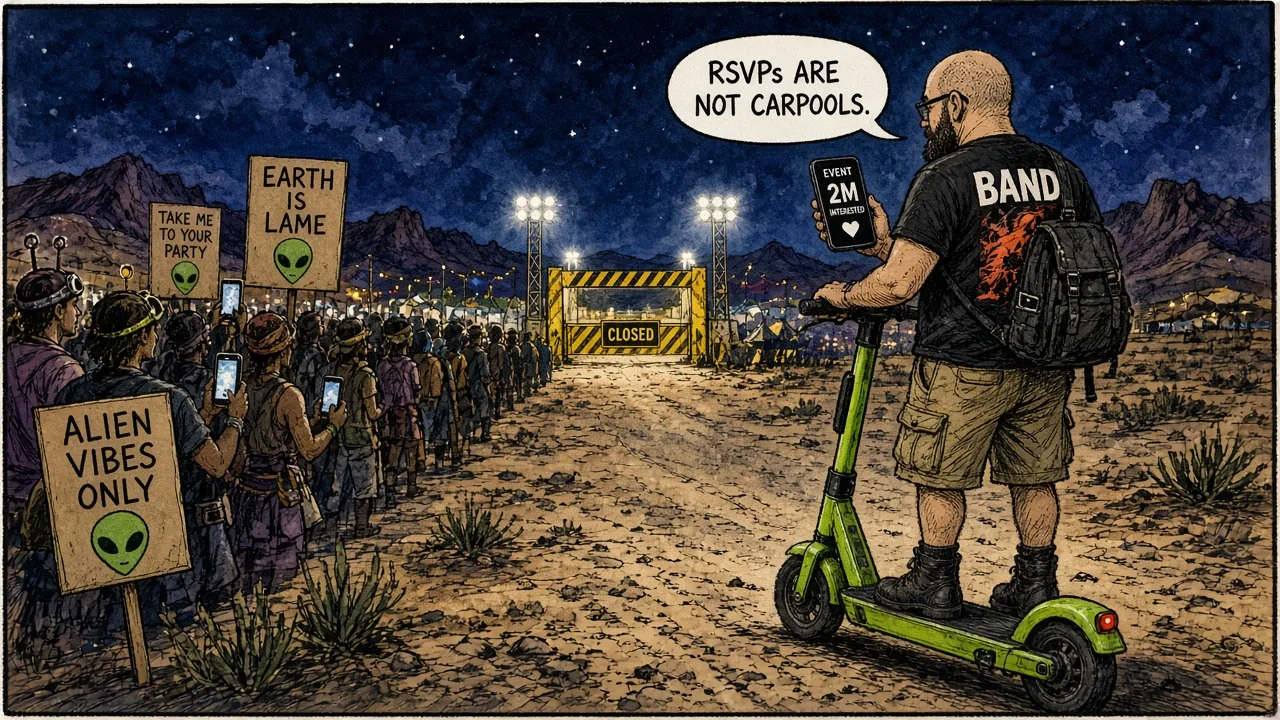
Millions clicked "interested." Dozens showed up at the gate. The aliens remained theoretical. The portable toilets did not.
The short version
- Storm Area 51 began as a June 2019 Facebook joke about Naruto-running into a classified base on September 20.
- Millions tapped interest online. The desert got a few thousand festival-goers and a much smaller gate crowd.
- Reuters and BBC: no mass rush, no base entry, a handful of arrests, costumes optional but popular.
- The Air Force’s public line was dull on purpose: it is a training range; do not trespass.
- The episode is useful public record because it stress-tested mythology against fencing, heat, and logistics.
- Aftermath trivia (new gate hardware noted by watchers) matters less than the main result: the raid stayed a meme.
From RSVP to Rachel
Matty Roberts’s Facebook event asked the internet to storm Area 51 and “see them aliens.” BBC reported more than three million marked interested. That number measured dopamine, not carpools.
By September 20, 2019, the story on the ground was festivals and curiosity, not a human wave. Reuters counted more than 3,000 out-of-town visitors across Thursday and Friday in the desert region around the base, with alien-themed gatherings in tiny Rachel and another event miles away. Lincoln County’s sheriff described guests as largely well behaved.
The raid that was never a raid had become a regional crowd-control and tourism problem—the Extraterrestrial Highway’s brand colliding with a real perimeter.
What happened at the gate
BBC: roughly seventy-five people at the front gate; nobody tried to go in. Reuters: about 150 around 3 a.m., foil hats and signs included; one person briefly ducked under a protective gate, was detained, and released. Most, officers said, were there to see the circus.
Arrests, per Reuters: five—three suspected trespass onto base grounds, one indecent exposure after urinating near an entrance, one alcohol-related. That is not a revolution. That is a long night with dumb decisions.
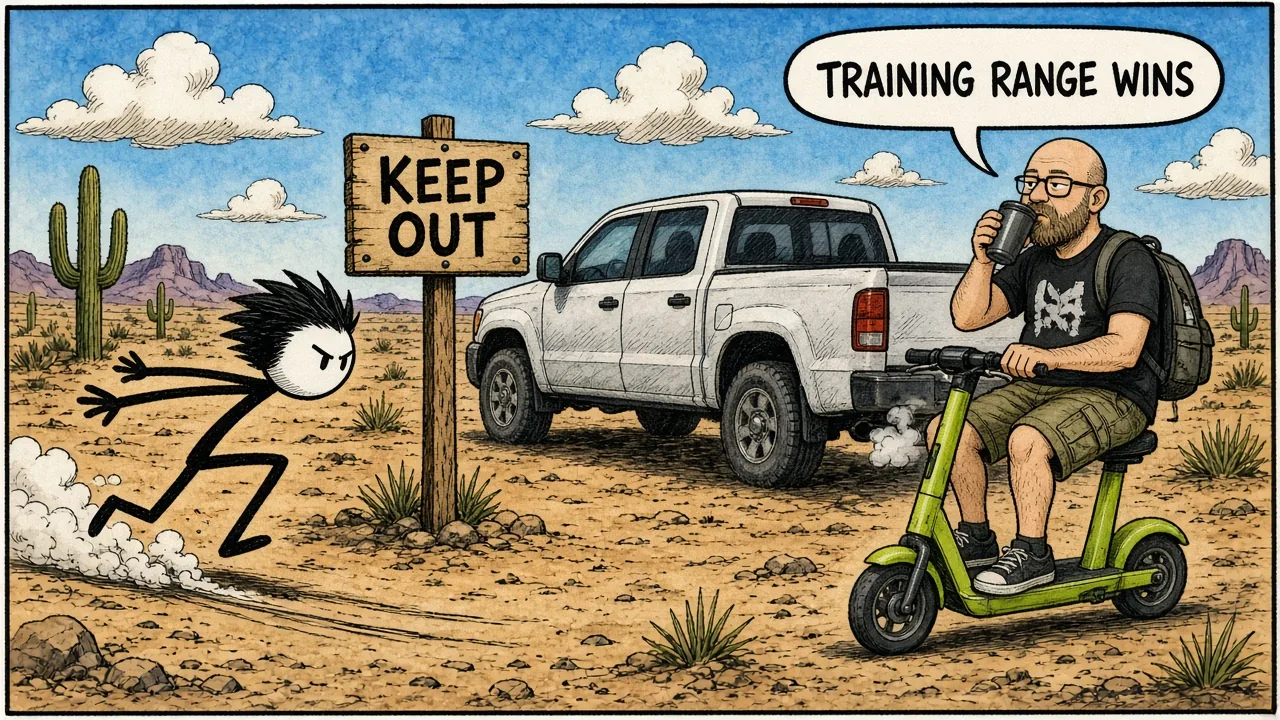
The Air Force warning circulating beforehand was the opposite of cinematic: the installation trains American forces; stay out. No debate about Martians is required to understand “training range” and “trespass.”
Why the meme bounced off the fence
Area 51’s public story already had official spy-plane acknowledgment from 2013 and decades of land withdrawals shrinking legal overlooks. A Facebook RSVP does not reverse either.
Reuters even reminded readers that CIA archives described flight-test work, not a gift shop of recovered saucers. The crowd came for the myth anyway. The perimeter enforced the map.
Dreamland’s timeline later noted a gate appearing on Groom Lake Road in September 2019 where signs and habit had previously done more of the work, “most likely” tied to the event. Causal language is theirs. The observable point is simpler: viral tourism hustles infrastructure.
Cultural residue
Storm Area 51 is now a case study in internet-to-desert translation loss. Online scale lied. Logistics told the truth. Local businesses scrambled; some residents braced for chaos that mostly became dust, music, and merch.
For this ErrorZap section, the file earns its keep as a control sample. When the public record says “flight test” and the meme says “aliens,” put them side by side and watch which one can get through a fence.
Joke "storm" invitation goes viral; millions click interest.
Air Force discourages trespass; desert towns prepare for visitors.
Small crowds, costumes, no entry; arrests measured in single digits.
Thousands visit the region; the raid remains theoretical.
Watchers note new gate hardware on the public approach road after the event.
Festivals are not breaches
Rachel’s alien-themed motel-bar and the Extraterrestrial Highway tourism economy did not invent Area 51, but they knew what to do with a crowd. Reuters described camping and music near the Little A’Le’Inn and a second event about forty miles away in Hiko. That geography matters: the viral invitation pointed at a gate; the entertainment industry pointed at towns that actually sell burgers.
The Air Force and county law enforcement planned for the worst case the meme advertised. What arrived was mostly the festival case. That gap—between internet threat model and desert turnout—is the public lesson. Fence lines, heat, distance, and felony trespass still outperform hashtags.
What not to copy
This file is not an invitation sequel. No approach notes, no “best time to visit the gate,” no packing list for another raid joke. The useful residue is documentary: RSVP inflation, small gate crowds, single-digit arrests, official “training range” language, and a reminder that 2013’s CIA acknowledgment already framed the place as spy-plane country.
Media vs. myth scoreboard
| Viral claim | Public outcome (Reuters/BBC) |
|---|---|
| Millions will Naruto-run the gate | Dozens to low hundreds at the gate |
| They can’t stop all of us | Nobody entered the base |
| See them aliens | Costumes, yes; aliens, no |
| Instant crisis | Single-digit arrests; festivals dominated |