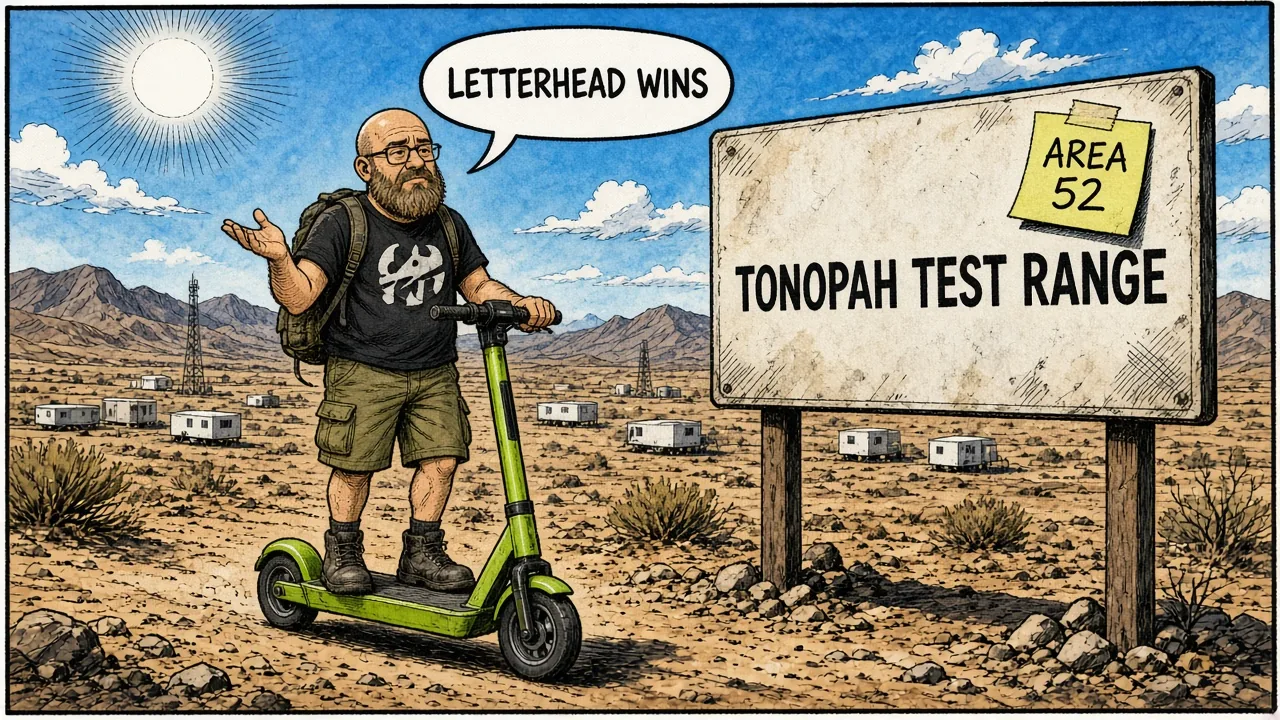
"Area 52" is internet slang. Tonopah Test Range is a Sandia letterhead. Guess which one publishes a mission statement.
The short version
- Tonopah Test Range is a real DOE/Sandia test range in Nevada, established in 1957 for ballistic and non-nuclear weapons-feature work.
- Official language emphasizes instrumentation, data, land area, and security for national-security test customers—not tourism.
- Pop culture bundled it with Groom Lake as “Area 52.” The lab stationery did not.
- The same public neighborhood hosts electronic-combat and emitter infrastructure that watcher sites associate with the 99.1 MHz music FM already covered in the section anchor post.
- Janet flights and shared NTTR airspace link Tonopah’s weekday reality to Groom’s.
- If Area 51 is the myth magnet, TTR is the reminder that Nevada’s classified desert is a system of ranges.
What Sandia says out loud
Sandia’s Tonopah Test Range homepage is almost aggressively unsensational. TTR supports DOE weapons-program research and development testing. It offers tracking instrumentation and data systems. It has land and security for government agencies and contractors who need to run tests without a stadium crowd.
The history page leans on Leland Johnson’s Sandia monograph: established 1957 by Sandia Corporation as an isolated Atomic Energy Commission site to test ballistics and non-nuclear features of atomic weapons; decades of Cold War service after that. That is origin-story enough. No saucer emoji required.
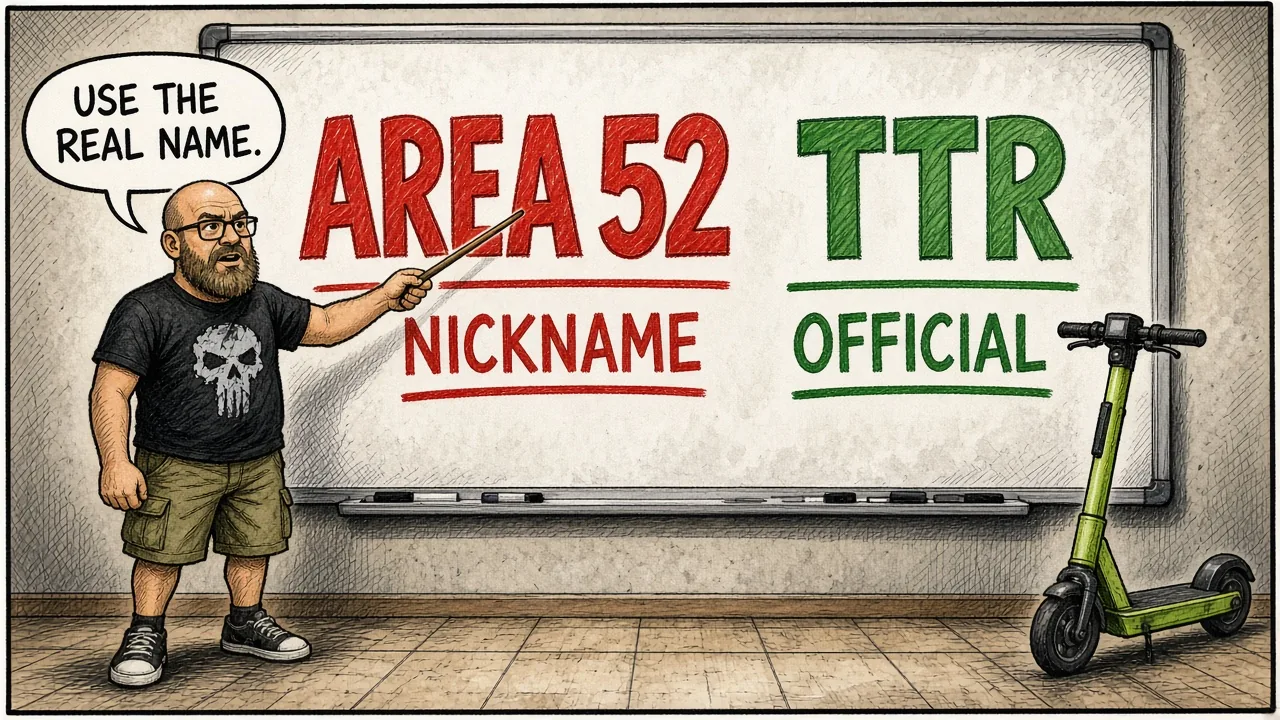
Nickname vs. letterhead
“Area 52” spread because the internet likes sequential stickers. Groom Lake got “51” from old Atomic Energy Commission grid language; Tonopah got a +1 in bar talk and video titles. Sandia’s site does not brand itself Area 52. When primary sources and nicknames disagree, ErrorZap keeps the nickname in quotes and the letterhead in the lede.
That naming hygiene matters for the whole Area 51: The Public Record section. Precision is how you stay out of the souvenir-shop version of the desert.
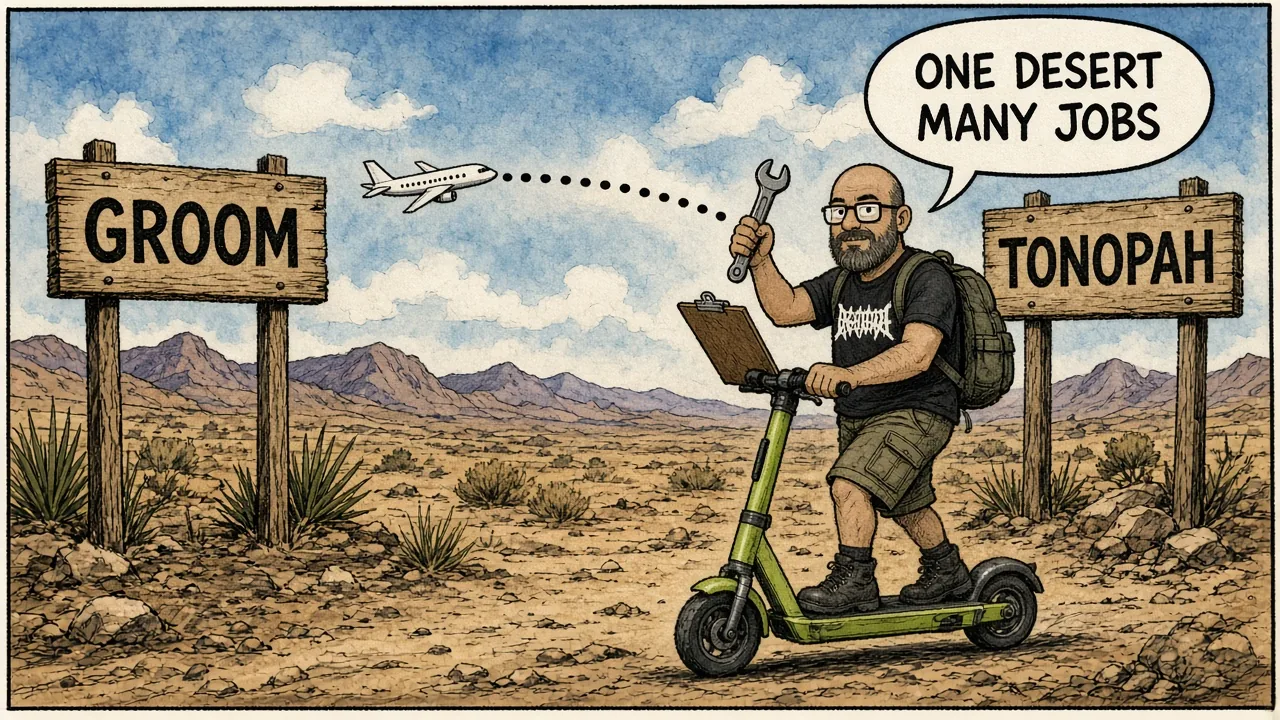
Same desert, different job
TTR and Groom sit in the same broader Nevada Test and Training Range story even when their bureaucracies differ. Workers move on Janet metal. Watchers track construction pulses—Dreamland flagged heavy TTR trucking in early 2019. Electronic-combat and emitter sites on the Tonopah side are part of why the music FM on 99.1 showed up in scanner culture beside the 99.9 back-gate transmitter near Groom.
None of that requires inventing a second alien warehouse. It requires accepting that weapons and aircraft test infrastructure clusters where there is land, airspace, and security already paid for.
What the public record leaves out
No coordinates, photo spots, emitter maps, or frequencies are in it, and none are here. TTR’s public truth is institutional: a Sandia range with a 1957 birth certificate and a modern test-support mission statement.
If someone sells you Area 52 as Groom’s twin UFO campus, ask for the Sandia PDF. Bring popcorn for the silence.
Sandia Corporation stands up TTR for AEC ballistic / non-nuclear weapons-feature testing.
Official history frames long service through the arms-race years.
Pop culture pairs Tonopah with Groom; Sandia letterhead stays "TTR."
Public watchers log heavy material movements at TTR early in the year.
99.1 MHz music FM observations near Site 4 enter the same public notebook as Groom's 99.9 transmitter.
New helicopter callsigns fly from TTR on a mission watchers suspect is passive-radar testing (unconfirmed).
Why TTR belongs in an Area 51 section
A public-record Area 51 shelf that ignores Tonopah is doing fan service, not geography. Groom Lake is the celebrity. TTR is the sibling range with a published Sandia mission page you can quote without inventing hangar gossip. Worker metal overlaps via Janet. Electronic-combat infrastructure on the Tonopah side is part of the same open-source notebook that produced the music-FM field notes in the section anchor.
Keep the hierarchy straight: Sandia/DOE describe a weapons-test support range. Watchers describe emitters and schedules. Mythology supplies the “Area 52” sticker. ErrorZap prints the first two and labels the third.
Instrumentation is the product
Sandia’s public description keeps returning to measurement: tracking, data systems, controlled land. That is the opposite of a blank myth. A range that sells “we can capture the shot” is advertising competence, not invisibility. Visitors will not get a tour. Readers can still understand the job.
Compare that with Groom’s public posture, which is mostly boundary and silence. TTR’s homepage is quiet, but it is not blank. That difference alone justifies a separate dossier.
No treasure map
Public interest in Tonopah often slides into the same bad habits as Groom tourism: ridge lists, scanner trophies, “what are they building” guesswork. This dossier stops at letterhead facts and section cross-links. The Aug 29 ErrorZap field notes already carry the FM-signal thread. Sandia’s pages already carry the mission statement. Anything that starts to look like a visitor guide gets cut.
Update: a new helicopter mission out of TTR (September 2026)
In late September 2026, Dreamland Resort started logging a callsign it had never heard in the NTTR: SUPER 61 and SUPER 66, two helicopters, “possibly CH-47 Chinook,” operating from Tonopah. On September 23 they flew a daytime mission north of Area 51 with the Area 51 shuttle SABRE 07 in support and RAMROD as mission controller. Two other stations on the net went by Sonic and Gabby. Dreamland tagged them “radar emitter(?)” and “passive radar detector(?)”, and relayed a suggestion that the test was of a new passive radar system. The same pair flew again on September 25.
That is a labeled guess, not a finding. It is still the most interesting TTR radio in a while, because it fits the passive-radar thread the section started with. The full write-up, with the hedges intact, is in the FM-signals field note.
Myth check: the September 2026 ‘giant’ clip
In mid-September 2026, viral posts circulated a cropped still from long-range desert video and sold it as a roughly three-meter figure near Area 51. Replies in the same cluster walked the claim back hard: the footage sits at Tonopah Test Range (the “Area 52” nickname), not Groom Lake, and the “giant” reads as forced perspective plus heat shimmer at extreme telephoto distance—workers or gear that look huge when the lens and desert haze do the wrong kind of math. That is a rumor with no evidence at all of an anomalous person on the range. Uncanny Expeditions’ public Tonopah long-range filming is the source material those crops were pulled from. The channel’s own TTR night-and-day expedition video is ordinary range documentation—aircraft, hangars, distant activity warped by heat—not proof of a cryptid. Treat the X crop as entertainment recycling of watcher footage, not a primary source for anything strange walking the playa.
Sources
- Sandia National Laboratories — Tonopah Test Range
- Sandia — Tonopah Test Range History
- Dreamland Resort — Area 51 News and Timeline (TTR construction note)
- Dreamland Resort — Back Gate / FM transmitter notes (99.1 near TTR context)
- Viral mid-September 2026 X post - cropped 'giant' still from Tonopah long-range footage (rumor)
- Viral X replies - Tonopah Test Range attribution and forced-perspective notes
- Viral X clarifying replies - optical-illusion / heat-shimmer framing
- Uncanny Expeditions - Clandestine Night Operations Captured at AREA 52 / Tonopah Test Range
- Dreamland Resort - Secret Mission in the NTTR airspace north of Area 51 featuring SABRE 07, SUPER 61 and 66 (September 23, 2026)
- Dreamland Resort - SUPER 61 and 66 at it again (September 25, 2026)