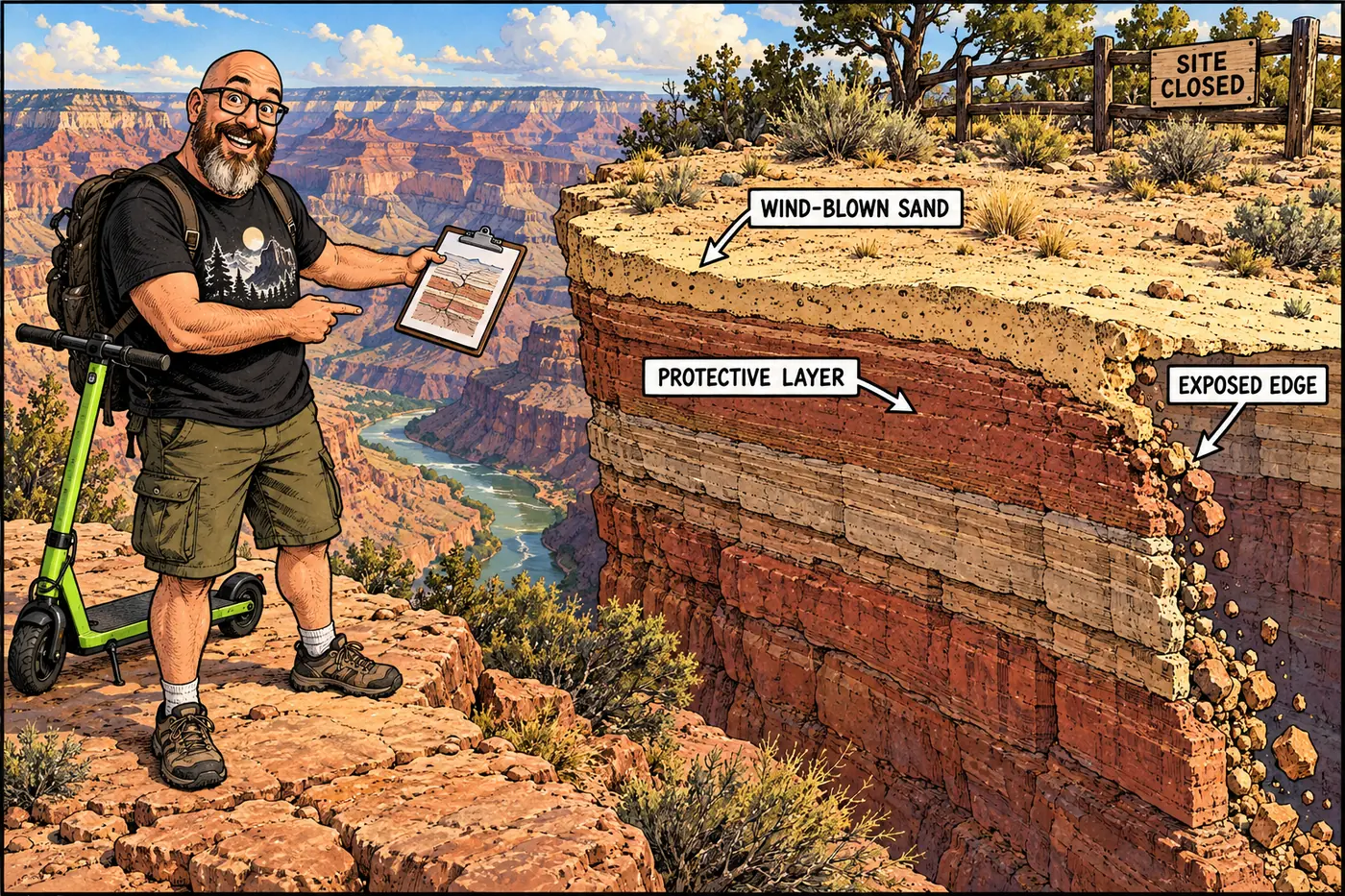
Grand Canyon National Park has more than 4,000 documented archaeological sites, a few hundred of them strung along the river corridor, and a problem no fence can fully solve: the dam upstream is slowly erasing them anyway. Here's how the park actually protects what's out there — the laws, the volunteers, and the sediment math.
The short version
- Grand Canyon National Park has more than 4,000 documented prehistoric and historic archaeological sites; roughly 420 sit near the Colorado River corridor, with another 55 just upstream in lower Glen Canyon.
- Two federal laws do the legal heavy lifting: the Archaeological Resources Protection Act (ARPA) makes unpermitted digging or trafficking a felony, and the National Historic Preservation Act (NHPA) requires review and tribal consultation before federal actions affect historic properties.
- Eleven federally recognized tribes are traditionally associated with the canyon, and NPS says it has consulted with them for more than 40 years — including at every phase of recent excavation projects.
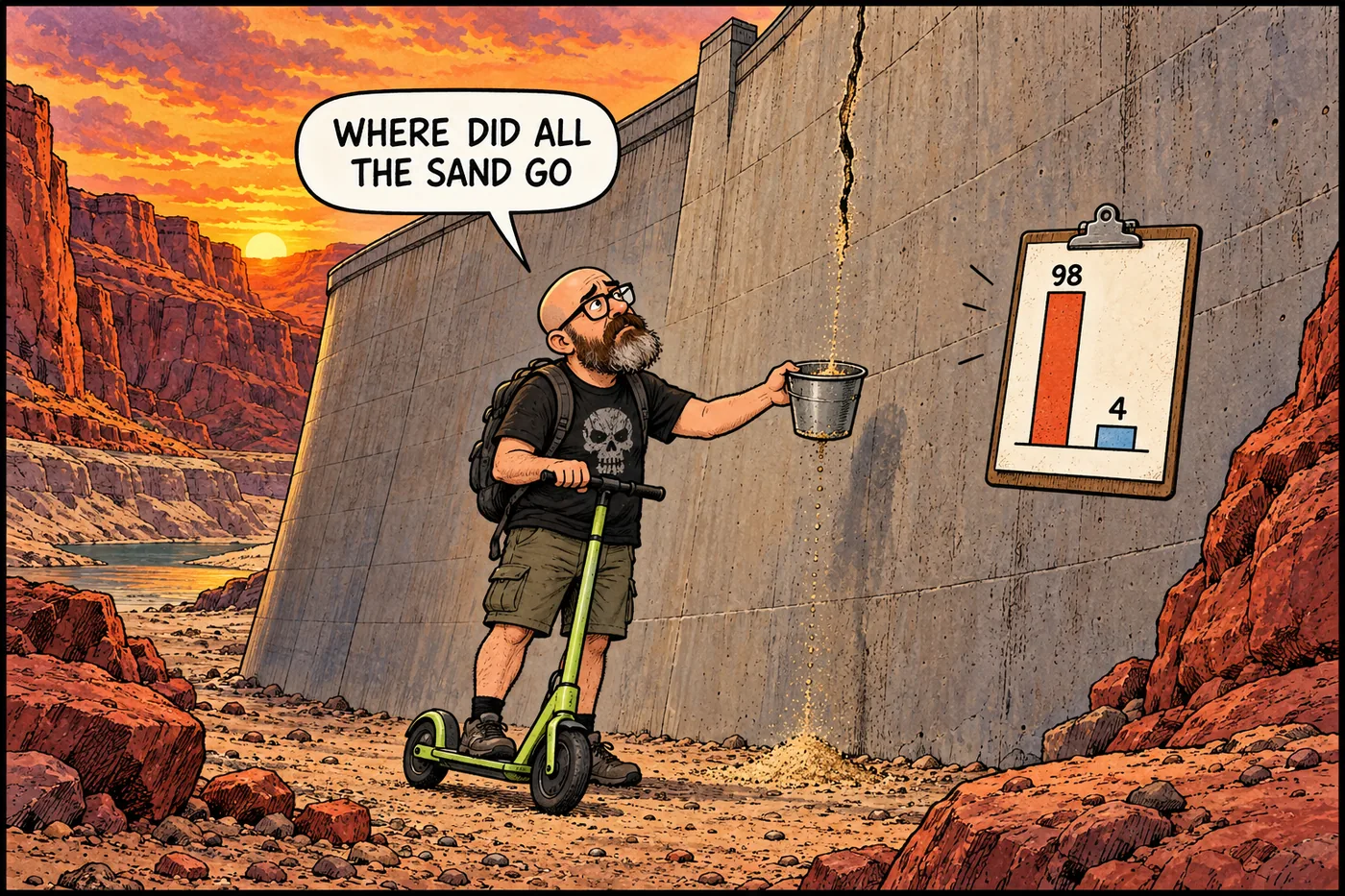
- A 2023 USGS study is blunt about the park’s biggest ongoing threat to river-corridor sites: of 362 sites surveyed, only 4 remain in the best-case condition for natural preservation, down from 98 in 1973 — a direct consequence of Glen Canyon Dam cutting off the sand supply that used to bury and protect them.
- Arizona’s statewide volunteer Site Steward program monitors about 2,400 heritage sites and logged 2,157 looting/vandalism incidents statewide between 2009 and 2021 — a useful gauge of the broader threat, though not a Grand Canyon-specific count.
- This session’s search of NPS’s own public enforcement records turned up no Grand Canyon-specific ARPA prosecution — a real gap in the record, not proof nothing has happened, and reported honestly below.
The legal framework: three laws, one goal
Grand Canyon’s archaeological protection rests on federal statutes that predate the park’s current management plan by decades.
ARPA — the Archaeological Resources Protection Act of 1979 — is the one with teeth. It requires a federal permit before anyone excavates or removes an archaeological resource from public or Indian land, and it criminalizes doing so without one. Penalties scale with the offense: excavating or trafficking without a permit carries up to two years in prison, a $20,000 fine, and a year of supervised release; causing injury or depredation to the resource itself carries up to ten years, a $250,000 fine, and three years of supervised release, with equipment used in the crime subject to confiscation. ARPA also lets the government pursue civil penalties and bans interstate or international sale of resources taken in violation of state or local law. Crucially, ARPA also restricts disclosure — federal land managers generally can’t release the nature and location of archaeological resources to the public, a provision covered in more depth in Sensitive cultural landscapes.
NHPA — the National Historic Preservation Act — works differently. Instead of criminal penalties, it requires federal agencies to identify historic properties and consult before an action affects them, and it’s the legal hook for tribal consultation on cultural landscapes that may not fit neatly into “archaeological site.”
NAGPRA — the Native American Graves Protection and Repatriation Act — has governed the protection and return of Native American human remains, funerary objects, sacred objects, and objects of cultural patrimony since 1990. Its stated principle is direct: human remains “must at all times be treated with dignity and respect,” and such items belong to lineal descendants, tribes, and Native Hawaiian organizations, not to whoever finds them.
Metal detecting is flatly illegal under ARPA in any NPS-managed park, and digging anywhere on federal land without an Archeological Investigations permit is against the law — rules that apply just as much to a curious hiker as to a deliberate looter.
What’s actually out there
Grand Canyon’s site count is large enough that most visitors walk past dozens of documented locations without knowing it. The park has more than 4,000 documented prehistoric and historic sites, and about 420 of them sit near the Colorado River corridor — with an additional 55 just upstream in the lower reaches of Glen Canyon, monitored under the same multi-agency cultural-resources program.
A 2006–2009 cooperative excavation project between Grand Canyon National Park and the Museum of Northern Arizona put real numbers behind that scale. Funded with $1.2 million under the Federal Lands Recreation Enhancement Act, the project examined nine river-corridor sites. At Furnace Flats in 2007, crews recovered ceramic gaming pieces, stone pendants, grinding tools, and a scorched pinyon nut — a small but telling sign of trade between river-level communities and the rim. In April–May 2008, excavators uncovered a kiva, a rare ceremonial structure for this part of the canyon. GCNP’s then-deputy chief of science and resource management, Jan Balsom, summed up what the project found: “a much more extensive past than most people ever thought.” Tribal consultation occurred at every phase of the work.
Eleven federally recognized tribes are traditionally associated with Grand Canyon National Park: the Havasupai Tribe, Hopi Tribe, Hualapai Tribe, Kaibab Band of Paiute Indians, Las Vegas Paiute Tribe, Moapa Band of Paiute Indians, Navajo Nation, Paiute Indian Tribe of Utah, San Juan Southern Paiute Tribe, Pueblo of Zuni, and Yavapai-Apache Nation. NPS states that park staff have worked with these communities for more than 40 years.
The dam is the slow-motion threat
Fences and permits handle deliberate looting. They don’t handle what Glen Canyon Dam has been doing to river-corridor sites since 1963.
Before the dam, seasonal floods deposited fresh sand on the riverbanks every year. Wind carried that sand up onto terraces and benches, burying and effectively preserving archaeological sites in place — sealed under a protective blanket instead of exposed to weather and foot traffic. The dam trapped the sediment that used to make that possible. Riverbank sand no longer gets replenished at anything like the historic rate, and the sites that depended on it are eroding out into the open.
A USGS-led survey reported by KNAU in July 2023 quantified just how far that’s gone. Researcher Joel Sankey’s team examined 362 archaeological sites along the Colorado River corridor through the canyon. In 1973, 98 of those sites were in what the study calls “best-case scenario condition” — meaning windblown sand still had a real chance of preserving them in place. By 2023, only 4 remained in that condition. “Today there’s actually only 4 of those sites that we consider to be in a best-case scenario,” Sankey said. USGS and the park’s monitoring program (GCMRC, the Grand Canyon Monitoring and Research Center) have tracked the geomorphic condition of these sites with terrestrial lidar from 2010 to 2020, and an earlier study found aeolian sand deposition still actively protecting sites at only 4 of 13 monitored locations — about 30%.
This is exactly why the 2006–2009 excavation project existed in the first place: when in-place preservation stops being realistic, controlled excavation and documentation becomes the fallback, salvaging what erosion would otherwise take for free.
Watching the sites: stewards, not just staff
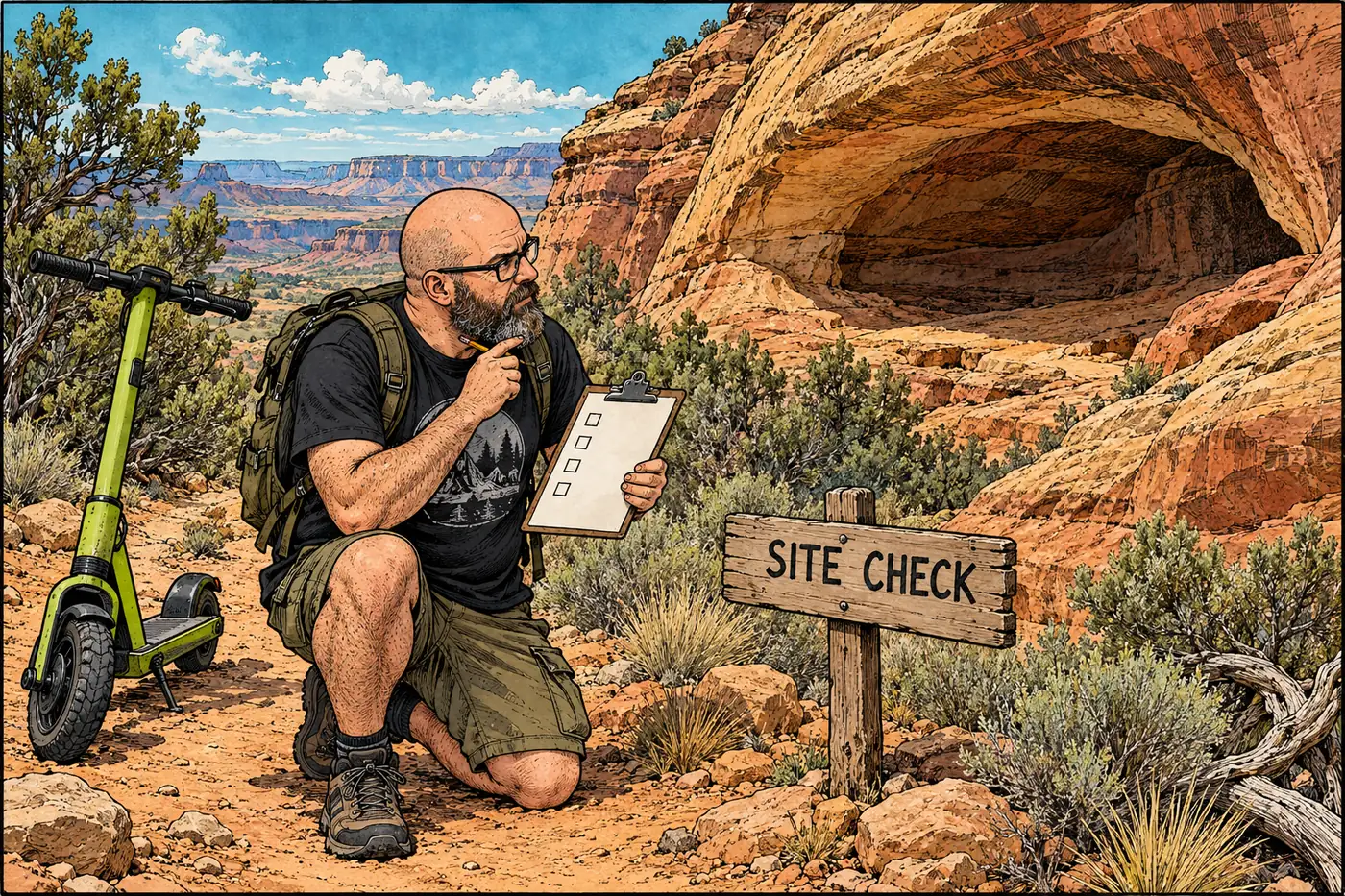
Grand Canyon’s own archaeology staff can’t be everywhere, which is where volunteer monitoring comes in. Arizona runs a statewide Site Steward program — Arizona State Parks volunteers who monitor roughly 2,400 heritage sites on state and federal land, visiting each site at least twice a year to log conditions and flag problems. The program’s own data, covering January 2009 through July 2021, recorded 2,157 looting and vandalism incidents across Arizona’s state and federal lands — a number the program itself says understates the real total, since volunteers can only cover a fraction of the state’s sites. That figure is statewide, not Grand Canyon-specific, but it’s the clearest public gauge available of how often this actually happens in Arizona.
Sediment that used to replenish riverbank sand gets trapped upstream, starting a decades-long erosion problem for river-corridor sites.
The Archaeological Resources Protection Act criminalizes unpermitted excavation and trafficking on federal and Indian land, and restricts disclosure of site locations.
Federal law formally requires the protection and return of Native American human remains, funerary and sacred objects, and objects of cultural patrimony.
NPS and MNA jointly excavate nine river-corridor sites, funded at $1.2 million; a rare kiva is uncovered in 2008 at Furnace Flats.
Arizona Site Stewards log 2,157 looting/vandalism incidents on Arizona state and federal land — a statewide, not park-specific, figure.
USGS/GCMRC track the geomorphic condition of river-corridor archaeological sites using terrestrial lidar.
Of 362 surveyed sites, only 4 remain in "best-case" preservation condition, down from 98 in 1973 — attributed directly to six decades of dam operations.
What’s actually off-limits (and why)
The Superintendent’s Compendium in effect since June 16, 2026 closes several named cultural-resource sites outright under 36 CFR § 1.5(a)(2): Anasazi Bridge, Hopi Salt Mines, and Furnace Flats are each closed to public presence, use, and access without written superintendent permission, each with the same short justification on record — protecting a significant cultural resource. Separately, a park-wide rule under 36 CFR § 2.1 makes it illegal to possess, destroy, injure, deface, remove, dig up, or otherwise disturb “any… cultural or archeological resources” anywhere in the park, developed site or backcountry. Open fires are also banned within any cultural or archeological site or area as a standing rule. Full detail on all of these closures, plus the broader off-limits picture, is in What is actually off-limits at the Grand Canyon, and why?
Cave entry gets its own blanket rule for the same underlying reason: any cave in the park requires a superintendent-issued permit to enter, with the stated justification citing protection of “unrecorded features, archaeological resources,” and cave-dwelling wildlife together.
None of these closures come with published GPS coordinates, trail directions, or river-mile-level location detail beyond what the compendium itself already states publicly — that’s deliberate, and it’s the subject of its own dossier: Sensitive cultural landscapes and why locations are withheld.
What the public record doesn’t show
Worth stating plainly: this session searched NPS’s own public enforcement archive — the Investigative Services Branch’s case chronicles for 2009 and 2012, plus the general NPS looting-and-vandalism overview page — and found no Grand Canyon-specific ARPA looting or vandalism prosecution. The named example cases on NPS’s own looting page are from Pea Ridge, Ozark National Scenic Riverways, Death Valley, and Chickamauga & Chattanooga, not Grand Canyon. A well-known 2009 multi-state antiquities-trafficking sting resulted in a dozen federal indictments and 23 arrests — but the defendants were from Utah, New Mexico, and Colorado, and the case doesn’t touch Arizona or Grand Canyon at all.
That’s a gap in what’s publicly documented, not a claim that looting has never happened here. NPS doesn’t publish a complete national case archive, and plenty of enforcement actions never generate a public press release. What the record does show clearly is the legal exposure anyone caught digging or trafficking at Grand Canyon would actually face, and a statewide volunteer network logging thousands of incidents on Arizona’s public lands generally. The honest summary: the law is real, the penalties are real, the erosion is measured and published in detail — and a park-specific prosecution count simply isn’t something the public record, as checked this session, supports citing.
Sources
- Grand Canyon National Park Superintendent's Compendium, effective June 16, 2026 — National Park Service
- Archaeological Resources Protection Act of 1979 — National Park Service Archeology Program
- 16 U.S.C. § 470hh — Confidentiality of information concerning nature and location of archaeological resources — Cornell Law School
- Looting & Vandalism — National Park Service Archeology Program
- FAQs — National Park Service Archeology Program
- NAGPRA — National Park Service
- Site Stewardship Programs — National Park Service Archeology Program
- Heritage Resource Looting and Vandalism in Arizona: How Serious is the Problem? — Archaeology Southwest / SaveHistory.org
- Archeological Excavations at Nine Sites along the Colorado River Corridor — Grand Canyon National Park, National Park Service
- Traditionally Associated Tribes — Grand Canyon National Park, National Park Service
- Cultural Resources — Glen Canyon Dam Adaptive Management Program
- Study: Archaeological sites in Grand Canyon eroding due to dam operations — KNAU Arizona Public Radio
- Federal Agents Bust Ring of Antiquity Thieves Looting American Indian Sites for Priceless Treasures — U.S. Department of the Interior
- Chronicles of 2012 — NPS Investigative Services Branch
- Chronicles of 2009 — NPS Investigative Services Branch