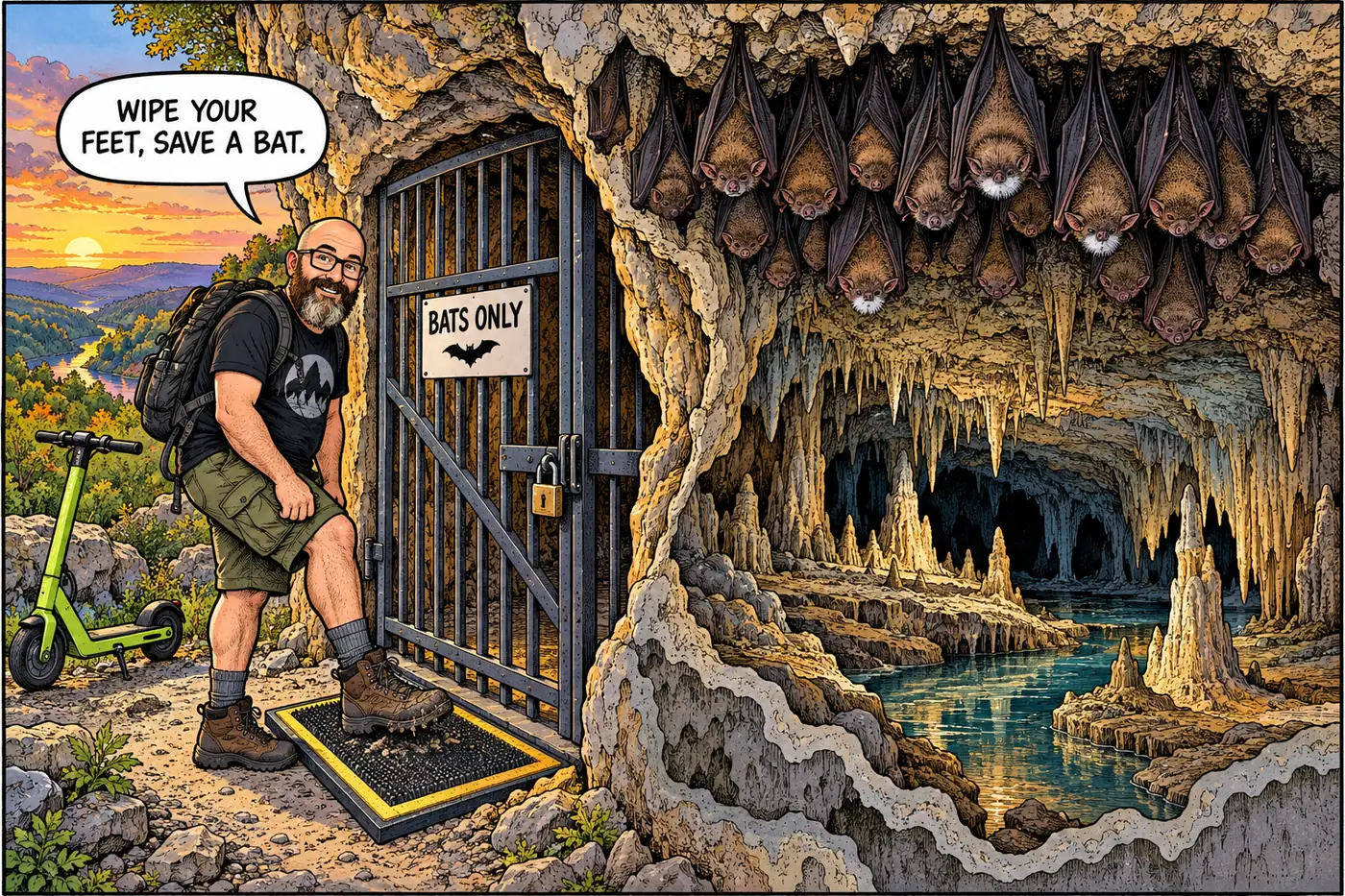
Grand Canyon holds the highest bat diversity of any unit in the National Park Service — 22 species, a dozen of which hibernate through winter in the park's caves and old mine shafts. That's exactly the biology a cold-loving fungus needs. It's been closing in on Arizona for years, and in 2025 it arrived.
The short version
- White-nose syndrome (WNS) is caused by Pseudogymnoascus destructans (Pd), a fungus that thrives in cold, humid hibernation sites and has killed millions of bats since it was first documented in New York in 2006.
- Grand Canyon has 22 documented bat species, 12 of them hibernating — the group WNS targets, because it infects bats while they’re too dormant to fight it off.
- A single low-level, inconclusive Pd detection turned up in a Grand Canyon bat in 2019. Confirmed disease has never been documented in the park.
- Arizona’s status changed in February 2025: state biologists confirmed high-level Pd on a bat with suspicious wing damage near Sierra Vista, and trace fungus has separately turned up in Coconino County — the county Grand Canyon sits in.
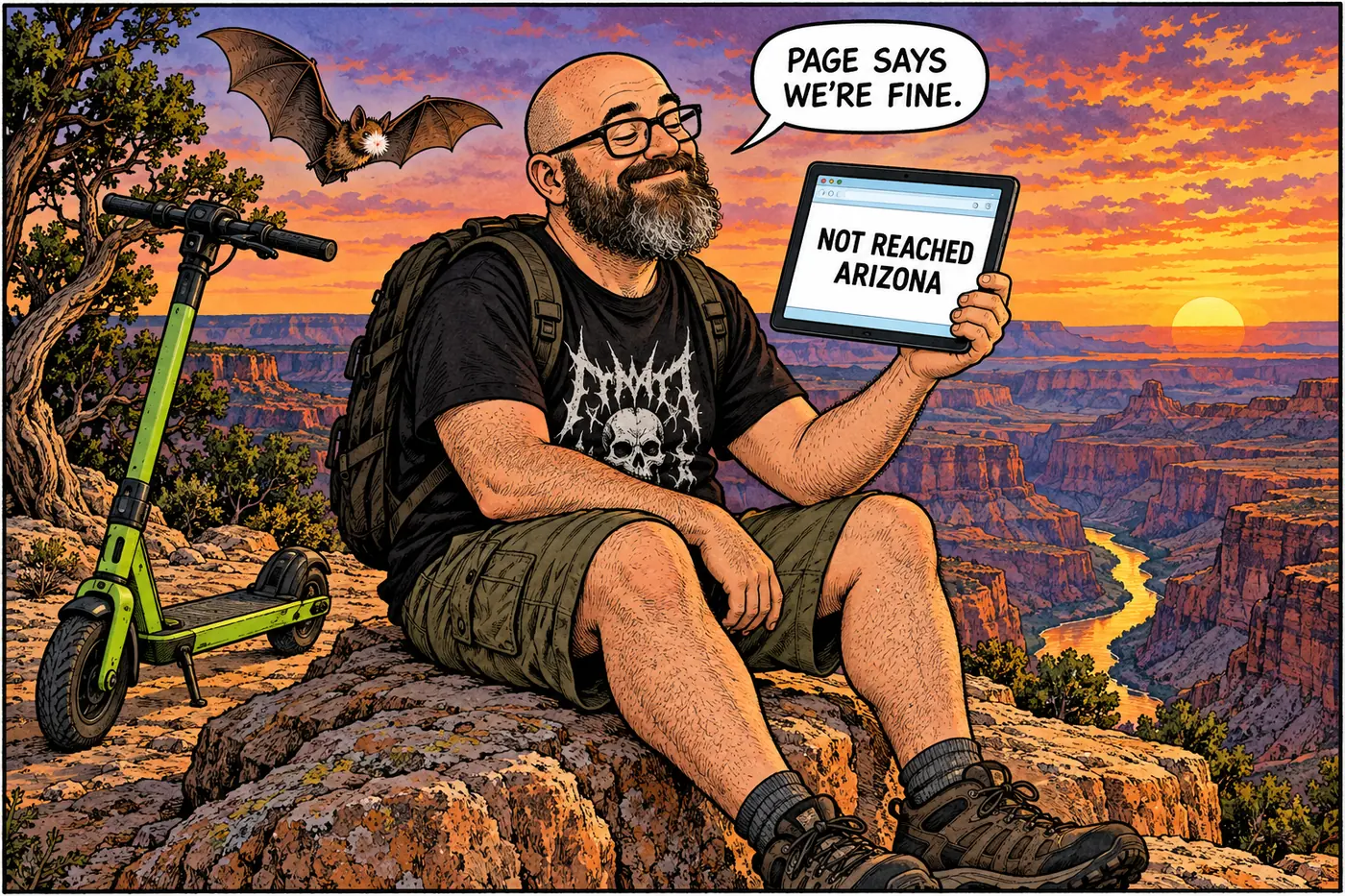
- Two of the park’s own web pages haven’t caught up to that news; one still says the fungus “has not reached Arizona.”
- The park’s response is the same tool used against mine hazards: close the cave, control what people carry in on their boots.
What white-nose syndrome actually is
Pseudogymnoascus destructans is a fungus that grows best in cold, damp places — which happens to describe the inside of a hibernation cave perfectly. It gets its common name from the fuzzy white growth it produces on an infected bat’s muzzle and wings. The fungus doesn’t kill bats directly so much as it disrupts them: infected bats rouse from hibernation more often than they should, burning through fat reserves meant to last the whole winter, and many starve or dehydrate before spring. It was first documented in a New York cave in February 2006 and has since reached 40 U.S. states and 9 Canadian provinces, killing millions of bats along the way. A 2021 USGS-led study covering 23 years of winter survey data found that three species — northern long-eared bat, little brown bat, and tri-colored bat — had each declined by more than 90% in the areas WNS had reached. The disease poses no risk to humans or pets, but people can carry its spores between caves on contaminated clothing, boots, and gear, which is exactly why cave-entry rules exist.
Grand Canyon’s exposure
Grand Canyon National Park has the highest bat diversity of any National Park Service unit: 22 documented species, ranging from the tiny canyon bat — usually the first one seen at dusk — up to larger species that roost in cliff cracks, ponderosa pine snags, old mine workings, and caves. Of those 22, 12 hibernate through the winter, which is the group WNS specifically targets, since the fungus needs a dormant host to do its damage.
The park has been watching for it since at least 2015, running acoustic surveys across an elevation gradient from the rim to the river and periodically capturing bats to check for signs of infection. In April 2019, a fringed myotis captured during routine surveillance tested “inconclusive” for Pd — a swab came back with trace levels too low to count as a confirmed detection under the standard case definition, and the bat showed no outward signs of disease. Follow-up sampling that June, and a review of the park’s samples from prior years, found nothing. Grand Canyon wildlife biologist Brandon Holton said at the time that the park would step up winter and spring surveillance, since that’s when infected bats are most likely to shed detectable fungus. The U.S. Fish and Wildlife Service’s national WNS coordinator noted that many western bat species hadn’t yet been exposed, and that Southwestern bats’ habit of hibernating alone or in small groups — rather than the dense colonies common in eastern caves — might slow transmission even after the fungus arrives. Might, not won’t.
2025: the fungus gets a foothold in Arizona
That changed, at least for the state as a whole, in February 2025. Arizona Game and Fish Department announced that a cave myotis sampled at Fort Huachuca near Sierra Vista, in the state’s southeast corner, had tested positive for Pd at a high enough level to be linked to visible wing abnormalities — the first Arizona detection tied to physical symptoms rather than a bare trace reading. Four other bats sampled in the same effort, across two more species, carried trace amounts. Fort Huachuca had been watching for the fungus since 2014 and running DNA sampling since 2017, with low-level flags in 2021 and 2023 before the 2024 sample (confirmed by lab results in early 2025) crossed into “concerning.”
The bigger picture, per the same release: since 2019, trace Pd has turned up during statewide surveillance in at least four Arizona counties — Mohave, Coconino, Yavapai, and Cochise — and between 2021 and 2024, eight bats total tested positive for trace fungus, spanning cave myotis, southwestern myotis, and big brown bats. Coconino County is where Grand Canyon National Park sits. That doesn’t mean the fungus has been found inside the park itself — the state’s county-level reporting doesn’t say where within the county each sample came from — but it means Grand Canyon is no longer somewhere-off-in-the-distance from a confirmed detection. It’s in the neighborhood. Arizona Game and Fish’s state bat specialist, Angie McIntire, put it plainly: “It’s concerning, but not surprising given how Pd has been spreading from state to state over the past several years.” Arizona public radio station KJZZ, reporting independently days later, noted there’s still no cure — prevention, meaning keeping people and their gear from moving spores between sites, is what wildlife agencies have to work with.
Two of the park’s own pages haven’t been updated to reflect that shift. Grand Canyon’s cave and karst page, last revised in May 2024, still tells visitors the disease “has not reached Arizona.” A separate NPS page describing the park’s bat research projects is dated all the way back to 2017 — before even the 2019 inconclusive detection. Neither is wrong about what it says for the date it was written; they’re simply behind the most current confirmed information, which is a useful reminder that a park website’s “last updated” stamp matters as much as its text.
Why the caves stay shut
Grand Canyon’s current Superintendent’s Compendium, effective June 16, 2026, closes Cave of the Domes to public entry except by written superintendent permission, and gives two reasons in the same sentence: stopping people from disturbing roosting and hibernating bats, and stopping people from carrying Pd into the cave on their gear. That’s a closure built specifically around this disease, not a generic safety rule borrowed from elsewhere in the rulebook. Two more named caves along the river corridor, Bat Cave and Rampart Cave, are separately closed to any entry under the same compendium — full stop, no permit process at all for the public.
Rampart Cave’s closure has history behind it that has nothing to do with bats and everything to do with why NPS takes vandalism in these places seriously. The cave held one of North America’s most significant Shasta ground sloth dung deposits — several feet thick in spots, with layers dating from before 40,000 years ago to roughly 11,000 years before present. NPS specialists first investigated in 1936; the Smithsonian Institution ran the largest excavation in 1942. In 1976, despite a protective gate, vandals broke in and started a fire that destroyed 70% of the deposit. It’s the kind of loss that doesn’t come back, and it’s part of why “closed” at Grand Canyon tends to mean closed, not “ask a ranger nicely.”
Mines, caves, and the same bats
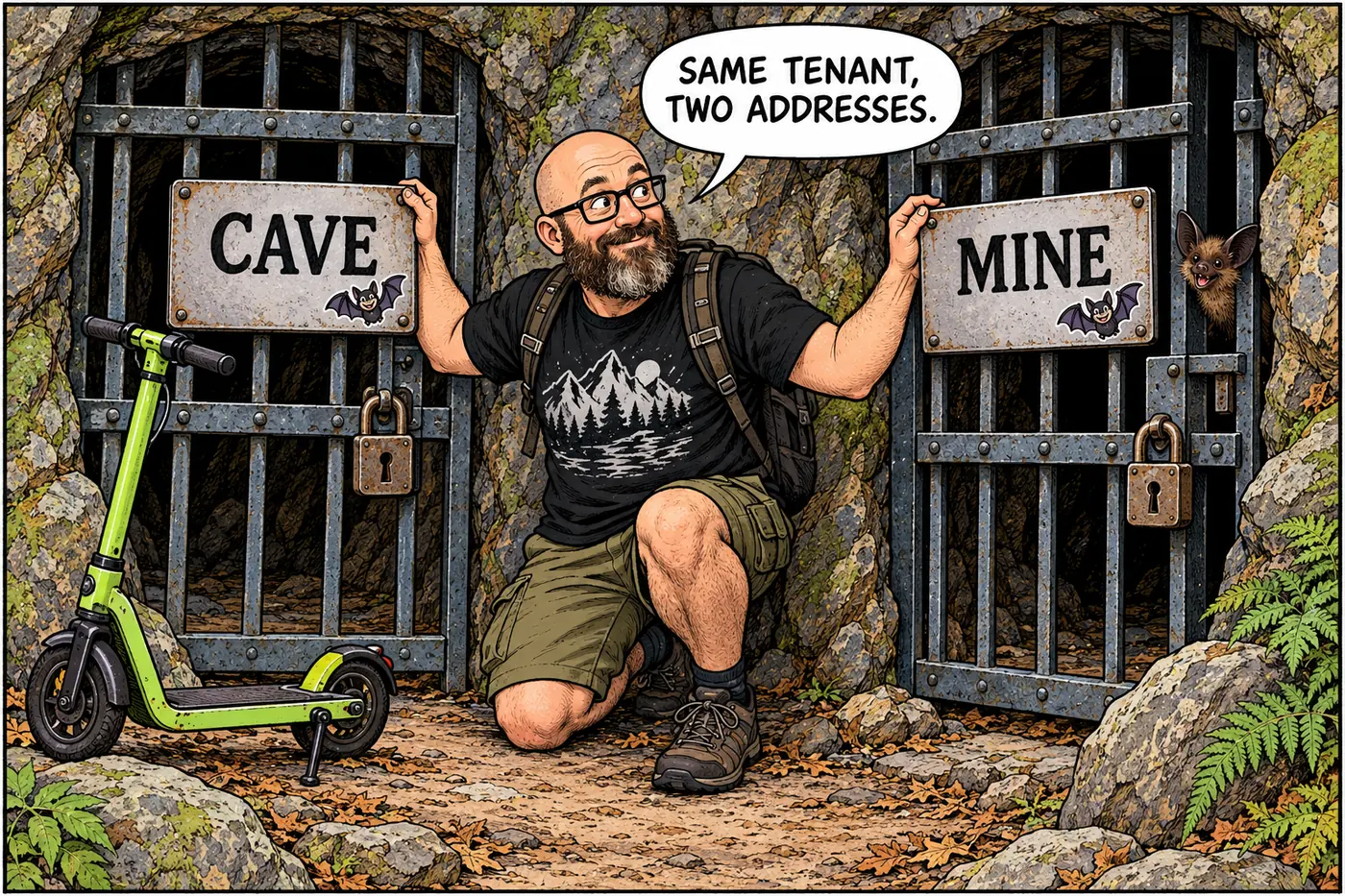
The park’s cave closures don’t operate in isolation from its mine closures — biologically, they’re often protecting the exact same animals. Nationally, 29 of the 45 bat species native to the United States rely on abandoned mines for some part of their life cycle: summer roosts, winter hibernation, nurseries, or stopovers during migration. Grand Canyon’s own bat page states the overlap directly: “Before the Grand Canyon was a National Park, it was home to many copper, gold, and uranium mines. Now these abandoned mines make excellent habitat for many bat species.” NPS’s toolkit for sealing hazardous mine openings across the park system includes wildlife-accessible “bat gates” and cupolas — steel structures that let bats fly freely in and out while keeping people from wandering into a collapsing shaft — and any closure work done in or near bat habitat is required to follow the same White-Nose Syndrome decontamination protocol used at cave sites. A “mine” closure sign and a “cave” closure sign can be protecting the identical colony (see mines versus natural caves for how the park draws that legal line in the first place).
What’s actually off-limits (and why)
Cave of the Domes: closed to the public except by written superintendent permission, specifically to protect roosting and hibernating bats and to prevent people from carrying Pd inside. Bat Cave and Rampart Cave: closed to entry entirely under the park’s river-corridor rules, no permit process. All three sit inside the park’s broader rule that every cave requires an entry permit and every mine is closed except for authorized research or administrative work — see mines versus natural caves for that general framework, and Grand Canyon Underground for how it connects to the park’s tunnels and shafts. None of this is about keeping people from a pretty hole in the rock. It’s about a fungus that’s already most of the way to the park’s front door.
Pseudogymnoascus destructans is identified at a cave in New York; the disease goes on to kill millions of bats across the country.
Park biologists start regular acoustic surveys and capture events across the canyon's elevation gradient to track bat species and watch for the disease.
A fringed myotis sampled in the park tests borderline-positive for Pd — too low to count as confirmed, and the bat shows no disease signs. Follow-up sampling that June finds nothing.
A USGS-led study finds three bat species have declined more than 90% in WNS-affected areas; at that point the fungus/disease had reached 35 states and 7 Canadian provinces.
State biologists confirm high-level Pd, linked to wing damage, on a cave myotis near Sierra Vista; trace fungus is also logged in Coconino County, home to Grand Canyon National Park.
The park's current rulebook keeps Cave of the Domes, Bat Cave, and Rampart Cave closed or permit-only, citing bat protection and WNS transmission risk.
Sources
- Mines as Habitat — Abandoned Mineral Lands, National Park Service
- Bats test positive for possible deadly fungus — Arizona Game & Fish Department
- Bats — Grand Canyon National Park (National Park Service)
- White-Nose Syndrome Killed Over 90% of Three North American Bat Species — U.S. Geological Survey
- Fungus That Causes White-Nose Syndrome Possibly Detected At Grand Canyon National Park — National Parks Traveler (reproducing NPS news release)
- White nose syndrome that has decimated millions of bats confirmed in Arizona — KJZZ
- Cave / Karst Systems — Grand Canyon National Park (National Park Service)
- Bat Projects in Parks: Grand Canyon National Park (National Park Service)
- Grand Canyon National Park Superintendent's Compendium, effective June 16, 2026 — National Park Service
- Pleistocene Life and Landscapes — Grand Canyon (National Park Service)
- AML Closures — Abandoned Mineral Lands, National Park Service