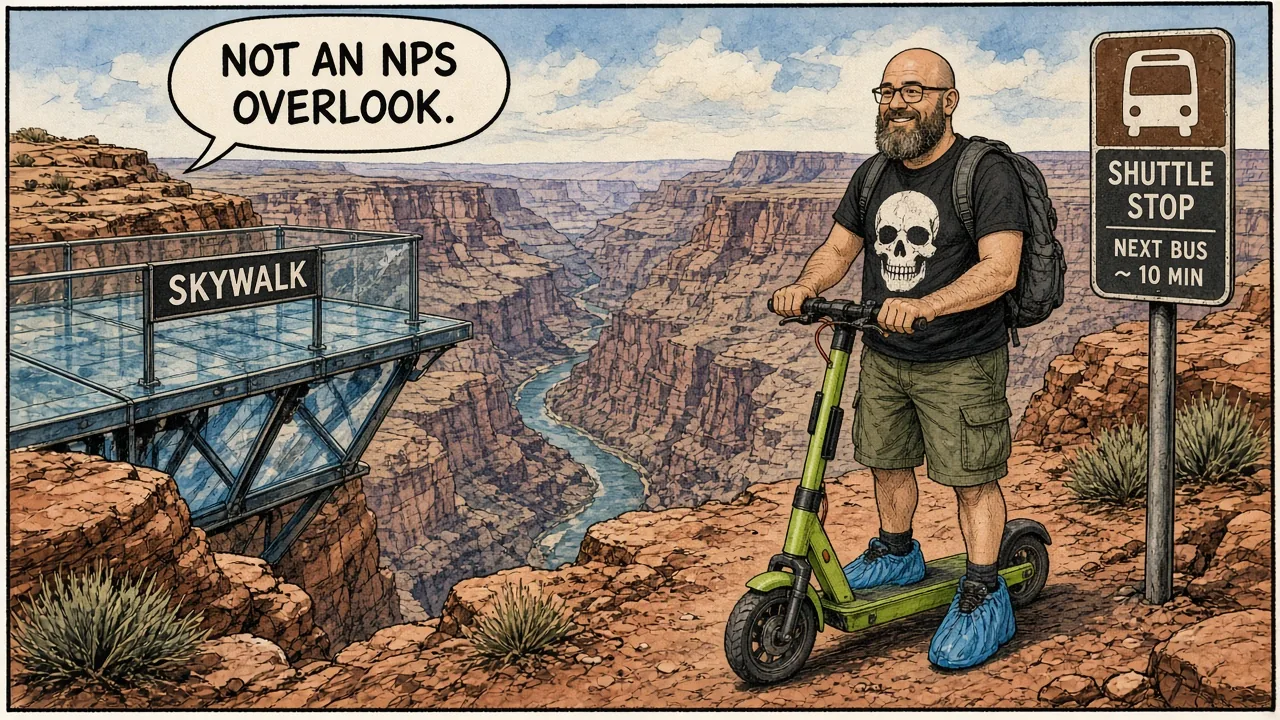
The Skywalk is a horseshoe of steel and glass sticking about 70 feet off the Hualapai rim at Eagle Point — tribal tourism infrastructure, not an NPS overlook. Behind the viral photos sits a West Rim operations plant: paid entry, shuttle loops, lockers, and a destination that runs on Hualapai rules and Hualapai roads.
The short version
- NPS states plainly: the Skywalk is outside Grand Canyon National Park, managed by the Hualapai Tribe on tribal lands — a horseshoe-shaped steel frame with glass floor and sides projecting about 70 feet (21 m) from the rim.
- Grand Canyon West (GCW) is the Tribe’s far-western visitor complex — roughly a five-hour drive from South Rim village by road — with Skywalk as the signature attraction among other viewpoints and services.
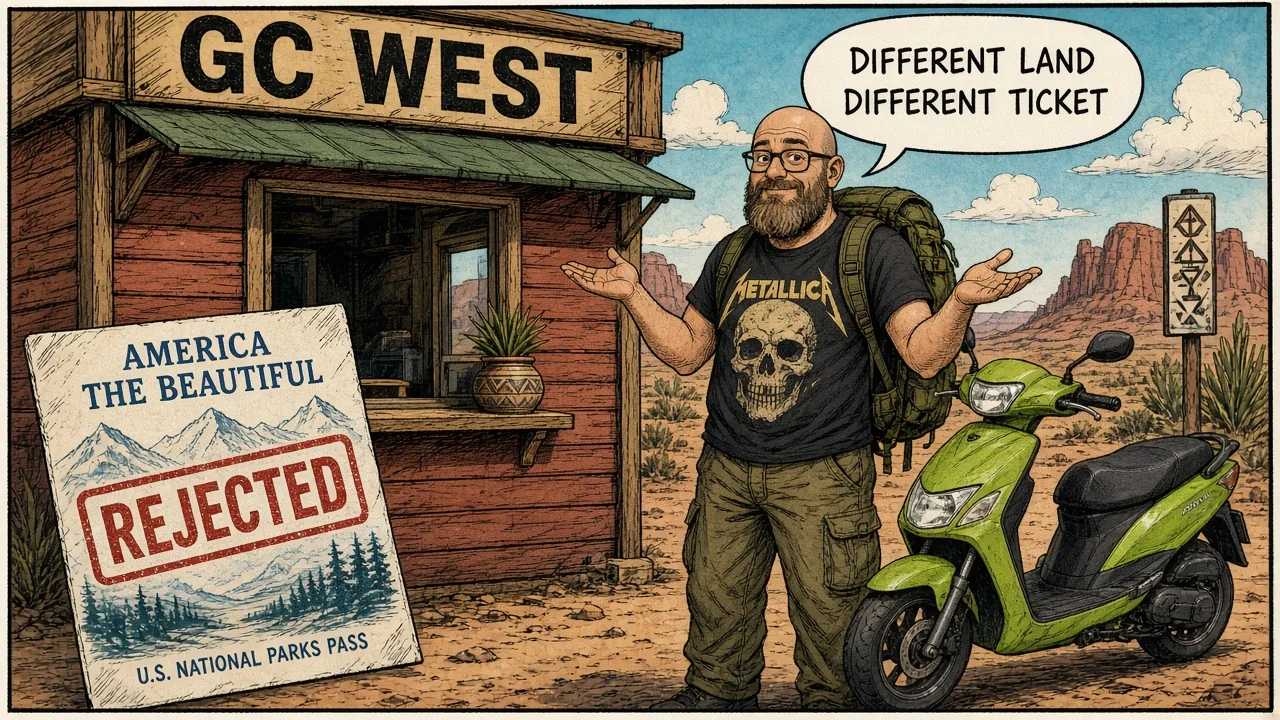
- The Tribe collects fees to enter reservation areas open to visitors; National Park passes do not apply. As of 2026 tribal marketing, an All-Access Pass bundles Skywalk with other GCW experiences and on-site shuttle service.
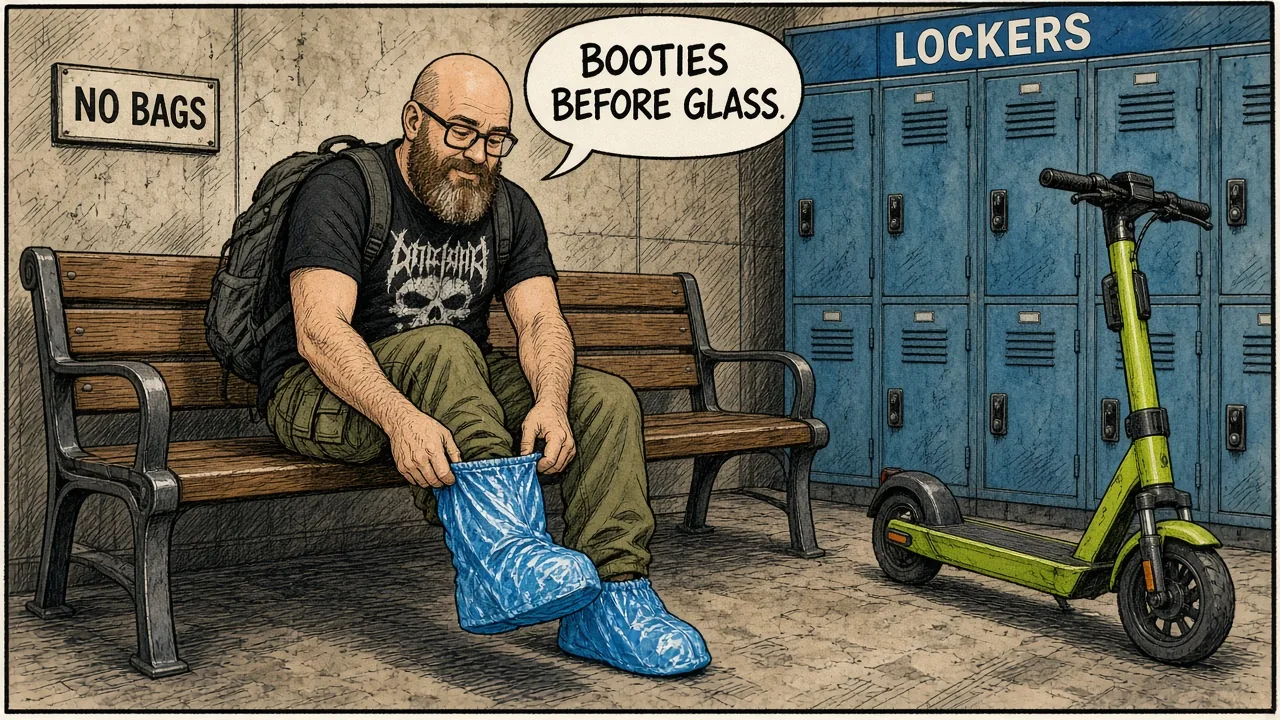
- Operational plant includes offsite parking with hop-on/hop-off shuttle to viewpoints, bootie covers to protect the glass, and locker storage (no purses/backpacks on the bridge).
- Access corridors include Diamond Bar / Buck and Doe approaches; see Hualapai Buck and Doe Road for the Peach Springs arterial and West Water utility link.
- This page is Skywalk / GCW visitor infrastructure. Broader river-edge jurisdiction stays on Hualapai lands along the river.
Not a park overlook — a tribal tourism plant
NPS’s Skywalk explainer exists mostly to stop the confusion: visitors asking rangers for “the glass bridge” are usually looking for a different destination several hours west. Grand Canyon West was chosen by the Tribe at the far western end of the canyon to host visitor services including the Skywalk. Food service is on site. Fees and restricted areas are tribal decisions.
That framing matters for an infrastructure dossier. Skywalk is not a freestanding selfie prop. It sits inside a paid destination with shuttle logistics, viewpoint stops (Eagle Point and others such as Guano Point in tribal marketing), guided cultural programming, and employment for tribal members. Hualapai Moving Forward’s Buck and Doe materials explicitly list Skywalk, zip lines, and river rafting as GCW attractions that workers commute to from Peach Springs.
Cross-link infrastructure across jurisdictions for the bigger map of who runs what. This page stays on the West Rim plant.
What the glass bridge is (and isn’t)
Public NPS description is deliberately short: horseshoe-shaped steel frame, glass floor and sides, about 70 feet out from the rim. Tribal operator copy matches the 70-foot cantilever and describes a roughly 10-foot-wide deck with views thousands of feet toward the canyon floor. Operator materials also advertise structural capacity in dramatic terms (“strong enough to hold seventy fully loaded 747 passenger jets”) — treat that as marketing language from the attraction site, not an engineering report reproduced here.
What is operationally solid: Skywalk opened to the public in 2007 (operator “Skywalk in the making” chronology). Visitors store bags in free lockers, wear protective booties over shoes, and walk a controlled capacity deck. Peak hours are commonly flagged around late morning to mid-afternoon. Professional photo vendors operate on site. Exact live load limits, damper hardware, and fabrication drawings are not necessary to understand the place as infrastructure — and publishing equipment details is not the point of this page.
Destination ops: passes, shuttles, and corridors
Grand Canyon West’s 2026 All-Access Pass marketing lists Skywalk, zipline, guided tours/exhibits, performances, meal/merchandise discounts, walking trails, and shuttle service to and from all points. Offsite parking with complimentary shuttle to Skywalk is part of the published visitor flow — a deliberate design choice to keep private cars off the rim attractions.
Getting there is its own infrastructure story. NPS still publishes Kingman and Las Vegas approaches via Pierce Ferry Road and Diamond Bar Road merging into Buck and Doe into Grand Canyon West, noting the Kingman approach is fully paved and that shuttle service is available from the reservation boundary for a fee. The Peach Springs dirt spine that still needs phase funding is covered on the Buck and Doe dossier — do not assume every named “Buck and Doe” segment is the same pavement status.
West Water potable supply for GCW (see Buck and Doe materials) is the hidden utility behind the glass: tourism capacity tracks water, power, and road reliability as much as it tracks ticket demand.
NPS notes Hualapai Reservation of just under 1,000,000 acres; Peach Springs is tribal headquarters.
Diamond Bar / GCW access funding (ICT, ENR) precedes Skywalk-era visitation growth.
Operator chronology marks Skywalk construction/opening period; public glass bridge becomes GCW signature plant.
Shuttle-linked viewpoints, zipline, river products, and pass bundling expand beyond a single bridge.
Tribal marketing sells bundled passes/shuttles; Moving Forward advances Buck and Doe paving for workers and visitors.
What’s actually off-limits (and why)
- Reservation areas closed to the public — NPS and the Tribe both note that some reservation lands are restricted; fees and rules are tribal. National Park passes do not authorize entry.
- Skywalk deck rules — bags and certain items are kept off the glass; follow on-site tribal operator instructions.
- Why the distinction matters: Grand Canyon West is Hualapai economic infrastructure on sovereign land. Treat it as a ticketed tribal destination, not as an unstaffed public overlook or an NPS facility.