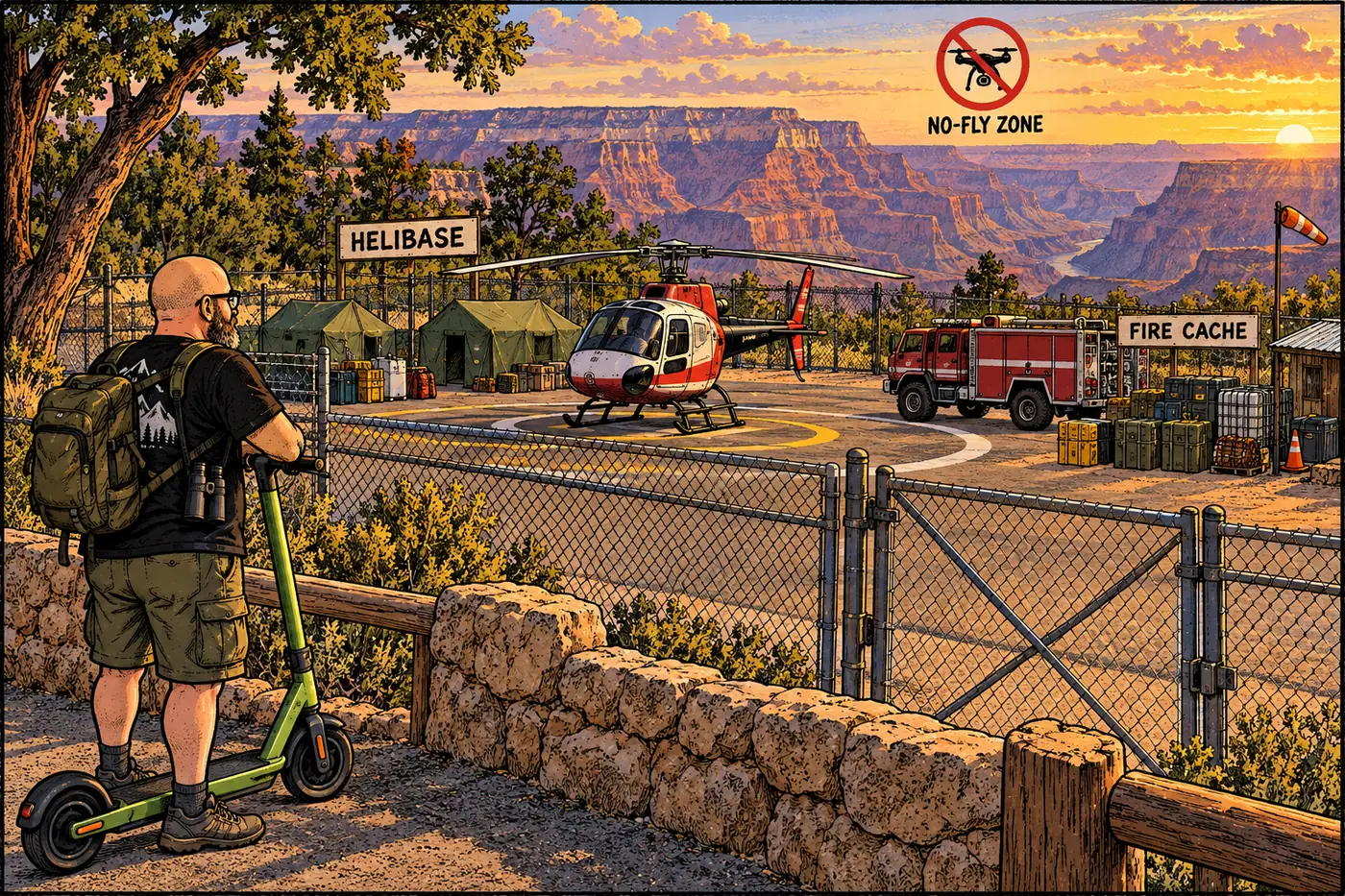
You cannot land a helicopter in Grand Canyon National Park just because you have one. There is exactly one publicly named helistop inside the canyon's closed areas, one South Rim helibase that trains half the country's wildland-fire helitack crews every summer, and a hard federal ban on flying below the rim anywhere else — a rule written in blood after two mid-air collisions killed 153 people between 1956 and 1986.
The short version
- Grand Canyon’s helicopter operations run out of one facility: the South Rim Helibase, inside the park’s fenced Aviation Operations Area near the Maintenance Operations Center and Wildland Fire Base.
- The only helicopter landing site named in the park’s current closure rules is the “attached helistop” at the Roaring Springs Pumphouse — closed to the public along with the rest of that water infrastructure.
- Drones are banned park-wide without written permission, partly so a rescue helicopter never has to dodge one.
- Federal law has restricted flying below the canyon rim since 1988, after back-to-back mid-air collisions in 1956 and 1986 killed a combined 153 people.
- When the Aug. 29, 2026 flash flood hit Bright Angel Canyon, the South Rim Helibase became the hub for a two-day airlift: 13 flights, 61 hikers, one Arizona DPS helicopter running FLIR thermal cameras in the dark.
- Commercial helicopter tourism — the loud kind with landing tours — mostly doesn’t happen inside NPS boundaries anymore. It happens at Whitmore Wash and Grand Canyon West, both on tribal land outside the park.
The South Rim Helibase
Grand Canyon’s helicopter operations are consolidated in one place: the South Rim Helibase, part of the park’s Fire and Aviation complex, tucked inside the fenced Maintenance Operations Center / Wildland Fire Base / Aviation Operations Area (AOA) compound. The Superintendent’s Compendium — the park’s current rulebook — closes that whole compound to public access “to protect government property, files and enhance employee safety.”
The helibase does double duty. Day to day, it’s home to the Grand Canyon Helitack Crew, a wildland-fire unit that also runs one of the National Park Service’s most decorated short-haul rescue programs — in 2015 alone the crew spent 149 days away from the station as the primary medical and short-haul helicopter on large wildfires nationwide, work that earned it the National Wildfire Coordinating Group’s Wildfire EMS Award in 2016. Every summer, the same facility hosts an interagency Helicopter Training Academy: multiple two-week sessions, June through September, teaching helitack certifications to “red-carded” wildland firefighters from agencies across the country. It’s free to attend — trainees camp on-site — but it’s not easy; the academy’s own literature warns candidates to arrive “in great shape” and ready to “fight fire at 7,000 to 9,000 feet.”
One named helistop, and it’s not for you
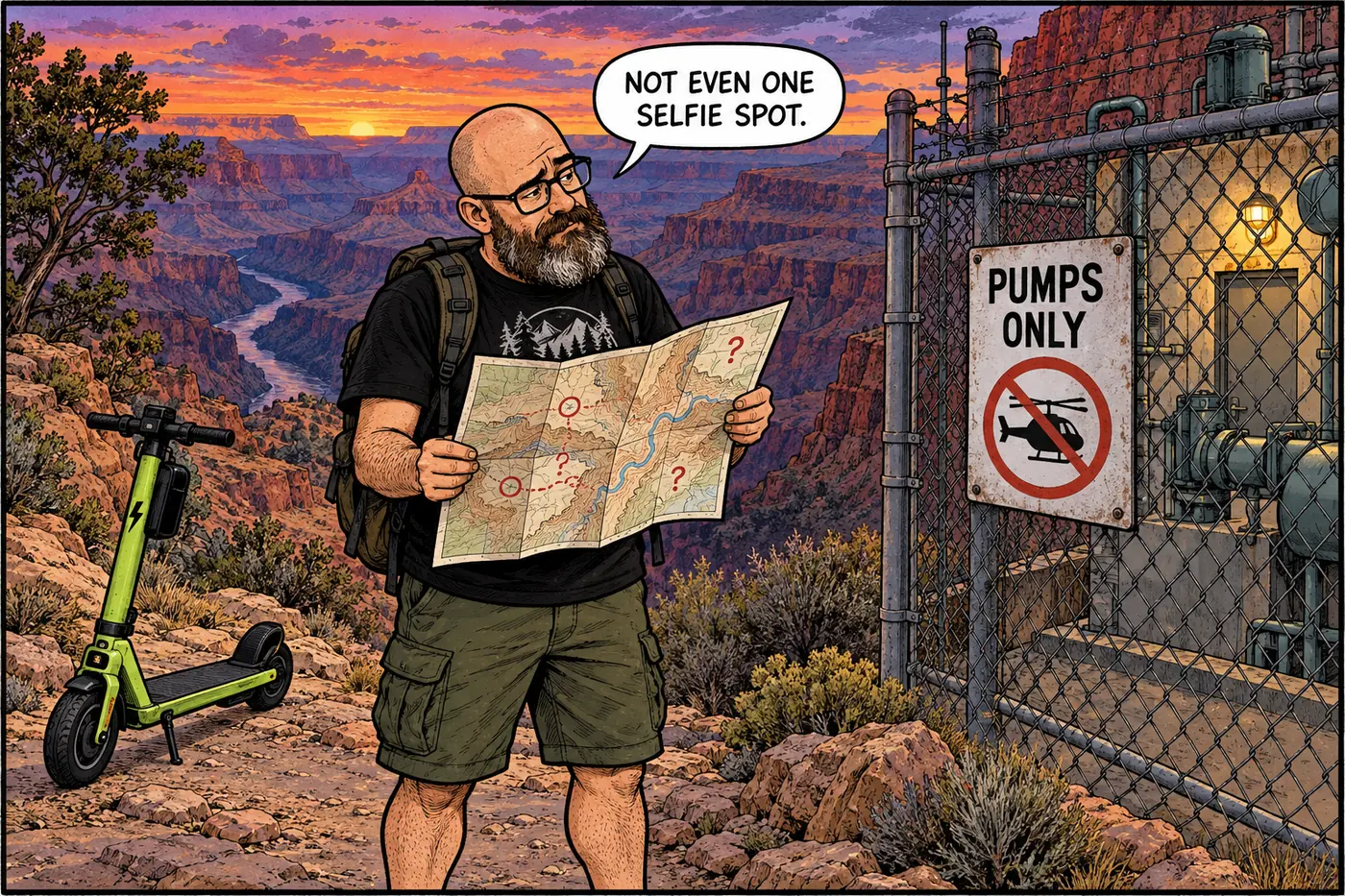
Search the park’s current closure list for a landing pad and you find exactly one: the “attached helistop” at the Roaring Springs Pumphouse, deep in the canyon at the top of Bright Angel Canyon. It’s closed right along with the pumphouse and the rest of the water infrastructure around it — the public has to stay 100 feet back from the whole complex. The reason has nothing to do with the helicopter and everything to do with what it serves: Roaring Springs is the source for the Transcanyon Waterline, the pipeline that has supplied the South Rim’s water for a century, and a helistop there exists to move people and gear in and out for pump maintenance, not sightseeing. (More on Roaring Springs itself at /grand-canyon/roaring-springs/.)
That’s the pattern across the park: where helicopters land, it’s tied to infrastructure or emergency response, not tourism. There’s no public list of “backcountry helispots” at Phantom Ranch, Havasupai Gardens, or Cottonwood Campground in any document found for this page — if informal landing zones exist at those sites for rescue use, the park hasn’t published a map of them, and this page isn’t going to guess at one.
Why you can’t just fly in
Grand Canyon airspace has been fought over twice, both times after people died. On June 30, 1956, a TWA Constellation and a United DC-7 collided over the canyon, killing all 128 people aboard both planes — the crash that, per NPS’s own chronology, helped push Congress to create the FAA the following year. Thirty years later, in June 1986, two sightseeing aircraft collided over the canyon, killing 25. That second crash is the one that actually changed how tour operators fly here: it led directly to the National Parks Overflights Act of 1987, and by June 1988 the FAA had carved out a Special Flight Rules Area over the canyon with four permanent flight-free zones. In 2000, the National Parks Air Tour Management Act pushed the industry further, requiring air tour operators nationwide to move toward quieter aircraft.
The park backs all of that up with its own rule: launching, landing, or flying a drone anywhere inside Grand Canyon National Park requires the superintendent’s written approval, full stop. The compendium is explicit about one of the reasons — keeping the airspace clear for “emergency operations that may include use of the park helicopter.”
What’s actually off-limits (and why)
- Roaring Springs Pumphouse and helistop — closed to public entry, 100-foot buffer, under 36 CFR § 1.5(a)(2). It’s working water infrastructure, not a viewpoint.
- The Aviation Operations Area, Maintenance Operations Center, and Wildland Fire Base compound — fenced or posted, closed to the public, home to the helibase, fueling facilities and the shuttle-bus compound.
- Drone flight anywhere in the park — prohibited without written superintendent approval, in part to protect helicopter operations and visitor safety.
- Flying below the canyon rim — restricted federal airspace since 1988 under the FAA’s Special Flight Rules Area, with narrow exceptions for administrative and emergency flights.
None of this is secret; it’s published in the compendium and in FAA/NPS rulemaking going back decades. What it adds up to is a canyon where almost every legal helicopter landing has a job to do — moving a pump technician, a wildland firefighter, or an injured hiker — rather than a tourist with a view.
When the helibase gets busy: August 2026
The clearest recent demonstration of what this infrastructure is actually for came on August 29-30, 2026, when a flash flood tore through Bright Angel Canyon, destroying nearly all the footbridges across Bright Angel Creek and stranding dozens of hikers around Phantom Ranch and the lower North Kaibab Trail. NPS and the Arizona Department of Public Safety ran a joint air evacuation out of the South Rim Helibase: DPS’s helicopter “Ranger 3,” based in Flagstaff, flew 13 round trips between the canyon floor and the helibase, carrying 61 hikers to safety. After dark on the 29th, crews used FLIR thermal-imaging cameras to locate two stranded hikers at a pair of rock formations known locally as “Tom and Jerry.” By the morning of August 30, NPS reported 62 people evacuated from Phantom Ranch and the lower North Kaibab Trail, with the American Red Cross meeting arrivals at Maswik Lodge on the South Rim. Ranger 3 flew four more flights on September 1 to insert and extract U.S. Border Patrol BORSTAR search personnel and their K-9s, still searching for a missing hiker. Phantom Ranch, Bright Angel Campground and the entire North Kaibab Trail from its trailhead down to Phantom Ranch remained closed “until further notice.”
A mid-air collision over the canyon kills 128; the disaster helps push Congress to create the FAA the following year.
Grand Canyon National Park Airport opens near Tusayan, and commercial air-tour operators begin flying scenic routes from it.
Two sightseeing aircraft collide over the canyon, killing 25, and put congressional pressure on the FAA and NPS to act.
The National Parks Overflights Act (1987) leads to an FAA Special Flight Rules Area with four flight-free zones over the canyon, effective mid-1988.
The National Parks Air Tour Management Act pushes commercial operators nationwide toward quieter aircraft.
The Grand Canyon Helitack Crew, based at the South Rim Helibase, wins the national Wildfire EMS Award for its short-haul rescue program.
A flash flood strands dozens near Phantom Ranch; NPS and Arizona DPS run a 13-flight, 61-person helicopter evacuation from the South Rim Helibase.
Outside the fence: tourism moves to tribal land
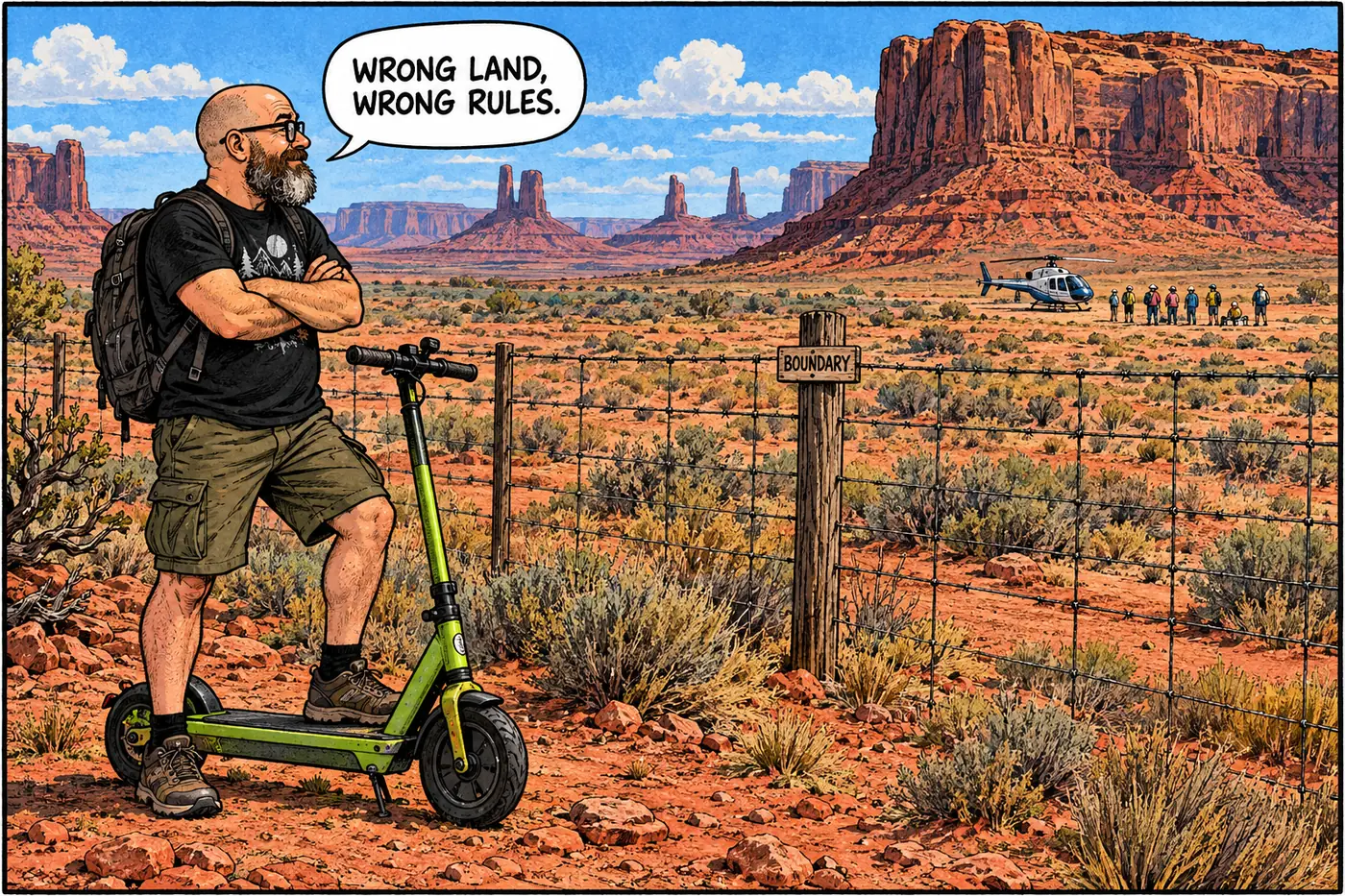
If you’ve seen photos of a helicopter setting down on the canyon floor with sightseers stepping out, that almost certainly wasn’t inside Grand Canyon National Park. Commercial “landing tours” today operate mainly on Hualapai land at Grand Canyon West, outside the park entirely and under tribal jurisdiction, not NPS rules — a genuinely separate destination best understood on the Hualapai Tribe’s own terms rather than as an extension of the national park.
Two other helicopter operations sit just outside NPS boundaries and serve very different purposes. At Whitmore Wash, on Hualapai land along the river, a helicopter pad is used to exchange passengers on multi-day commercial river trips — swapping guests finishing an upper-canyon run for a fresh group starting the lower canyon, with flights generally restricted to before 10 a.m. except on the heaviest exchange days. And at Hualapai Hilltop, a contracted helicopter service shuttles Havasupai tribal members, supplies, and a limited number of permitted visitors down to Supai village — a lifeline for a community that otherwise depends on an 8-mile trail or pack mules for everything that doesn’t fly in. Both operations are described in the operators’ and the tribe’s own public materials; neither is part of Grand Canyon National Park’s aviation system, and this page isn’t the place to detail routes or schedules for tribal lands and infrastructure that aren’t ErrorZap’s to map.
For the park’s own restricted-site inventory, see what’s actually off-limits at the Grand Canyon and why.
Sources
- Helicopter Training Academy — Logistics — National Park Service
- Helicopter Training Academy — FAQs — National Park Service
- Grand Canyon Helitack Receives Prestigious National EMS Award — National Park Service
- Grand Canyon National Park Superintendent's Compendium, effective June 16, 2026 — National Park Service
- Overflights — Chronology of Significant Events — National Park Service
- Arizona Department of Public Safety Air Rescue Assists with Grand Canyon Flood Rescues — Arizona Department of Public Safety
- Significant Flash Flooding Closes Phantom Ranch and North Kaibab Trail — National Park Service
- Whitmore Helicopter Pad and Trail — Western River Expeditions
- Can tourists purchase helicopter flights into and out of Supai Village? — Havasupai Reservations