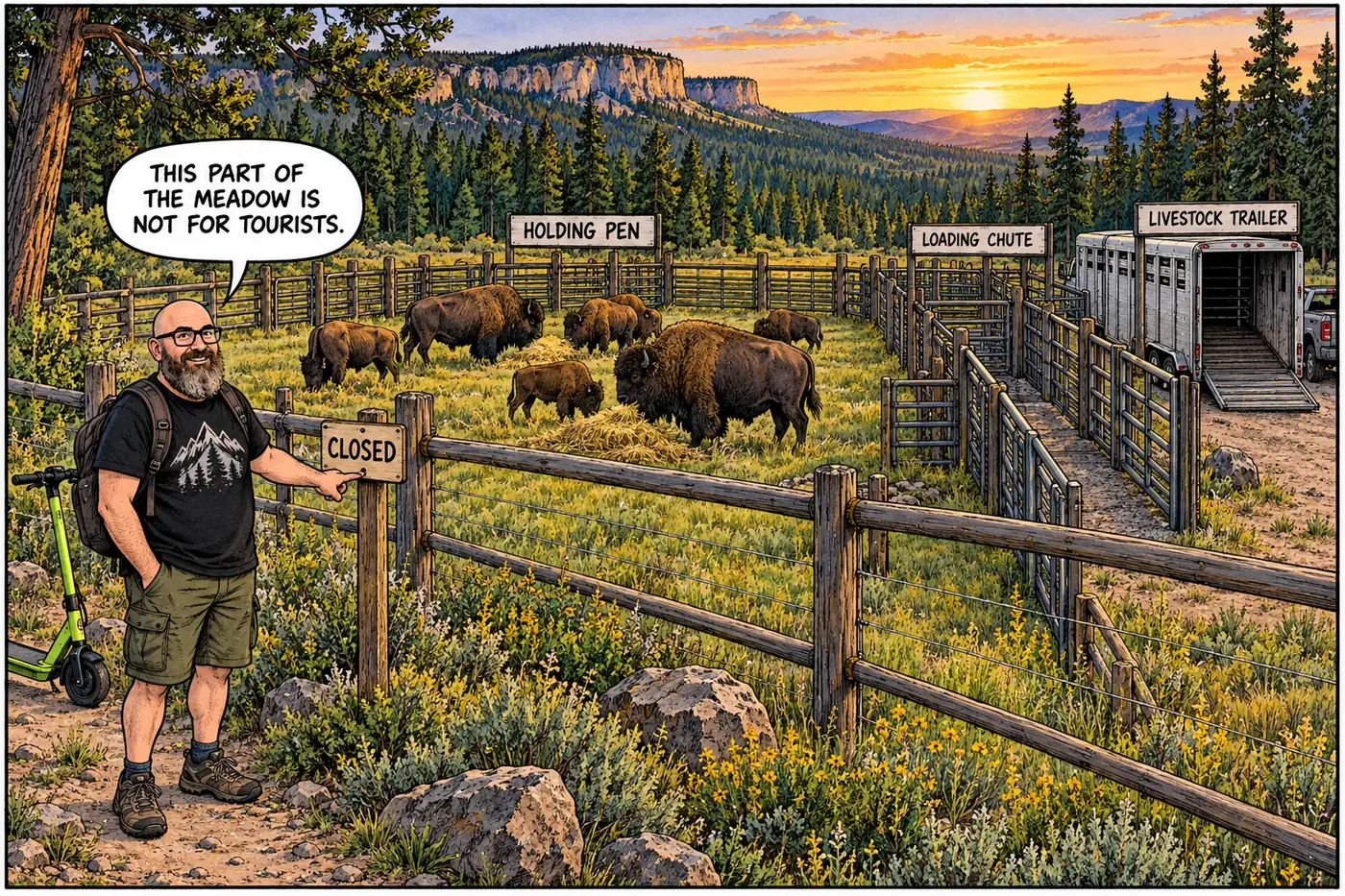
A fenced meadow south of the North Rim entrance holds one of the park's stranger pieces of infrastructure: a livestock corral built to catch wild bison. It exists because a Cold War-era cattle rancher's failed crossbreeding scheme left behind a herd that wasn't supposed to be at the Grand Canyon in the first place.
The short version
- Little Park Meadow, on the North Rim, is closed to all public entry — roadway included — specifically because a live bison-capture facility operates there.
- The bison herd traces back to 1906, when Charles Jesse “Buffalo” Jones trailed 87 animals 175 miles from Utah to the Kaibab Plateau for a failed cattle-crossbreeding venture.
- That herd drifted to House Rock Valley, then migrated onto the North Rim in the 1990s and has lived there mostly since 2010 — now considered non-native to this specific landscape and a threat to vegetation, water, and archaeological sites.
- NPS built the Little Park corral in 2018 after a 2017 federal decision authorized reducing the herd to under 200 animals through live capture and limited lethal removal.
- Since 2018, the park has removed 306 bison from the North Rim, with 282 of them transferred alive to eight tribal nations through the InterTribal Buffalo Council.
- No roundup happened in 2025 because of the Dragon Bravo Fire; as of the most recent public NPS update, the park was still evaluating whether captures would resume in 2026.
How Buffalo Jones’s cattle scheme accidentally saved a bison herd
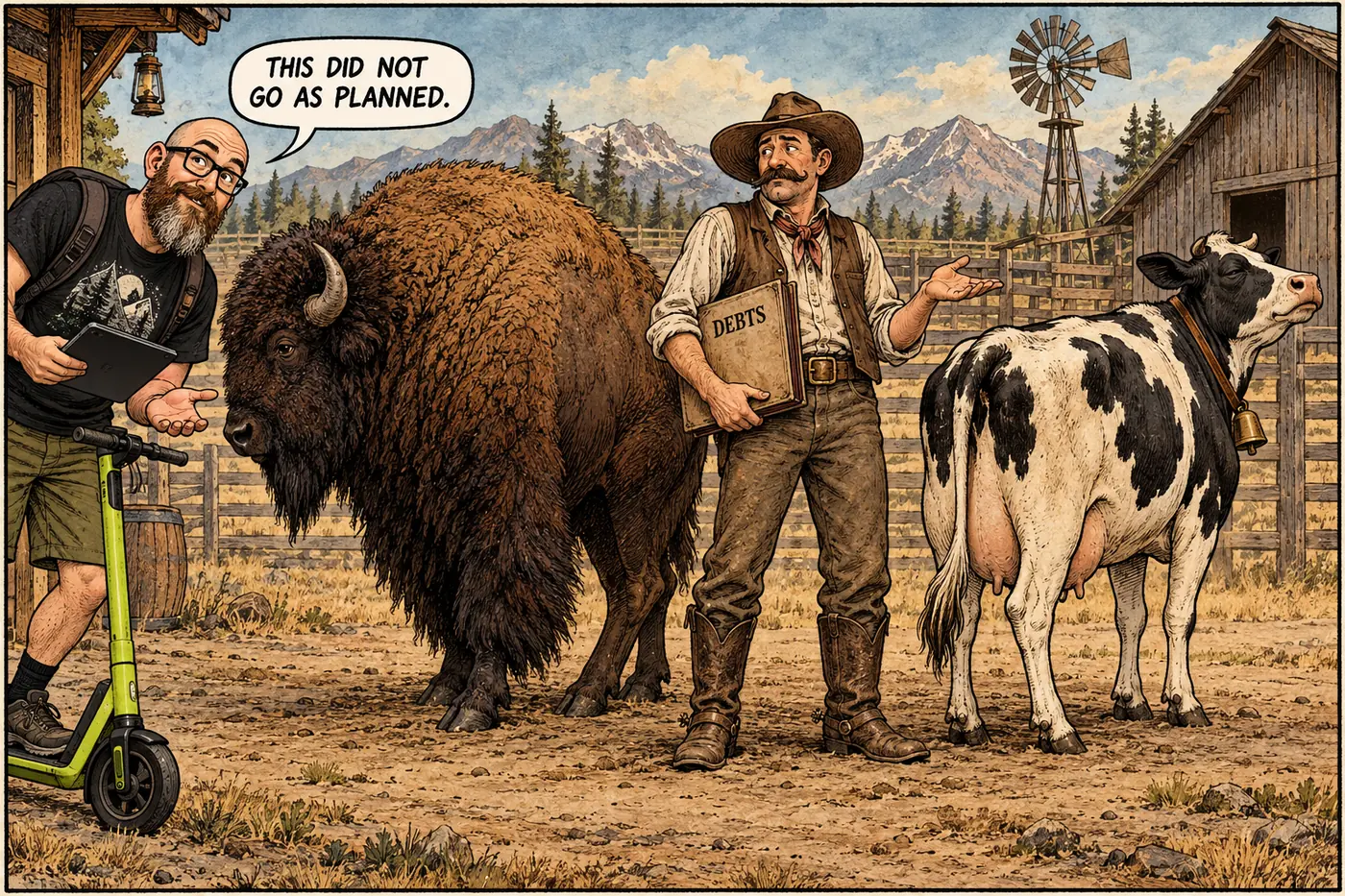
The Kaibab Plateau’s bison were never native to it. They arrived because of one man’s business plan. Charles Jesse “Buffalo” Jones had spent the 1880s catching bison calves from the last wild herds in the Texas panhandle and northeast New Mexico. In 1906 he trailed 87 of those animals roughly 175 miles from Utah to the Kaibab Plateau, intending to crossbreed them with Galloway cattle into a hardier hybrid stock — a “cattalo” venture that was fashionable among a few ranchers at the time.
It didn’t work. The crossbreeding was unsuccessful, and by 1907 or 1908 the operation was bankrupt. Jones drove off the cattle and the more successful-looking hybrids, and in 1909 sold what remained — 15 to 20 bison and bison-cattle crosses — to James T. “Uncle Jimmy” Owens. The herd that resulted from that sale is, genetically, the ancestor of the animals that still range the Kaibab Plateau and North Rim today.
From House Rock Valley to the North Rim
For decades the herd lived well outside the park. It moved down from the Kaibab Plateau’s high meadows into House Rock Valley, and starting in 1929 the Arizona Game and Fish Department managed it there — about 100 animals, inside the House Rock Wildlife Area on Kaibab National Forest land.
That changed in the 1990s. Public hunting pressure, drought, reduced forage, and fire pushed roughly 100 bison to migrate onto Grand Canyon National Park’s North Rim, where hunting isn’t permitted. Since 2010 the herd has lived primarily inside the park. It’s now co-managed by three agencies — Grand Canyon National Park, Arizona Game and Fish, and the Kaibab National Forest — and is described by conservation groups as one of the few unfenced wild bison herds left in the United States.
Why the park wants fewer bison
NPS’s official position is blunt: these bison are non-native to this particular landscape, introduced by one rancher’s failed business venture a little over a century ago, and their growing numbers on the North Rim degrade vegetation, deplete water resources, and damage archaeological and culturally significant sites. The park’s management target is fewer than 200 animals.
Getting there took years of federal process. NPS began a science-based planning effort in 2014, developed with public input and consultation with Arizona wildlife officials and tribes. On September 1, 2017, the Intermountain Regional Director signed a Finding of No Significant Impact for the Initial Bison Herd Reduction Environmental Assessment, authorizing a plan to bring the herd under 200 within five years using a combination of live capture-and-transfer and limited lethal removal.
Building the corral in Little Park Meadow
The tool for the live-capture half of that plan is the facility this page is about. In summer and fall of 2018, NPS contractors designed and built a corral in Little Park Meadow, just south of the park’s North Rim entrance. Ahead of each roundup, staff stock the corral with food and water — partly to acclimate bison to entering it voluntarily, partly to get the animals used to being around people, which makes the actual capture safer for everyone involved.
The Superintendent’s Compendium — the park’s official closure rulebook — treats the surrounding meadow and its access road as fully off-limits, and separately calls out the corral itself, listed under the map code NW-1E as the “Bison Corral Site,” as closed to all visitor use.
The roundups, year by year
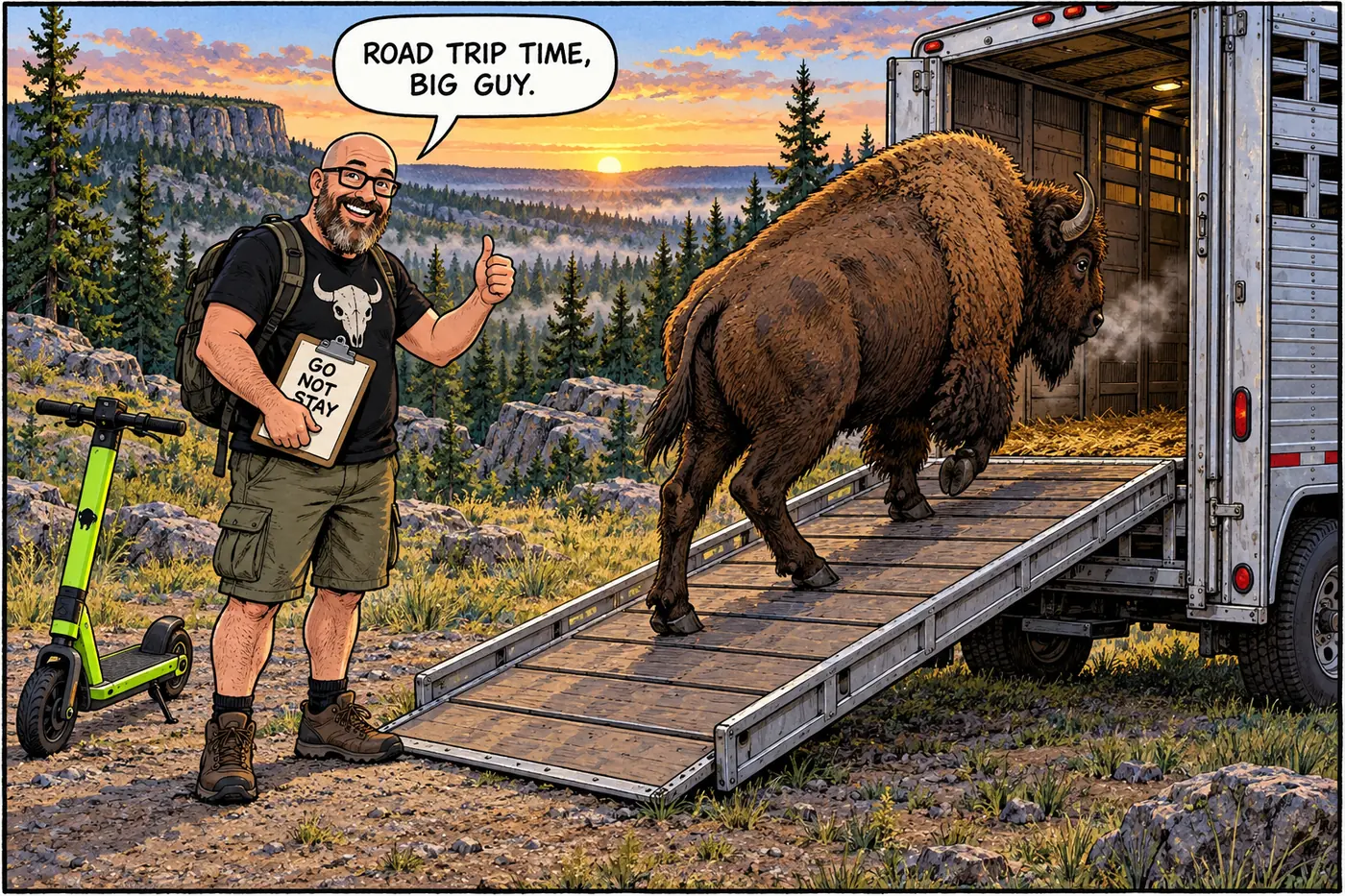
The 2019 season was the first: in September, 31 bison were captured and secured in livestock trailers, then handed off to the InterTribal Buffalo Council, which transported them to the Quapaw Tribe in Oklahoma.
2021 added something new — the park’s first lethal removal effort, run by volunteers rather than park staff, alongside continued live capture. NPS and Arizona Game and Fish sought “skilled volunteers” able to handle work at roughly 8,000 feet elevation; of 25 applicants contacted by mid-May to confirm they met the criteria, 12 were selected. Five bison were culled that season, with the meat and culturally significant parts donated to three federally recognized tribes. Between live capture and the lethal effort, more than 40 bison came off the North Rim in 2021, part of a push to bring the herd from around 600 animals down toward the sub-200 target by 2025.
The largest single roundup on record came September 13, 2024: 100 bison captured and transferred via the InterTribal Buffalo Council to the Cheyenne River Sioux Tribe in South Dakota. That year’s summer population estimate stood at approximately 378 bison. Counting every season since the program began in 2018, the park has removed 306 bison from the North Rim total, with 282 of them transferred alive to eight different tribal nations rather than culled.
A 2024 comment from the park’s bison program manager, Brady Dunne, frames the intent behind all of it: “They are also going to contribute to the genetics of the nationwide bison herd, so this wasn’t just a ‘Yee-haw,’ you know, let’s catch bison for fun. This is a very scientific and well-executed project.”
No live-transfer operations happened in 2025 — the Dragon Bravo Fire got in the way. As of the most recent public NPS update found, the park was still evaluating whether to bring live-capture operations back to the North Rim in 2026. Grand Canyon Conservancy has also been fundraising toward a $250,000 goal to fund annual captures, tribal relocations, and repairs to the capture corral itself, which the Conservancy says needs “significant repairs” to keep staff safe and the program running. Park Superintendent Ed Keable has put the stakes this way: “Supporting this program protects Grand Canyon and provides a great benefit to our tribal partners.”
What’s actually off-limits (and why)
Per the current Superintendent’s Compendium, Lower Little Park Meadow and its roadway are closed to all public entry or use, with the closure perimeter marked by irregularly spaced signs, under 36 CFR § 1.5(a)(2). The park’s stated reasoning is direct: the intentional presence of wildlife in and around the capture facility is a hazard to the public, and keeping people out lets the government run the facility safely and effectively. Both “Lower Little Park (NW-1E)” and “Upper Little Park (NW-2)” also appear separately on the compendium’s North Rim road-closure list. None of this is unusual by park standards — it’s the same regulatory mechanism used for other restricted sites across Grand Canyon — it’s just applied here to keep the public away from a working wildlife-management operation rather than a mine, a pumphouse, or a piece of communications gear.
Buffalo Jones trails 87 bison roughly 175 miles from Utah for a cattle-crossbreeding venture.
The failed venture's remaining 15-20 bison and hybrids are sold to James "Uncle Jimmy" Owens, founding the modern herd.
Arizona Game and Fish starts managing roughly 100 bison in House Rock Valley, Kaibab National Forest.
Hunting pressure, drought, and fire push about 100 bison onto park land, where hunting isn't allowed.
NPS signs a Finding of No Significant Impact authorizing reduction to under 200 bison via capture and limited lethal removal.
NPS contractors construct the Little Park Meadow capture facility south of the North Rim entrance.
31 bison captured and transferred live to the Quapaw Tribe in Oklahoma.
100 bison captured September 13 and transferred to the Cheyenne River Sioux Tribe; 306 removed total since 2018.
Sources
- Grand Canyon National Park Superintendent's Compendium, effective June 16, 2026 — National Park Service
- Bison in Grand Canyon, the Kaibab Plateau Herd — National Park Service
- Bison Conservation, Recovery and Management — Grand Canyon Conservancy
- 100 Bison Transferred from North Rim (2024) — National Park Service
- Bison at Grand Canyon — National Park Service
- In an Annual Effort, Grand Canyon National Park Corrals 100 North Rim Bison, Sending Them to South Dakota — KNAU