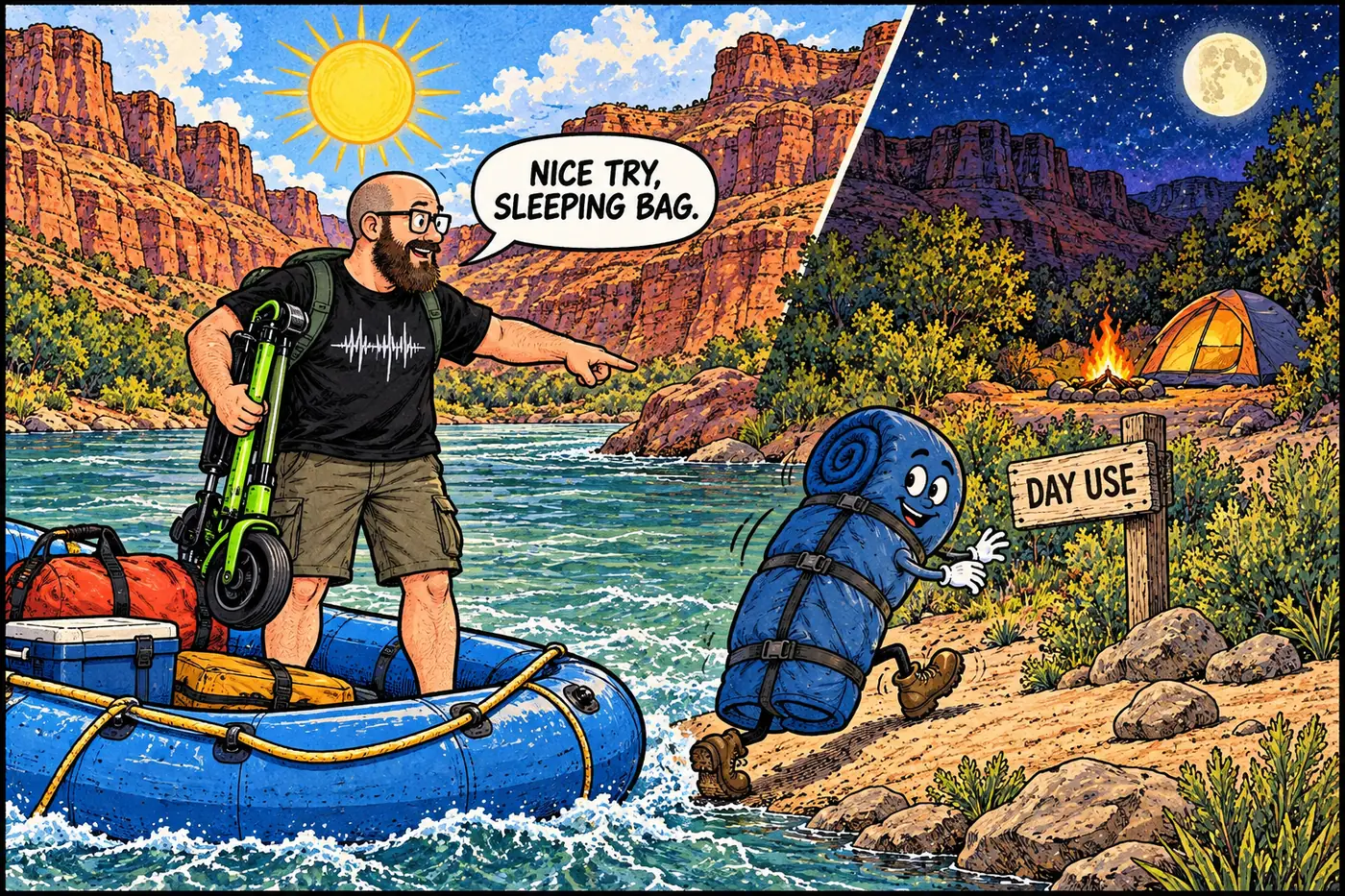
Matkatamiba Canyon is a useful test of the words “closed” and “off-limits.” The park's current rules do not shut out daytime visitors. They shut out overnight camping, twice: once in the backcountry list and again in the rules for river camps. The distinction matters more than a dramatic warning sign would.
The short version
- In the Superintendent’s Compendium effective June 16, 2026, camping is prohibited in Matkatamiba Canyon below the Redwall formation.
- A separate river-trip entry makes the mouth and canyon day-use-only and again prohibits camping.
- Neither Matkatamiba entry says all visitation is forbidden. That is different from some of the park’s true no-visitation closures.
- A backcountry permit for off-river camping does not erase a site-specific camping ban.
- The published Matkatamiba rules do not identify a specific local reason for the ban. Do not convert general canyon hazards into an invented explanation.
Two rules, one overnight answer
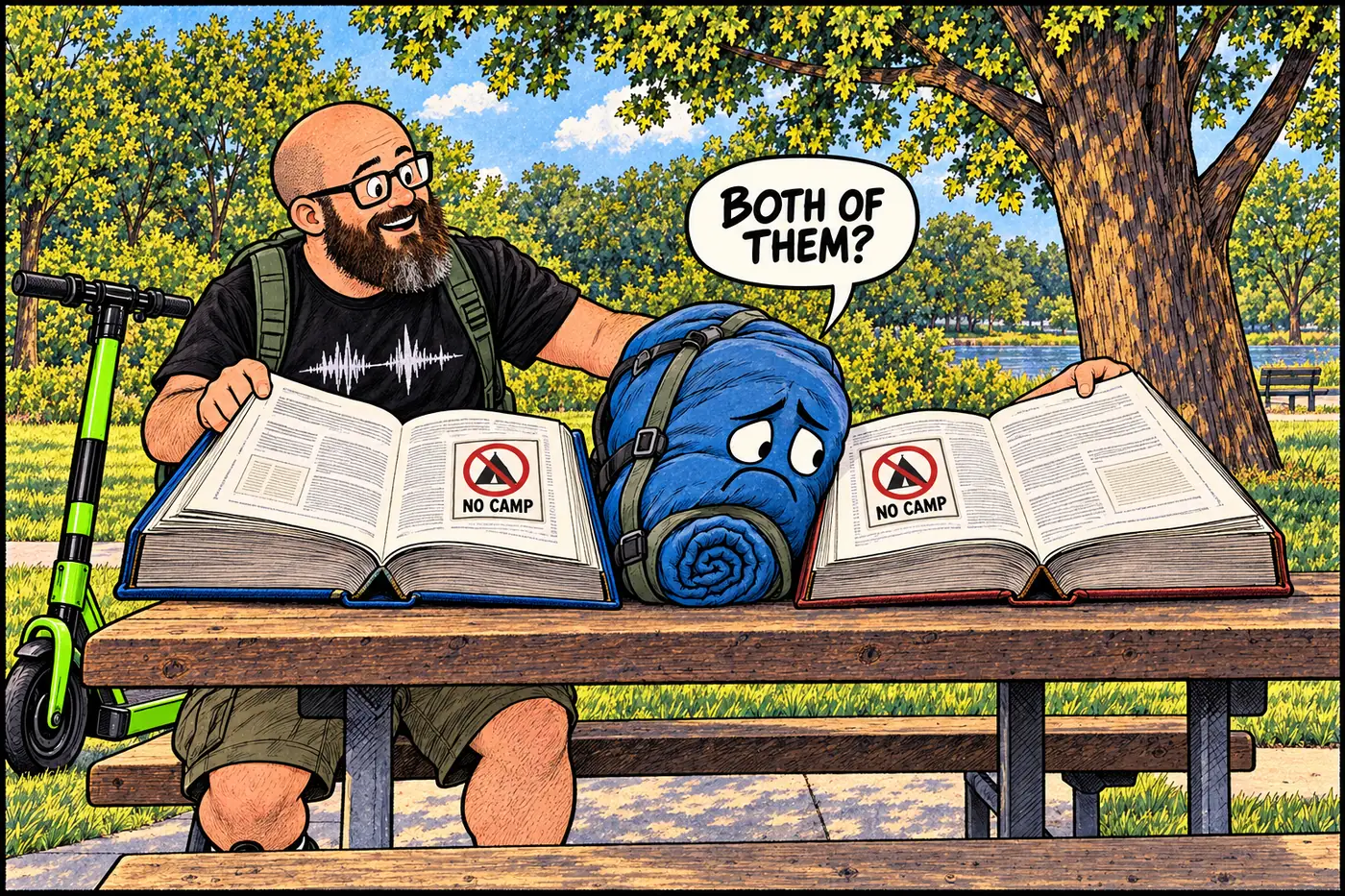
Grand Canyon National Park’s 2026 Superintendent’s Compendium includes Matkatamiba in two lists. Under backcountry camping conditions it says: “Camping is prohibited in Matkatamiba Canyon anywhere below the Redwall formation.” Under river-trip restricted areas it says the canyon mouth and the canyon itself “are day-use areas only” and that “Camping is prohibited.” Those are the operative words. They describe where a visitor cannot spend the night; they do not say that a daytime visit to Matkatamiba is banned.
The two provisions serve different audiences. The first sits in the backcountry camping section, where the park describes overnight conditions for hikers. The second sits in a sequential list of restrictions for river camps. A river trip and a backpacking trip are not interchangeable permits: NPS explicitly requires a backcountry permit for off-river camping by river-trip participants, while its river-trip information describes separate commercial and noncommercial boating arrangements. Neither type of paperwork can turn a prohibited Matkatamiba campsite into an authorized one.
There is a wording wrinkle worth leaving intact. The backcountry entry specifies ground below the Redwall formation. The river-trip entry calls the mouth and canyon day-use-only without restating that geologic boundary. This page cannot decide from those two lines alone how an unusual upper-canyon overnight itinerary would be treated. It can tell you the narrow, clearly documented answer: do not plan to camp in the lower canyon or at its mouth, and check the park’s current instructions for anything less obvious. A boundary in a rulebook is not a challenge to find a loophole.
| Where the rule appears | Park’s Matkatamiba wording | What the wording establishes |
|---|---|---|
| Backcountry camping conditions | “Camping is prohibited … anywhere below the Redwall formation.” | A stated lower-canyon overnight restriction. |
| River-trip restricted areas | “The mouth … and the Canyon itself are day-use areas only … Camping is prohibited.” | No river-trip camp at the mouth or in the canyon. |
What’s actually off-limits (and why)
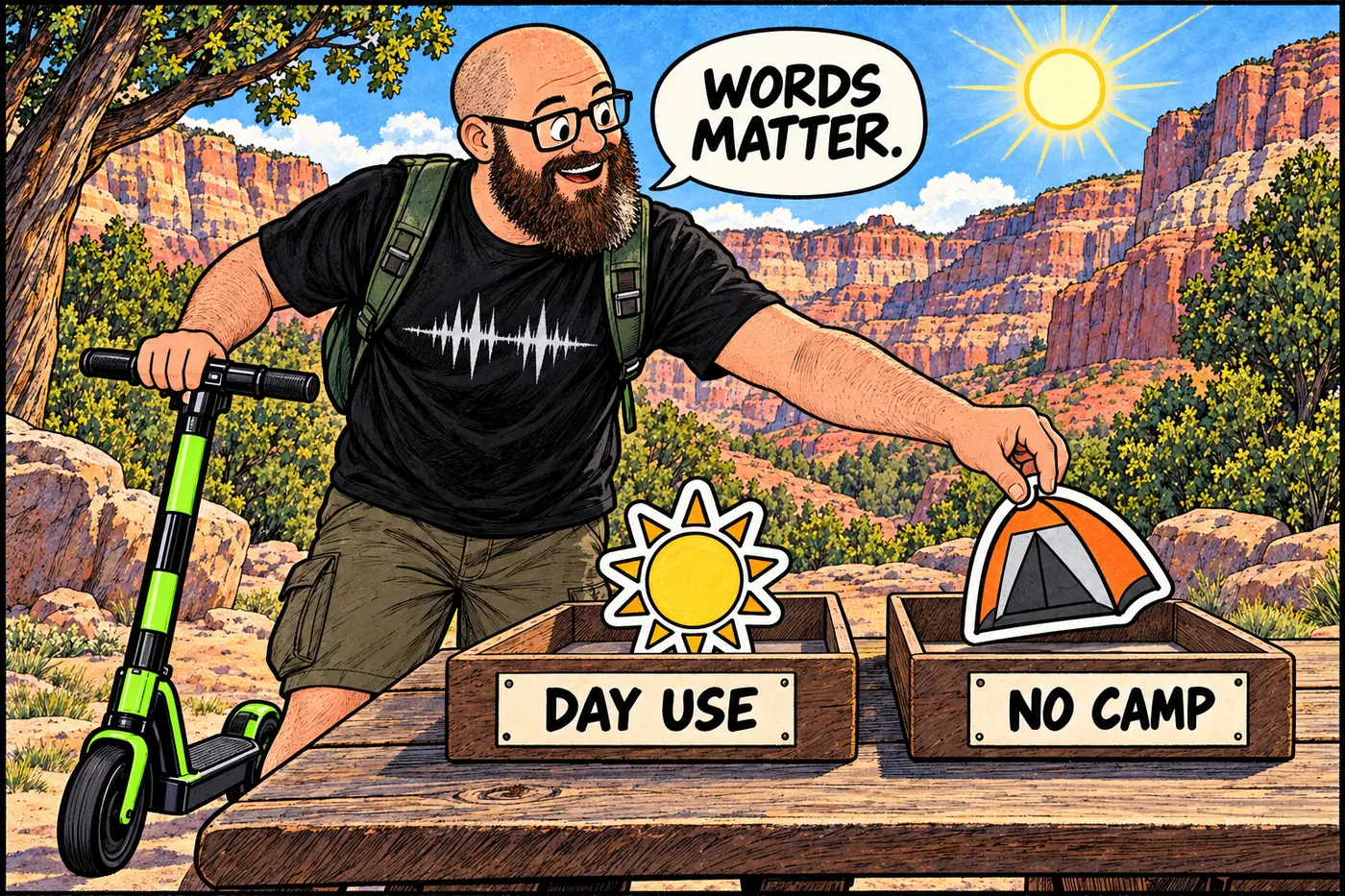
As of September 23, 2026, overnight camping is the activity the compendium rules out here. It does not declare Matkatamiba closed to all visitors during the day. Compare that with the same river-trip list’s plain “No visitation is permitted” language for Furnace Flats and the Hopi Salt Mines. The park knows how to write a complete visitation closure. For an overview of those different categories, see what is off-limits.
What about the why? The published Matkatamiba entries give no site-specific explanation. Elsewhere, NPS explains that it sets backcountry overnight capacities using campsite availability, ecological sensitivity, management zoning and use history. That describes its general decision framework, not a finding about this canyon. A tempting story about flash floods, fragile habitat or an undisclosed archaeological site would be speculation here. There is no need to dress up a clear camping rule with an unproved motive.
USGS research provides useful geological context without solving that policy question. Its 2004 study describes debris flows from Grand Canyon tributaries carrying sediment to the Colorado River and creating rapids. It also emphasizes that the likelihood of a debris flow varies among tributaries. That is a description of a regional physical process, not evidence that a particular Matkatamiba event caused this camping restriction. Geology can explain why river corridors are dynamic. Only a park record could explain this individual rule’s origin.
A small rule with a big distinction
This is the mundane infrastructure of access: a use-area code in one part of a compendium and a day-use instruction in another. NPS divides the wider backcountry into use areas with overnight capacities, and requires permits for camping outside the developed rim campgrounds. In that system, “I have a permit” is the start of checking the details, not the end. The park also says off-river camping by river-trip participants needs a backcountry permit. At Matkatamiba, the named prohibition remains the decisive detail for the lower canyon.
The August 2026 flash flood in Bright Angel Canyon prompted NPS to close campgrounds there; the park’s backcountry page identifies Bright Angel and Cottonwood specifically. It does not say the flood changed Matkatamiba’s status. Those closures should not be pasted onto every side canyon by association. This dossier describes the standing Matkatamiba language in the June 2026 compendium, not a real-time guarantee about any future notice.
The honest summary is short: Matkatamiba is day-use-only where the river rule applies, lower-canyon camping is separately barred under the backcountry rule, and the record consulted here does not establish the original reason or date for either restriction. Not every restricted canyon conceals a facility. Sometimes the hidden infrastructure is just the management line between a visit and a campsite.
Sources
- Grand Canyon National Park Superintendent's Compendium, effective June 16, 2026 — National Park Service
- Backcountry Permit — National Park Service
- Backcountry Trails and Use Areas — National Park Service
- River Trips and Permits — National Park Service
- Frequency and initiation of debris flows in Grand Canyon, Arizona — U.S. Geological Survey