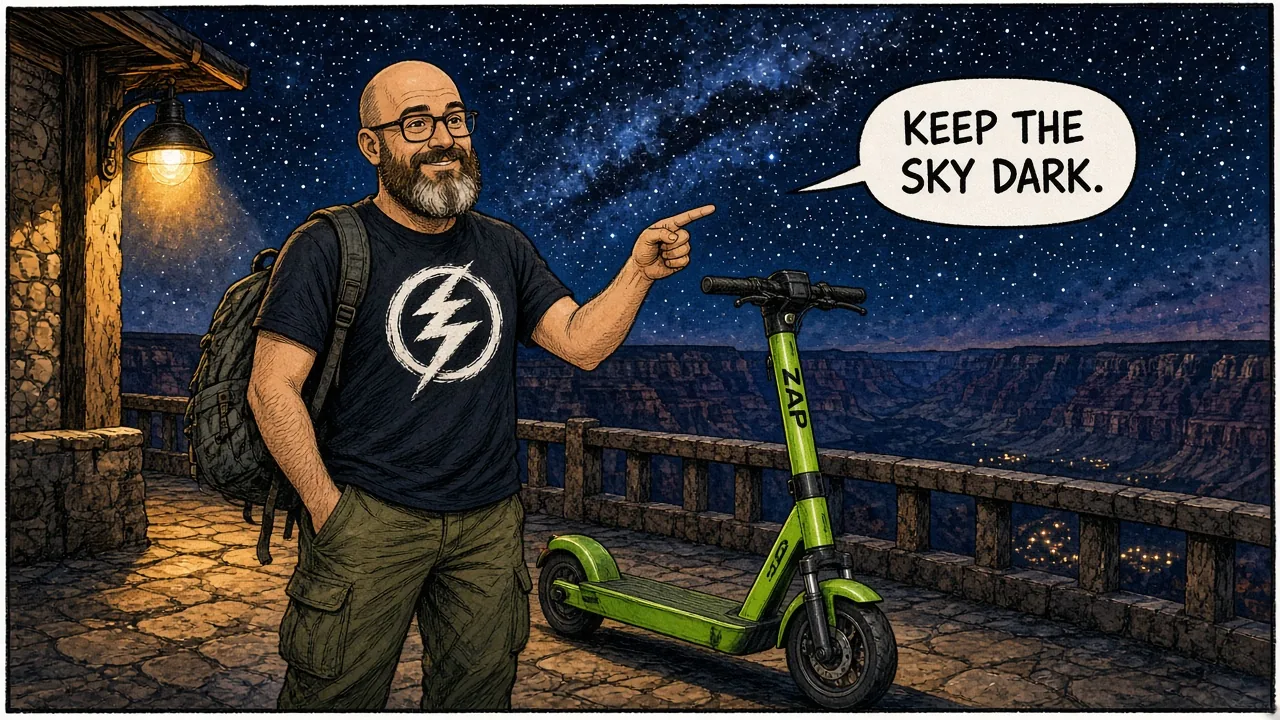
Grand Canyon’s night sky is infrastructure too — or rather, the lighting plant that tries not to erase it. Certified as an International Dark Sky Park in 2019 after retrofitting thousands of fixtures, the park hit about 95% dark-sky-friendly lighting by late 2025. 2026 work aims at Desert View and remaining Village fixtures while Star Party crowds keep growing.
The short version
- NPS announced official International Dark Sky Park certification on June 17, 2019, after a provisional period that began in 2016 with an inventory of over 5,000 exterior fixtures.
- Provisional rules required retrofitting 67% of fixtures to dark-sky compliance for full certification; NPS reported reaching about 69% by late May 2019 (from ~35% already compliant).
- Grand Canyon Conservancy (GCC) funded nearly all of the ambitious retrofit; NPS called the park one of the largest, most complex International Dark Sky Parks.
- GCC’s 2025 project reporting: 95% of park lights dark-sky friendly as of October 2025; 207 fixtures replaced in key South Rim facilities that year; 250 astronomy programs reaching 73,080 visitors; 35th Star Party with 9,616 visitors and 108,861 telescope views.
- 2026 priorities published by GCC: continue toward full compliance (Desert View and remaining Village fixtures), keep sky-quality measurements, host the 36th Star Party (June 6–13, 2026).
- This is lighting retrofit infrastructure. Power plant context: power and electrical infrastructure.
Why outdoor lighting is canyon infrastructure
Most “hidden infrastructure” pages are pipes, radios, or roads. Dark-sky work is the opposite move: remove glare, shield fixtures, warm the color temperature, add timers, and delete lights that do not earn their keep — while keeping paths and buildings safely usable.
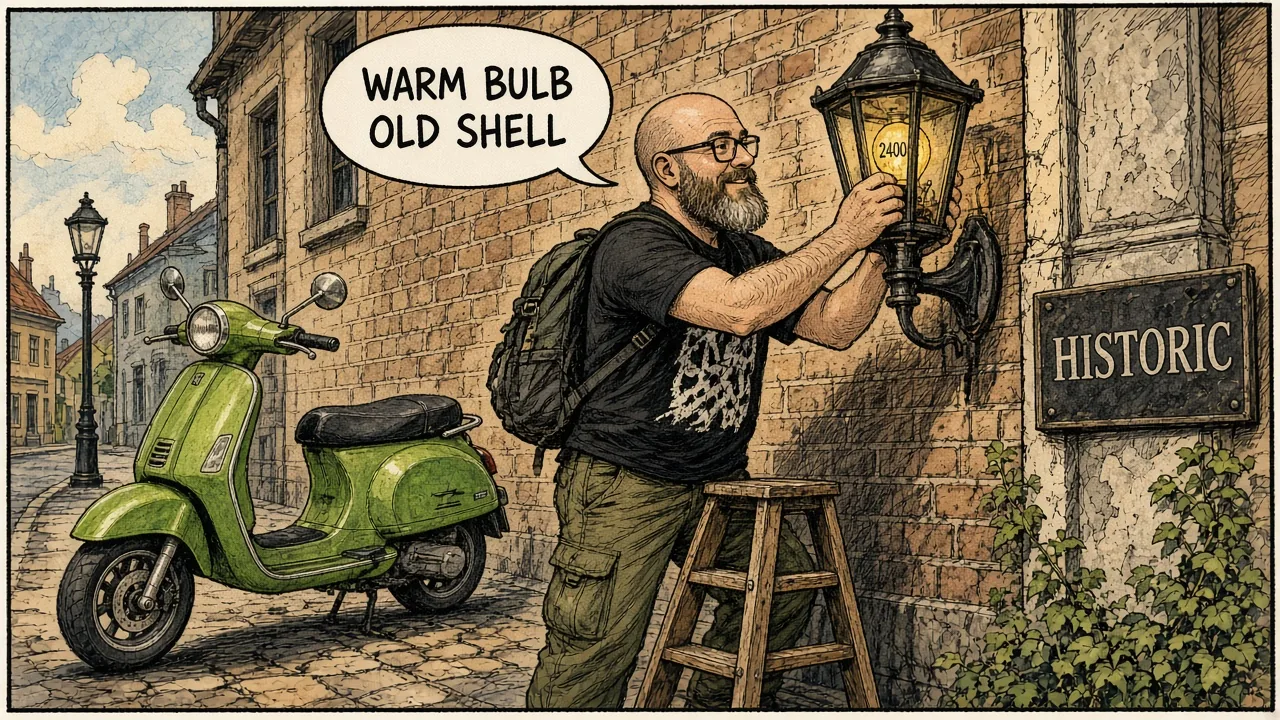
NPS’s 2019 certification release is the origin story. Provisional International Dark Sky status in 2016 came with a three-year clock. Inventories counted more than 5,000 exterior fixtures. Historic Village work required State Historic Preservation Office coordination: about half of 198 Lodge-area fixtures were historic and could not be dismantled, so the park swapped bulbs (often 2400K CCT) inside old housings. Non-historic fixtures got fully shielded replacements or came out. Concessioner Xanterra buildings were retrofitted with GCC-purchased gear and contractor install.
Later phases hit residential neighborhoods, Maswik Lodge, Grand Canyon School, the Recreation Center, and the rest of the Historic Village — more than 1,500 fixtures in those areas alone. Planned next targets at certification time included North Rim, Desert View, Phantom Ranch, and Tuweep on the road to 90% compliance. By 2025–2026, GCC reporting says the park is past that interim goal and sitting near 95%.
What “95% compliant” actually meant in 2025–2026
GCC’s Dark Sky Preservation page (fetched 2026) states that as of October 2025, 95% of park lights are dark-sky friendly, moving toward full compliance. 2025 GCC-supported work included replacing 207 light fixtures at named South Rim nodes: Clinic, HQ, Yavapai Geology Museum, Supai Camp, Museum Collections, Paiute stairwells, Albright, Xanterra Purchasing, and more — plus an extensive night-sky quality study to guide mitigation inside and beyond the park.
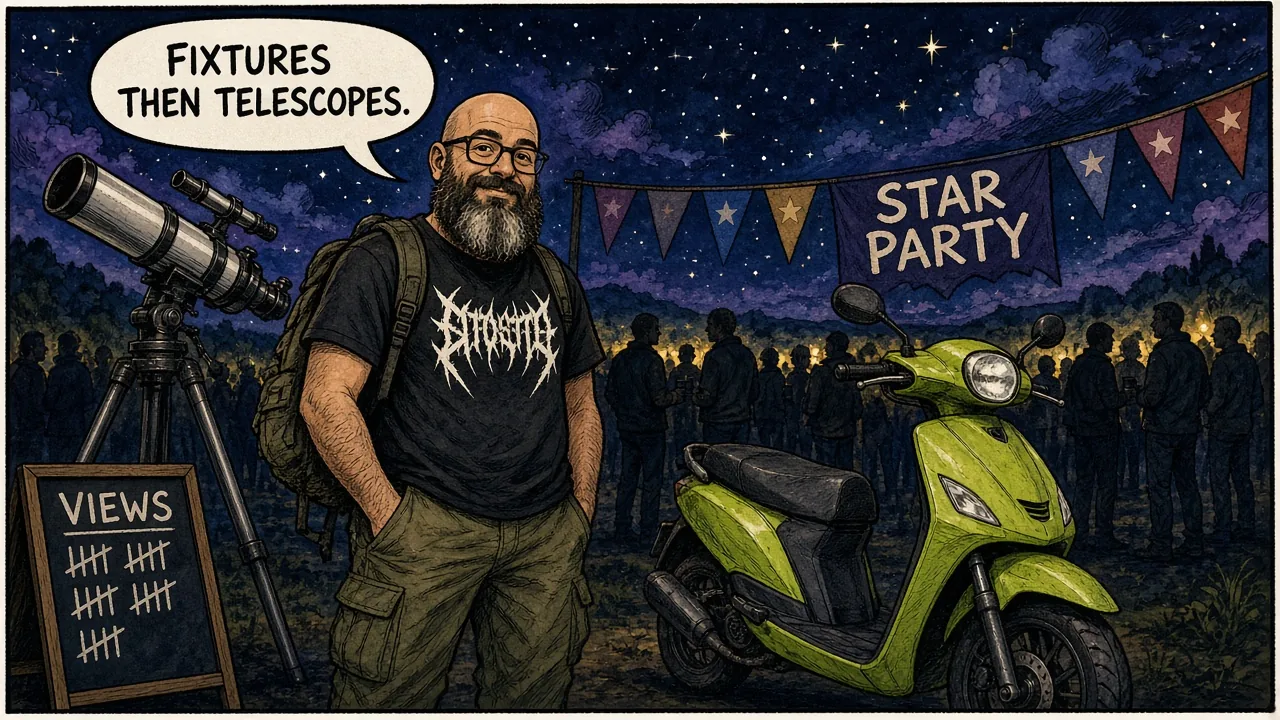
Programming is the other half of the certification bargain. 2025 totals: 250 astronomy programs, 73,080 visitors reached, 178 astronomy volunteers contributing 6,103 hours, and the 35th Annual Grand Canyon Star Party (9,616 visitors; 108,861 telescope views). Superintendent Ed Keable’s published quote frames dark-sky support as visitor-bond infrastructure — awe as a managed resource.
2026 published priorities: upgrade Desert View fixtures and remaining Village fixtures; expand astronomy outreach; continue annual sky-quality measurements required for International Dark-Sky certification; host the 36th Star Party June 6–13, 2026. Social posts in September 2026 repeated the ~95% compliant figure and flagged additional retrofit work still planned that year.
August 2026 flood and Stage 4 water emergency changed daytime South Rim operations; dark-sky retrofit and Star Party planning are separate tracks, but staffing capacity for night programs still rides the same thin workforce covered in GRCA budget and staffing cuts.
Historic fixtures, warm bulbs, and concession partners
The technical pattern is consistent across NPS and GCC materials: fully shielded fixtures where possible; warm CCT bulbs (2400K called out for many historic swaps); timers; removal of unnecessary lights; safety lighting retained. Historic fabric forced bulb-in-fixture solutions rather than rip-and-replace. Concession coordination mattered because lodging and retail exteriors are a big share of rim skyglow.
Certification itself carries no separate legal hammer — NPS was clear in 2019 that IDA certification is a commitment and tourism/education signal, not a new statute. The enforceable piece is ordinary park management plus the practical inventory of what still glows too blue or too high.
Inventory of 5,000+ exterior fixtures; three-year retrofit clock starts.
Historic Village/Lodge, then neighborhoods/school/Maswik; GCC funds nearly all hardware.
NPS: ~69% compliant; ceremony tied to 29th Star Party kickoff.
GCC: October 2025 milestone; major South Rim facility replacements; huge Star Party attendance.
Published 2026 astronomy flagship while Desert View / remaining Village upgrades continue.
Public materials still describe remaining fixture work toward full compliance.
What’s actually off-limits (and why)
- Nothing clandestine — fixture programs and Star Party schedules are public education infrastructure.
- Practical note: night programs still require ordinary park rules, trail sense, and respect for residential/housing areas after hours.
- Why include an off-limits section: dark-sky work is not permission to wander maintenance yards or housing loops with a camera. Stick to public viewpoints and posted programs.