2010
Common Scents
A 240-page book about a young woman seeking physical and emotional safety while living with autism and chemical sensitivity.
Read →
In memory of
Writer. Connector. Friend.
Kate was one of the first people who made me feel that the things I struggled with were not random defects. They formed a pattern. They had names. And I wasn’t the only person living inside them.
We were friends for years—first at a distance, then for one unforgettable week in Maine. I had never done anything like flying across the country to stay with an online friend before. I haven’t done it since. I was nervous, and so was she. We went anyway.
This page is for the person who helped me discover autism, understand my sensory life, and see more clearly who I already was.
The earliest verified contact
I posted a thread called “Just Existing: A Sensory Overdose” under the name Veresae. I wrote about noise, smells, light, clothing, itching, isolation, and the exhaustion of trying to remain calm while too many sensations piled up at once.
Three weeks later, Kate answered as vivreestesperer—French for “to live is to hope.”
“i dont think ive ever related to a post as much as yours. It could have been me writing that so easily.”
— Kate on Wrong Planet, June 3, 2006
My notes saved the thread the next day. By June 9, they already grouped together “Kate,” “clothing,” and “plane flight.” The surviving evidence does not prove the exact first private message, but this is the earliest contact I can verify—and it sounds like the beginning of us.
Recognition across a distance
Before we met in person, the friendship was built from messages: the kind that make an unfamiliar person feel startlingly familiar. We found each other through the details most people dismissed—the fabric that hurt, the sound that would not fade into the background, the amount of work hidden inside an ordinary day.

Who she was
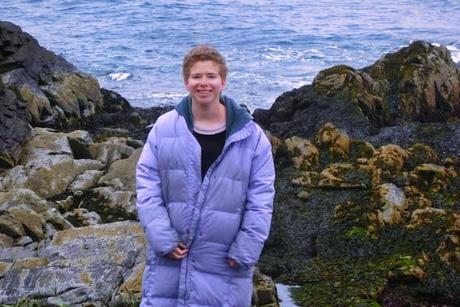
Kate was a Portland, Maine writer whose work joined autism, chemical and sensory sensitivity, loneliness, friendship, asexual identity, community, and the difficult business of being understood. She wrote candidly about the cost of moving through environments that other people experienced as ordinary.
She also wrote about connection: how to make people feel heard, how autistic empathy actually works, and what becomes possible when difference is taken seriously. She loved Maine, ’60s music, female country singers, and—as friends remembered—puns.
The question she helped me ask
In 2011 Kate laid out what she saw in me: sensory problems, intense attention to detail, special interests, social anxiety, difficulty knowing what to do in social situations, and a history of few friendships. She noticed that we got along unusually well and that we both thought outside the usual script.
She did more than recognize a resemblance. When talking to doctors felt impossible, she offered to make calls, ask about insurance, and find someone qualified to assess autism. That practical kindness mattered.
“I will always remember you. one of my first aspie friends.”
— Kate to Justin, June 2015
Colorado → Maine
In the summer of 2006, I flew to Maine to visit Kate. Before the trip, I wrote that we seemed “so similar,” and wondered what I would discover when we finally met. Afterward, Kate wrote that enjoying each other from afar was different from living together around the clock—but also that we were still good friends.
The nerves were real. So was the bond. Years later I kept returning to the visit in our conversations: her family, the house on the lake, Maine itself, and even standing at the airport used in The Langoliers. I told her it was one of the best things I had ever done.

The clothes thing
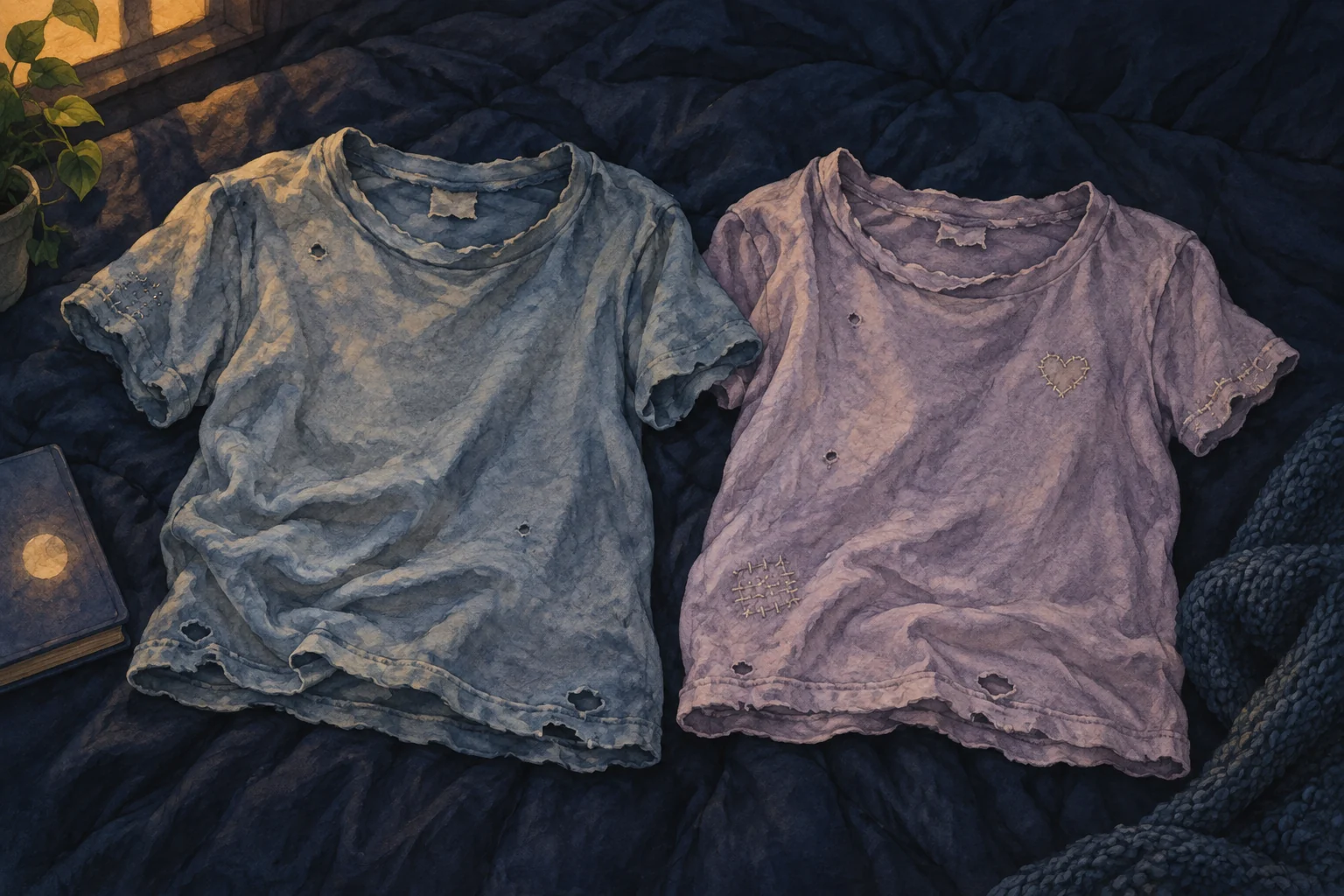
Clothing was never a small preference for either of us. Softness, looseness, seams, static, tags, and fabric could decide whether something was wearable. When one rare tolerable shirt or pair of shorts finally wore through, replacing it meant real stress.
“I got a new shirt.. 4 actually. And I like em. Only you would get how rare that is.”
— Justin to Kate, June 18, 2016
Kate had two or three shirts she could handle. I had worn one shirt and one pair of shorts for years. In September 2016 she told me she had made a joke about “holey pants” and immediately thought of me. After she died, I wrote what was still true: no one understood how much of a battle clothes were until I met her.
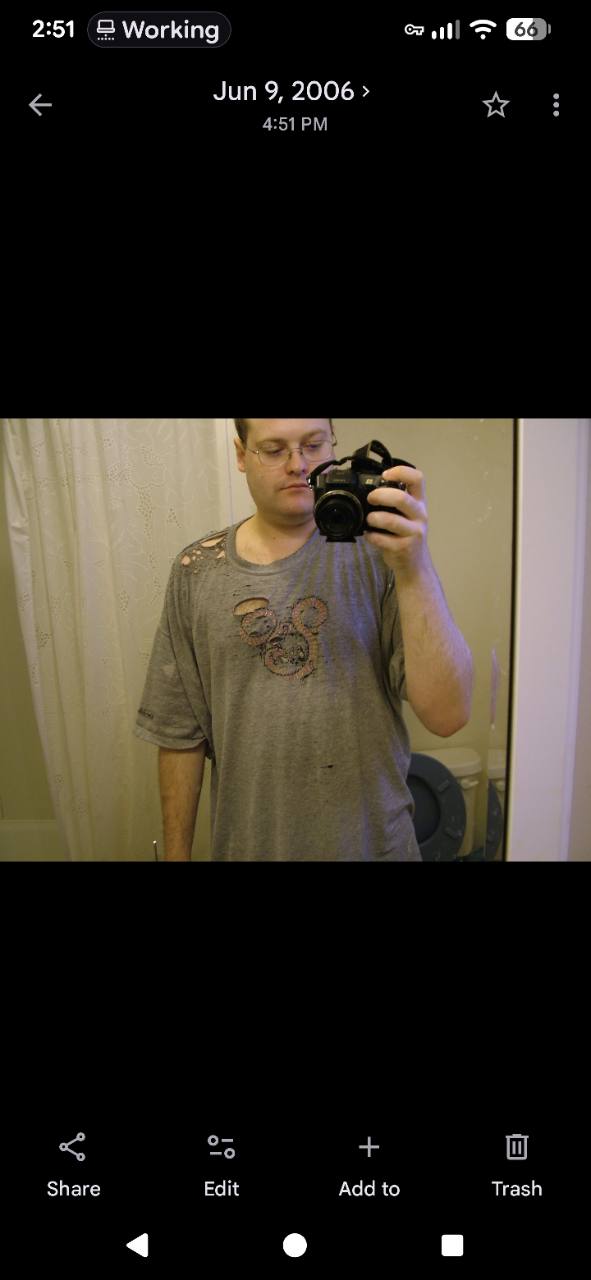
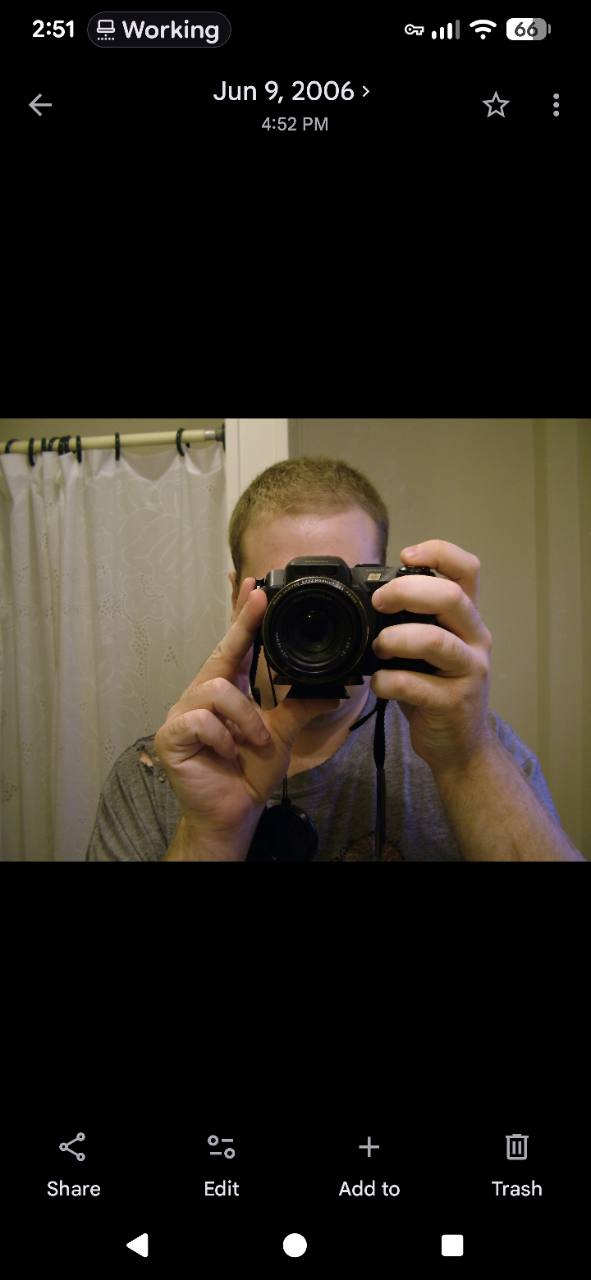
June 9, 2006
On June 9, 2006, I took these mirror photos to show Kate what I meant. The shirt was clean. Cleanliness wasn’t the problem. I could only wear a couple of shirts because the fabric, seams, and tightness could make me feel like I was suffocating. So I kept wearing the few things my body could tolerate, even after they had holes everywhere.
Kate was one of the few people who actually understood that.
In her own public voice
Kate’s 2019 essay for the Portland Press Herald asked Maine to take neurodivergent people seriously—not merely to acknowledge a diagnosis, but to make mental-health care, public spaces, and community life genuinely accessible.
Her earlier writing imagined a world where people did not have to fear being different. That wasn’t an abstract slogan for her. It grew from a life spent negotiating smells, noise, anxiety, misunderstandings, and systems that expected her needs to disappear.
Read her Press Herald essay →Selected work
2010
A 240-page book about a young woman seeking physical and emotional safety while living with autism and chemical sensitivity.
Read →2011–2019
Across 150 public posts, Kate wrote about sensory life, friendship, music, identity, health, humor, community, and Portland.
Read →2011
A humane account of caring for an elderly roommate—and autistic empathy expressed through attention and action.
Read →2015
A moment-by-moment description of entering a museum when light, sound, smell, and social pressure arrive at once.
Read →2019
A Portland cooperative café remembered as one of the rare public places where Kate could enter, belong, and be known.
Read →Archive
A searchable, dated inventory of 342 currently indexed blog and forum posts.
Browse →The public archive
Kate joined Wrong Planet in June 2004. Her profile records 223 posts; 192 remain exposed by the forum’s public search. Her later Aspie from Maine feed contains another 150 posts. The archive makes every currently indexed record searchable by date, title, forum, and excerpt.
Open the complete archive →Still here
Kate died at 37. The exact date and circumstances have not been independently verified, so this page does not pretend otherwise. What can be verified is the work, the years of messages, the visit, and the effect she had on the people who knew her.
“You were my clone and a true friend, and spending a week with you in Maine will always be a top memory.”
— Justin, writing to Kate’s memory in 2023
I still see something that reminds me of Maine, difficult clothes, a smell nobody else seems to notice, or one of the thousand small battles she understood—and I think of Kate.
Built from Kate’s public writing, a friend’s published memorial, and Justin’s archived notes and correspondence. Private contact details and unrelated medical material were deliberately excluded. Short excerpts from personal messages are used only where they document the friendship in Kate’s own voice.
The 2014 photograph is attributed to Kate’s Facebook and Gavin Bollard’s memorial. If you hold rights to it and want the attribution changed, please contact Justin through ErrorZap.