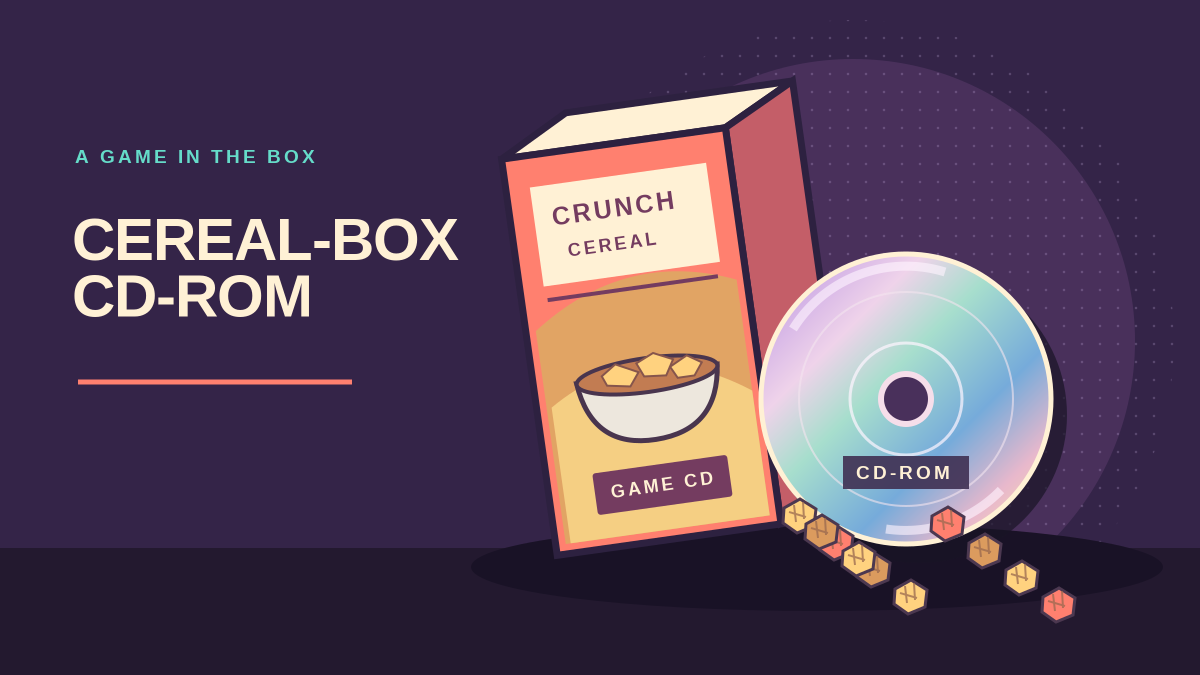
A cereal box already had several jobs. It contained breakfast. It provided something to read while eating breakfast. It occasionally offered an activity that could be completed with a pencil, scissors, and unrealistic parental enthusiasm.
Then Chex Quest proposed an additional responsibility: deliver a space mission.
The cereal aisle had become a software distribution channel. Somewhere, the little maze on the back of another box suddenly looked underfunded.
Please install your breakfast
A game arriving with cereal changed the scale of the prize. A tiny toy could occupy the table. A computer game could occupy the afternoon.
There was an extra thrill in getting something that appeared to belong in a different shop. You had gone looking for a box of food and encountered a reason to negotiate for computer time.
This was marketing, certainly. It was also a wonderfully strange chain of events. An adult could add a perfectly ordinary grocery item to the cart and accidentally authorize an expedition against slime monsters.
The sensible household question was probably whether anybody actually wanted to eat that much cereal. The child had already moved on to system requirements.
A small game with a very specific mission
The Chex Quest project’s own history dates the original five-level release to 1996. Lead artist and level designer Charles Jacobi also describes the cereal-box pack-in arrangement in a firsthand interview about the game’s creation.
The premise committed to its breakfast identity. Its enemies were Flemoids, and its equipment consisted of zorchers. According to the project description, zorching teleported the slime creatures away. The family-friendly presentation made the conflict a matter of sending unwanted visitors to another dimension.
That vocabulary did a surprising amount of work. A space adventure needed equipment, enemies, and a reason to keep moving. The cereal promotion supplied them with the complete confidence of a product that had decided it was now science fiction.
GROCERY PLAN:
  buy cereal -> eat breakfast

UNEXPECTED EXPANSION:
  cereal box -> computer game -> Flemoid problem
                                      |
                                   ZORCH
Five levels gave the original adventure a defined shape. This wasn’t a promise of an endless universe hiding behind the nutrition information. It was a compact trip with its own odd little world.
The surprise was part of the game
Digital storefronts make the connection between wanting a game and obtaining one fairly direct. Cereal-box software took a detour through the pantry. The route was ridiculous enough to become part of the memory.
It also gave the box a temporary second life. Once it had announced that an adventure lived inside, even breakfast packaging could feel like important documentation. You weren’t merely pouring cereal. You were handling the container from which the mission had emerged.
Plenty of promotions asked kids to imagine themselves inside an advertisement. This one gave them a world to move through.
Breakfast had acquired objectives. Fortunately, finishing the bowl remained the easier campaign.
Sources
- Chex Quest 3: About — project history and gameplay description.
- LevelSave: Interview with Chex Quest team member Charles Jacobi — firsthand account of the cereal-box project.