The Great Four-Hour Wait
The ritual began at 11:45 PM on a Tuesday, because that was when the house finally went quiet. We sat in front of our beige CRT monitor, the glow reflecting off our glasses, listening to the dial-up modem scream its familiar handshake song into the telephone line. The goal was simple: download “Wonderwall” by Oasis before school started at 7:30 AM.
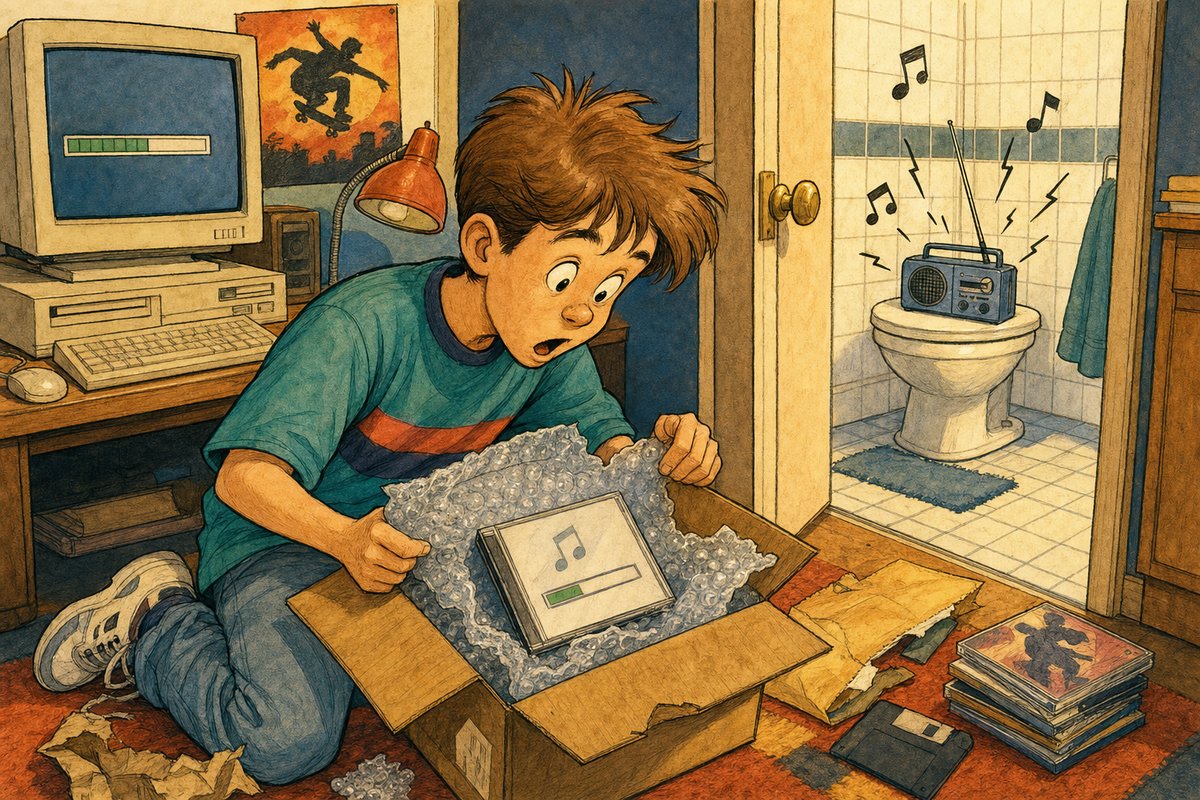
One-panel evidence: the song took four hours, reached 99 percent, and became something recorded from a radio in a bathroom.
We opened Napster, a program that felt like a digital library card catalog mixed with a chaotic phone book. In the search bar, we typed the band name. The list populated instantly, showing dozens of versions uploaded by strangers named Sk8trBoi99 or MusicLvr2002. We picked one at random, mostly because the file size was small and seemed less likely to corrupt halfway through.
The steps were precise:
- Click “Download” next to a track with a decent upload speed estimate.
- Wait while the progress bar creeps forward, pausing frequently as if the computer is thinking about its life choices.
- Do not touch the mouse, do not open another window, and pray the phone doesn’t ring.
The download started at 11:50 PM. By midnight, it was stuck at forty percent. We paced the hallway. At 2:00 AM, we checked again; it had jumped to sixty-five percent. The modem clicked rhythmically in the closet, a mechanical heartbeat syncing with our anxiety. By 4:00 AM, it hit ninety-nine percent and hung there for an hour. We assumed the final one percent was the hardest part of existence itself. When it finally finished at 5:15 AM, we felt a triumph usually reserved for winning wars or finding parking spots in Manhattan.
Here is what we thought: The computer was pulling the song from a giant central warehouse where all music lived, sorting through boxes until it found our specific track and handed it to us via a tiny straw. We imagined a clerk named Steve physically running the MP3 file down a hallway to our house because Napster told him which neighbor had the tape.
In reality, Napster used central indexing to help users discover MP3 files that were transferred directly between peers. The program kept a list of what everyone was sharing, acting like a directory, but the actual data traveled straight from my friend’s hard drive in Ohio to mine in New Jersey without passing through a main server. We weren’t downloading from a warehouse; we were borrowing from a neighbor who hadn’t locked his door.
 [INDEX]  says who has it
    |
    v
 [YOU] <==========> [STRANGER]
          MP3
      please stay online
When the file finally played, it might be the right song, the wrong version, or something recorded from a radio in a room with heroic acoustics. The central index helped us find a peer. It could not make that peer’s file honest, complete, or beautifully labeled.
Now a song arrives before I have time to distrust the filename.