You Were Away. You Were Right There.
You remember the door-opening sound.
Someone came online.
Not into the room.
Not onto the internet.
Into your Buddy List, which was much more important.
Then came the away message.
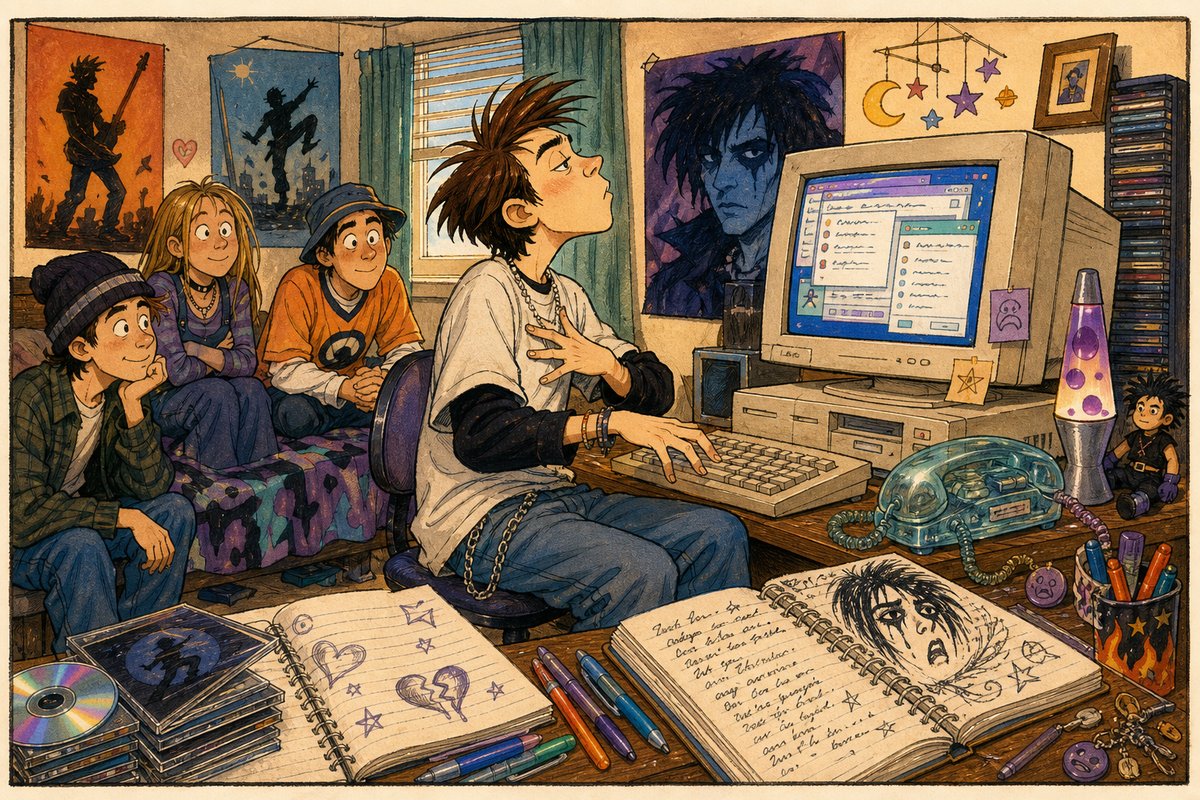
Fourteen words of copied song lyrics. Seven separate cries for help.
Away messages began as a practical answer: “I left the computer, so do not expect an immediate reply.”
Teenagers saw this useful feature and correctly turned it into theater.
Your message could be:
- a song lyric with one line capitalized for a specific person
- “shower” posted with the gravity of a press conference
- a private joke displayed to every human you knew
- “I know who my real friends are”
- an elaborate claim that you were out living wildly while physically waiting beside the monitor to see who responded
Here is what the software actually knew:
Very little.
Instant messaging introduced presence: a small piece of shared state that said a person was online, idle, away, busy, or offline. The client kept a connection to the service, and the service distributed status changes to people allowed to see them.
   [ YOU ] ---- status: AWAY ----> [ SERVER ]
                                         |
                    +--------------------+------------------+
                    v                    v                  v
                [friend 1]          [crush]          [that one cousin]
                 sees it           REALLY sees it      also sees it
The away message added human explanation to machine state.
The machine said: not active.
You said: The stars understand what you did, Kevin.
That tiny feature became the ancestor of status lines, custom Slack messages, “Do Not Disturb,” read receipts, green dots, typing indicators, and every app that tattles when you were “active 3m ago.”
We gained context.
We also created an arms race of social surveillance.
If your friend was away, fine.
If your friend was away but changed the away message, they were at the computer.
If they were at the computer and not answering you, the United Nations needed to be notified.
The modern internet did not invent oversharing.
It merely removed the character limit from the away message.