The Shiny Trivet of Regret
The ritual began with the holy trinity: a stack of blank CD-Rs in their slim jewel cases, the beige plastic box of the external drive, and the single, sacred moment when you pressed “Write.” We were alchemists of light and plastic, turning digital noise into physical artifacts. The room would darken as if for a theater premiere. The laser inside the drive hummed with the intensity of a small sun. We watched the progress bar crawl across the screen, holding our breath like we were defusing a bomb or watching a medical procedure on ER.
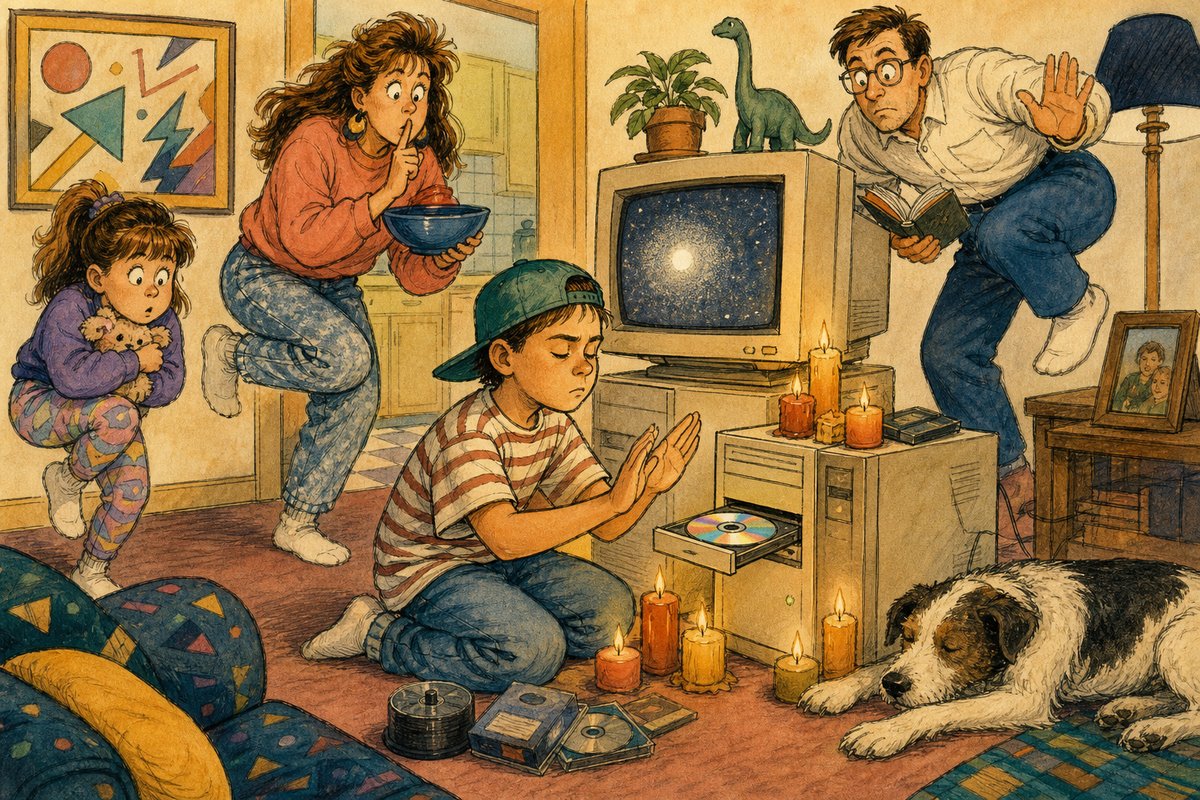
One-panel evidence: one buffer underrun turned a precious blank disc into a shiny drink accessory.
The steps were simple but fraught with peril:
- Arrange three coasters in a triangle to protect the desk from heat and scratches.
- Insert the blank disc into the tray until it clicked with satisfying resistance.
- Hit “Write” and immediately retreat to the kitchen to see if anyone wanted juice.
We believed we were creating something permanent. A mix tape for the soul. A library of our taste. But the drive was a temperamental beast, prone to tantrums if you so much as opened another window. The fear wasn’t that the song would be bad; it was that the disc would become useless before the track even finished burning. We treated every blank CD like a limited-edition vinyl, though we knew deep down they were just cheap polycarbonate with a dye layer.
Here is what we thought: That if we didn’t touch the mouse, if we didn’t play Solitaire, if we kept our hands in our pockets, the laser would do its job perfectly. We imagined the data flowing like water into a glass, filling it up drop by digital drop. If the stream stopped, even for a second, the whole thing would shatter. It was magic, really. A continuous beam of light encoding our love letters and MP3s onto a spinning disc.
The drama peaked when the progress bar was almost finished. You’d walk back in from the kitchen, heart pounding, expecting triumph. Instead, you’d see an error message or, worse, silence. If the computer could not keep data arriving fast enough, the write buffer could empty and the recording session could fail. The disc came out looking perfect and behaving like a tiny silver accusation.
We lived in fear of the buffer underrun. Early CD-R writing required a continuous data stream; an emptied write buffer could ruin the session before buffer-underrun protection became common. Once that write failed, starting the same session over on the same blank was generally not the rescue plan. The casualty went into a drawer as a monument to one badly timed click.
Eventually, we stopped caring about the perfection of the burn and started using the ruined discs for what they were best at: protecting our wooden tables from cold glasses of soda. We became masters of the coaster craft, stacking the shiny, unplayable discs into neat towers on our desks. They caught condensation rings like tiny mirrors, reflecting the glow of the CRT monitor.
   _______
  /       \
 |  O   O  |
 |    >    |
  \_______/
      |
     _|_
Now my CDs are just expensive coasters, and I still check if they’re wet before I put them down.