The Three-Second Name Sprint
The house phone sat on the kitchen counter like a silent judge. It was Tuesday evening, and I had exactly three seconds to convince my mother that she owed me money. The red light blinked. The machine hummed. I leaned in close, my breath fogging the plastic casing slightly, and delivered my line with the precision of a professional golfer addressing a tricky putt.
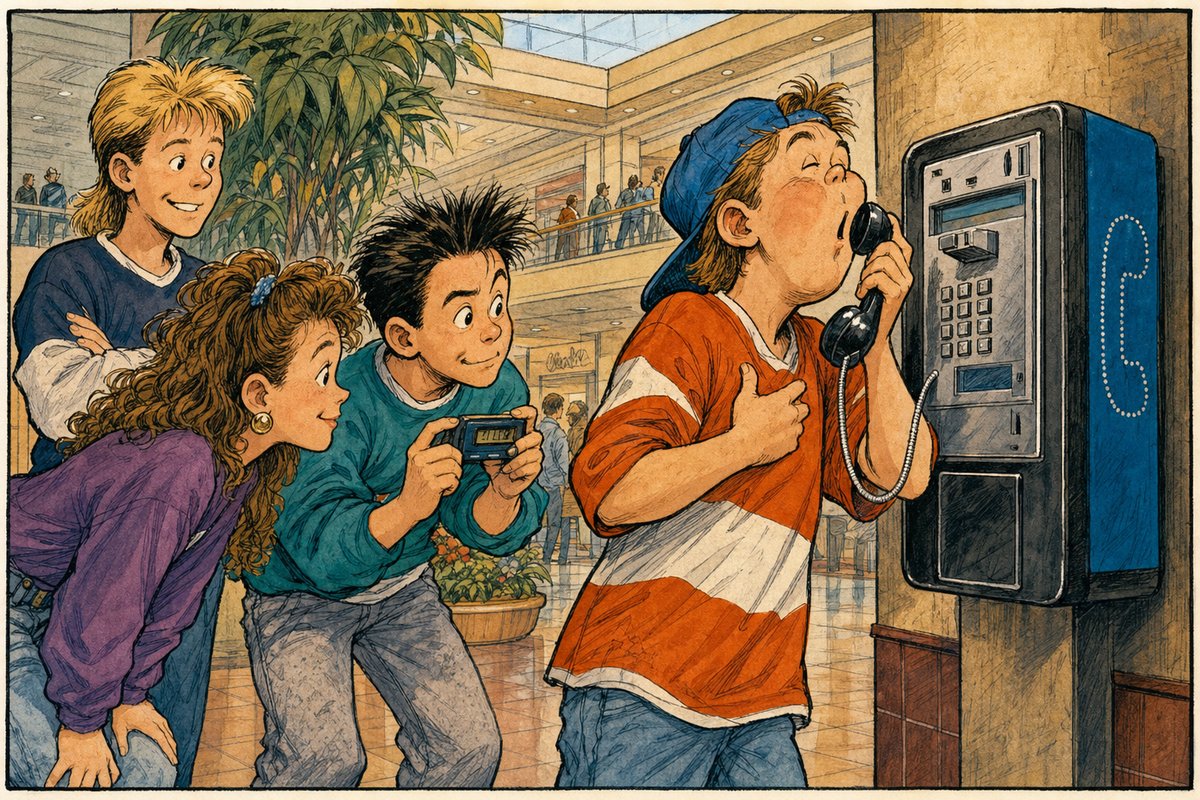
One-panel evidence: you had three seconds to turn your name into an entire free message.
“Hi Mom, it’s Tyler here.”
If I stumbled over “Tyler,” if I said “Tyle-er” or paused too long for “here,” the message would cut off. The system didn’t have patience for casual conversation. It was a binary gatekeeper: accept me, or reject me. If she rejected the charge, I got nothing but silence until I tried again. If she accepted, I had perhaps ten seconds to say something substantive before the automated voice reclaimed control. “Please leave your message after the tone.”
The ritual was precise and high-stakes:
- Dial the area code (always with a one) and wait for the long beep.
- Speak your name clearly into the receiver’s mouthpiece.
- Hold your breath while the machine processed the audio signature.
We treated this like a vault combination lock. A mumbled “Hey Mom” often failed because the system couldn’t match it to the known recipient’s file. You had to enunciate. You had to sound official. You were essentially signing a digital contract with your voice.
Here is what we thought: The machine was listening for our identity like a bouncer checking IDs at an exclusive club. If our name matched the caller ID database, the call went through; if not, it bounced back. We imagined there was a tiny clerk inside the phone, nodding along as we spoke, stamping “Approved” on our personal file before connecting us to Mom. We didn’t know about digital audio fingerprints or waveform matching algorithms. We just knew that saying “Tyler” clearly meant free cookies later, while saying “Tye-ler” meant I had to call back and hope she picked up the second time around. It was a simple trust exercise between us and the technology: tell it who you are quickly, and it lets you talk to who you love.
  _______
 /       \
|  MIC   |
| (•)    |
 \_______/
    |||
   VVVV
 "TYLER" -> MATCH!
The collect call was the original free trial of communication. You paid for the connection only if you liked what you heard. It taught us that our names had value, and that clarity was a virtue worth defending against an automated gatekeeper who didn’t care about our feelings, only our billing status.