The Digital Waiting Room That Didn’t Care About Your Feelings
The ritual began with the familiar, reassuring hum of the modem handshake. It was a sound that meant we were about to enter a different world, one defined by scrolling text and the occasional beep. I would sit cross-legged on the carpet, my hand hovering over the mouse or keyboard, waiting for the connection to establish. The screen would go black, then white, then filled with ASCII art logos that looked like they had been drawn by someone who loved geometry but hated comfort.
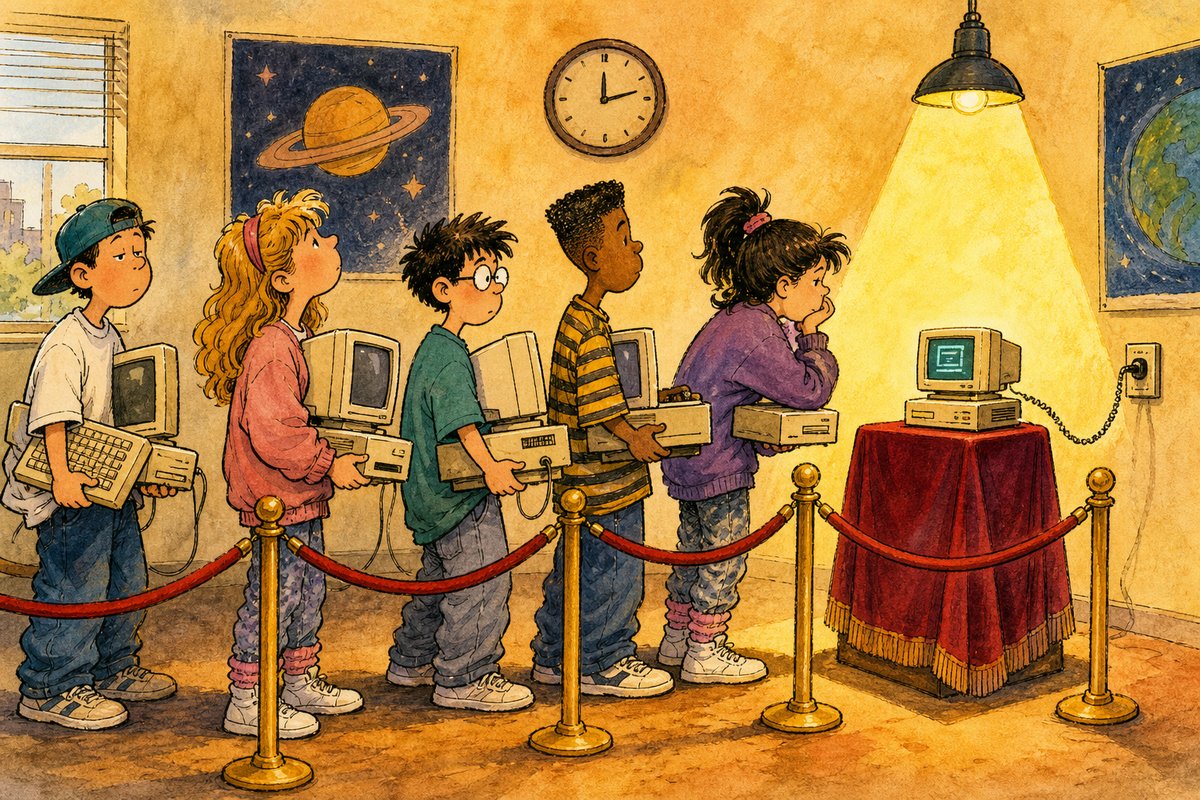
One-panel evidence: your computer called another computer that might allow exactly one visitor at a time.
Before we could dive into the digital ether, there was a specific sequence of events that every 90s kid knew by heart:
- Open the communication software and dial the number.
- Wait for the screeching symphony to resolve into silence.
- Read the login prompt while holding your breath.
- Type in your handle and hope no one else was there.
The magic happened when the line finally opened. The computer on the other end was just another box in someone’s living room, but it felt like a portal. We were connecting to a bulletin board system (BBS). This was not the cloud; this was a physical place you called into. You could read messages left by others, download files that were essentially small packages of digital treasure, play simple text-based games, or chat with people in real-time. It was a community hub before social media existed, built entirely on telephone lines and patience.
Here is what we thought: That the BBS was a exclusive club where only the coolest kids got in. We imagined that if you called during peak hours, you might get bumped by someone more important. We treated our login names like precious jewelry, carefully crafting them with underscores and numbers to look mysterious. We believed that the person running the board held ultimate power, deciding who could post what and when. In reality, it was just a server with limited ports, but the feeling of exclusivity was real.
The true magic lay in the limitation. Unlike today’s infinite internet, these boards had a strict line count. This meant they accepted modem calls from a fixed number of users at any given time. If you dialed and got a busy signal, it wasn’t because the website crashed; it was because someone else was already chatting about Star Wars fan fiction in the main room. You had to wait, listen to the dial tone, and try again. This constraint created a sense of urgency and community. Everyone knew everyone else’s handle because there were only so many people on the board at once. It forced interactions to be deliberate and personal.
The experience was slow, but it felt substantial. Every byte mattered. You didn’t just scroll past content; you waited for it to appear line by line. This pacing made the information feel more valuable. When you finally logged off, there was a sense of accomplishment, like you had visited a place rather than just opened an app.
   _    _  _____
  / \  | ||_   _|
 / _ \ | | | |
/_/ \_\|_| |_|

[1] Read Messages
[2] Download Files
[3] Play Game
[4] Chat with Admin

User: ?
The best part was never the technology; it was the relief of finally getting through when you saw that green “Connected” message.