The DJ Who Only Knew One Beat
We would sit in the dark of our parents’ study, waiting for the computer to wake up. It was a heavy, beige tower that hummed like a refrigerator having a mild existential crisis. We didn’t need a monitor yet; we just needed the noise. The ritual began with flipping the power switch on the wall unit. Then came the moment: BEEP.
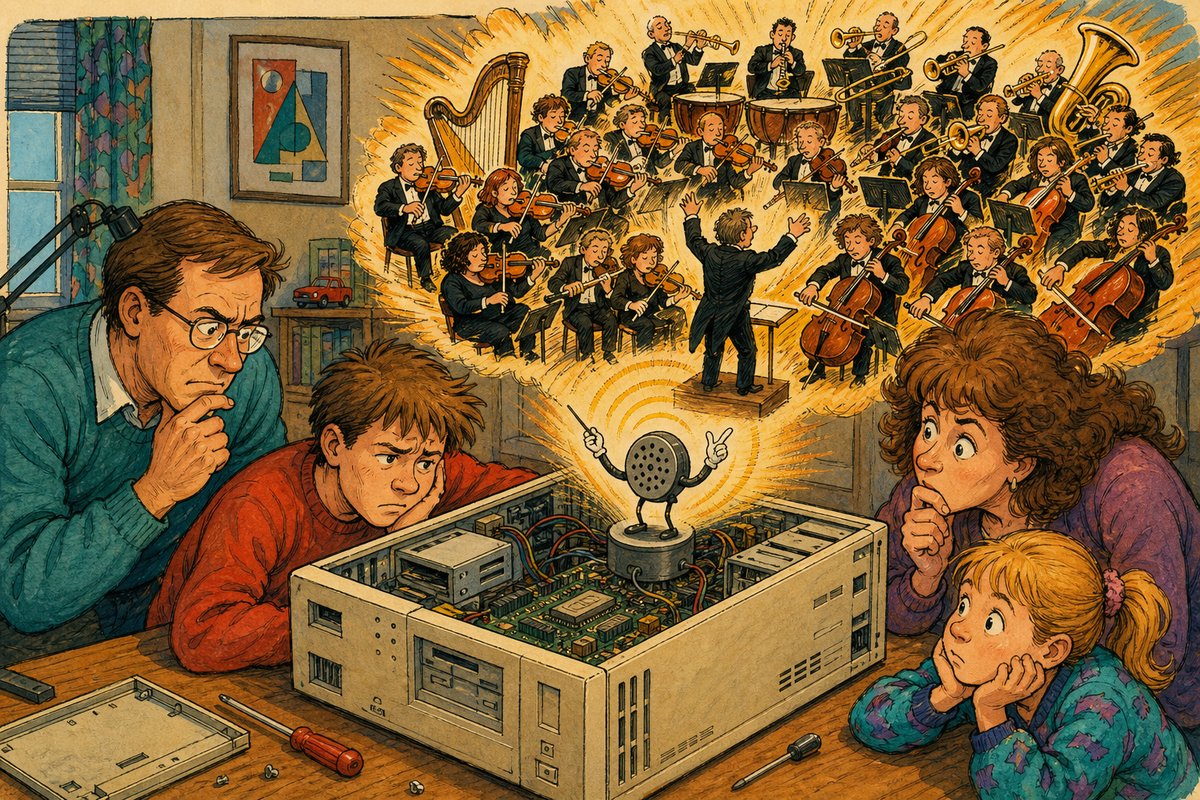
One-panel evidence: before the sound card loaded, one tiny speaker communicated entirely through judgmental beeps.
It wasn’t music. It wasn’t even a melody. It was the motherboard clearing its throat, announcing that it had decided to live another day. If the beep was long and low, we sighed in relief. If it was three short staccato shots, we scrambled for the manual. This tiny square of plastic, wedged deep inside the case, was our only companion during those ten seconds of booting up. It judged us. It told us if our RAM was loose or if the keyboard had forgotten how to type. We loved it because it made us feel like wizards who could understand the language of machines, even though we mostly just knew that one long beep meant “hello.”
- Flip the master power switch on the wall outlet.
- Wait for the hard drive motor to spin up with a whirring sound.
- Listen intently for the single tone from the internal speaker.
- Nod knowingly if the tone is continuous, or cheer if it stops.
Here is what we thought: The computer was alive and speaking directly to us through its chest cavity. We imagined there was a tiny person inside the case, holding a tuning fork, tapping out rhythms to tell us whether our games would load correctly. If the speaker stayed silent, we assumed the computer was shy or asleep. We didn’t know about circuits or voltage; we only knew that the beep was the heartbeat of our digital world. It was a comforting, if somewhat monotone, lullaby that signaled the end of darkness and the beginning of play.
  .-------.
 |  O   O  |
 |    >    |
 | '-----' |
  `---|---`
      |
   [BEEP]
Here is what was really happening: Motherboards used a simple internal speaker for tones and firmware POST beep patterns that could indicate hardware faults before video output. The system performed a Power-On Self-Test, checking basic components like memory and the keyboard controller. If everything passed, it sent a continuous tone to confirm readiness. If something failed, it paused and emitted specific sequences of short beeps to signal which part was broken. This allowed users to diagnose issues even if their monitor was blank or disconnected.
We never cared about the binary logic behind the tones. We just liked that our expensive toy could yell at us before it let us play. It felt sophisticated, like having a personal assistant who only communicated in Morse code but somehow always knew when we forgot to save our work. Today’s computers are silent until the Windows chime, but I miss that judgmental beep. It reminded me that something was actually happening inside the box, and that sometimes, technology just needs to make noise to feel real.
At least it didn’t require a subscription.