The Horizontal Slide of Doom
We were watching a rented movie when the picture suddenly filled with crawling noise and a horizontal tear. My father didn’t blink. He reached for the VCR’s tracking controls with the calm confidence of somebody docking a spacecraft.
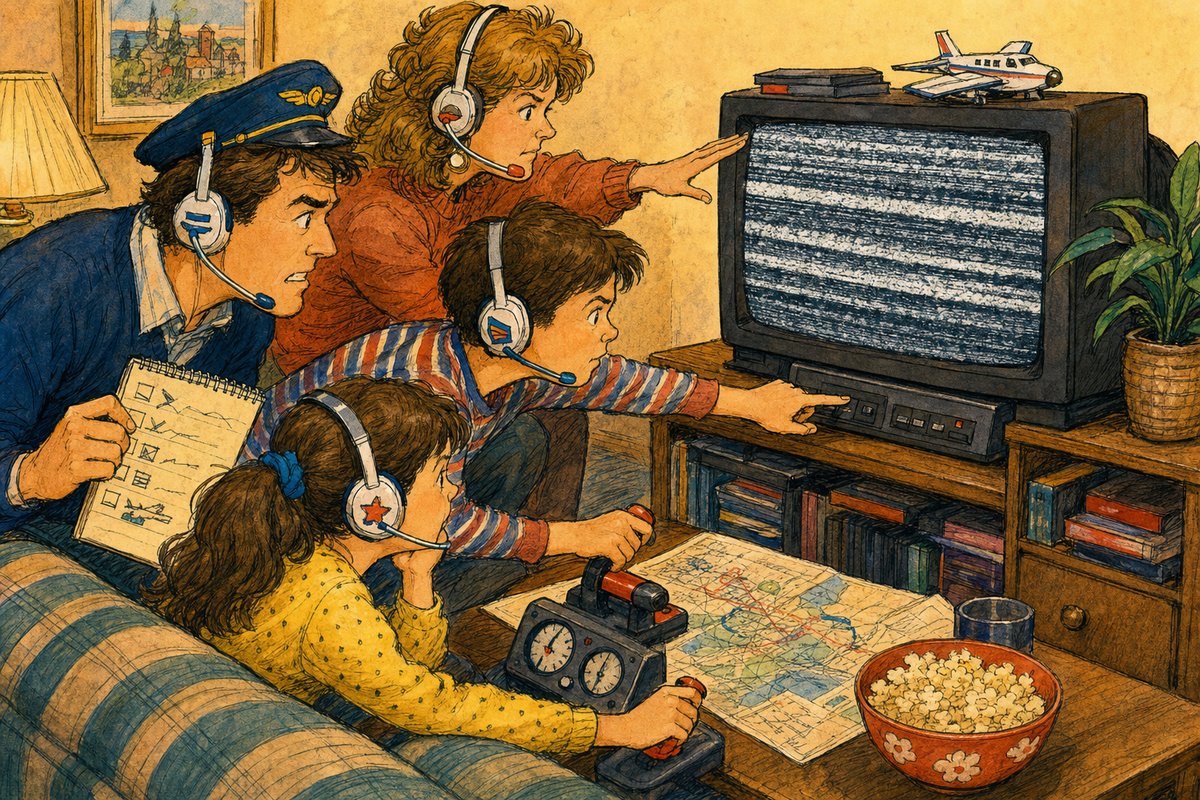
One-panel evidence: two buttons negotiated peace between the VCR heads and a movie recorded by somebody else’s machine.
The room held its breath. This was not merely an adjustment; it was a negotiation with the machine gods. We watched as the horizontal line slid up, then down, searching for that perfect, invisible seam where the picture locked into place. If we got it wrong, the screen would dissolve into chaotic snow. If we got it right, dinosaurs roared in clarity. It felt like magic because we had no idea what was happening inside that heavy box of wires and magnets.
The ritual followed a strict, unspoken protocol:
- Let the tape play so the picture problem remains visible.
- Find the tracking buttons on the VCR or remote.
- Tap one direction while squinting intensely.
- Reverse direction if the snow gets worse.
- Stop the instant the picture looks human again.
Here is what we thought: The VCR was a temperamental beast that required daily grooming to keep its head straight. We believed there were two heads inside, like eyes on stalks, and sometimes they got out of sync with each other. By turning the knob, we were physically nudging one eye to look at the same spot as the other. If we ignored it, the movie would eventually become unintelligible static, proving that neglect had consequences. We treated tracking like a dialysis machine for our entertainment; without it, the show would die in our living room.
      / \
     | O O |  <- The Two Heads
     |  ^  |
    _|_____|_
   /         \
  |  TRACKING | <--- The Soul of the Machine
   \_________/
Here is what was really happening: VHS video heads read diagonal tracks recorded across the moving tape. A tape made on one machine might not line up perfectly during playback on another. The tracking control adjusted playback timing so the heads followed those recorded tracks more accurately. It wasn’t repairing the movie; it was helping the VCR stay lined up with where the picture had been recorded.
We spent countless evenings playing this game, convinced we were performing surgery on a piece of technology. In reality, we were just helping a spinning drum stay on schedule. Today, when you press play and the movie starts instantly without a single glitch, it is easy to forget that we once had to manually tune our televisions like radios in a storm.
I still check my watch every time I pause a stream, just to make sure the heads are aligned.