The Town’s Giant Cup on Stilts
The best stop on the scooter infrastructure tour was the water tower. It had pipes, fences, control boxes, and the unmistakable confidence of something that could crush a bungalow without moving an inch.
As a 90s kid, I believed a water tower was a municipal water balloon. The town filled it until somebody opened too many faucets, then the whole thing squeezed water downward through sheer determination.
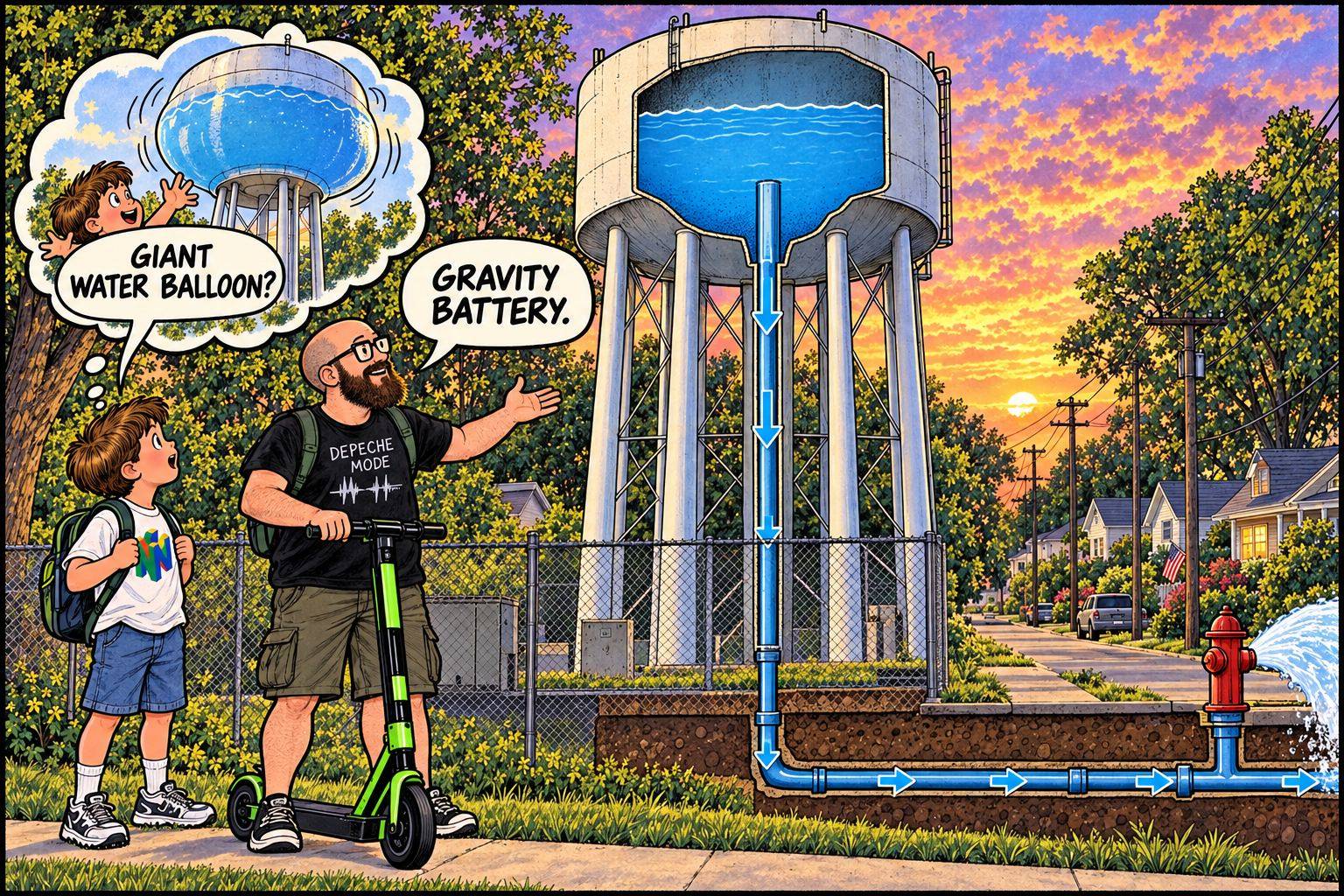
Wrong about the balloon. Surprisingly close about the downward part.
Water demand is lumpy. At 3 a.m., a neighborhood mostly sleeps. In the morning, everybody showers, flushes, fills coffee pots, and discovers that a child has left one faucet running for reasons unavailable to science. Pumps do not love instantly matching every one of those changes.
An elevated tank smooths the mess out. Pumps can refill storage when demand is lower. When demand rises, stored water flows into the distribution system. The height creates pressure through gravity, helping deliver water without requiring a pump to react to every glass, toilet, and sprinkler in real time.
          [ stored water ]
                 |
               height
                 v
 pump ---> main ---> homes ---> hydrant
The Environmental Protection Agency’s drinking-water system training guide says gravity storage tanks are elevated to maintain sufficient pressure across the service area. The same storage can help cover peak demand and firefighting flows. That is a lot of responsibility for a structure most kids used only as a landmark for “we’re almost home.”
Calling it a gravity battery is not perfect physics, but it is useful. Electricity pumps water upward, storing potential energy. Later, gravity returns that energy as pressure and flow. The tower also holds an inventory buffer, which is why its job is bigger than simply being tall and photogenic.
Modern systems add sensors, remote telemetry, variable-speed pumps, alarms, and careful water-quality controls. The tower is no longer merely a tank. It is a managed node in a network—one that happens to contain a ridiculous amount of something everyone needs.
That is the infrastructure trick I missed as a kid. Reliability often looks boring because the drama was handled earlier: water pumped before the rush, pressure waiting before the faucet opened, reserve capacity sitting quietly above the rooftops.
Still looks like a giant water balloon, though.