11:59 PM, December 31, 1999
The grown-ups said the computers might stop.
Which computers?
All of them, apparently.
Banks. Elevators. Airplanes. The grocery scanner. Possibly the microwave, although its only known date was 12:00.
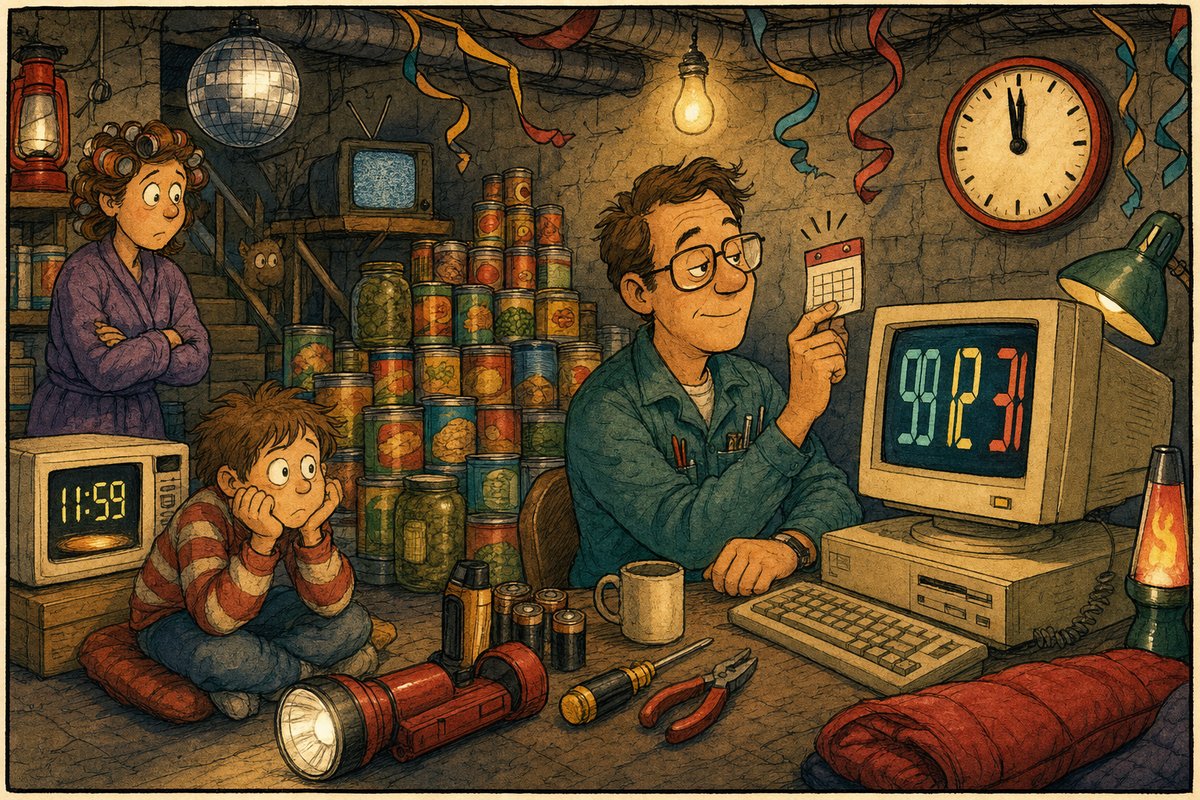
Civilization had one minute remaining and forty-seven cans of corn.
People stored water. Companies formed emergency teams. News anchors stood beside countdown clocks and used the phrase “embedded systems” like they had always said it.
Then midnight arrived.
The lights stayed on.
Adults laughed.
Half the world concluded the whole thing had been fake.
It was not fake. It was a bug that looked boring.
For decades, programmers often stored years with two digits to save expensive memory and storage:
   12/31/99  +  1 day  =  01/01/00

   Human:   January 1, 2000
   Bad code: January 1, 1900
   Bank:     Your loan is negative one hundred years old.
A wrong century could break age calculations, interest, expiration dates, schedules, sorting, billing, benefits, and any decision based on “before” or “after.”
The reason New Year’s Day was mostly normal is that enormous numbers of people spent years finding, fixing, replacing, and testing systems. By December 1999, major U.S. federal agencies reported nearly all their mission-critical systems compliant. Organizations rehearsed the rollover, built contingency plans, and kept technicians awake while everybody else wore novelty glasses shaped like 2000.
Some glitches still happened, but the predicted global collapse did not.
Y2K became the rare disaster story where prevention worked so well that prevention was mistaken for proof there had never been danger.
That lesson aged beautifully.
When security patches prevent the breach, backups prevent the catastrophe, or maintenance prevents the outage, nothing dramatic happens.
Nothing happening is the product.
We watched the microwave at midnight and thought the computers had saved themselves.
They had not.
A lot of tired nerds saved them, then got blamed for making too big a deal about it.