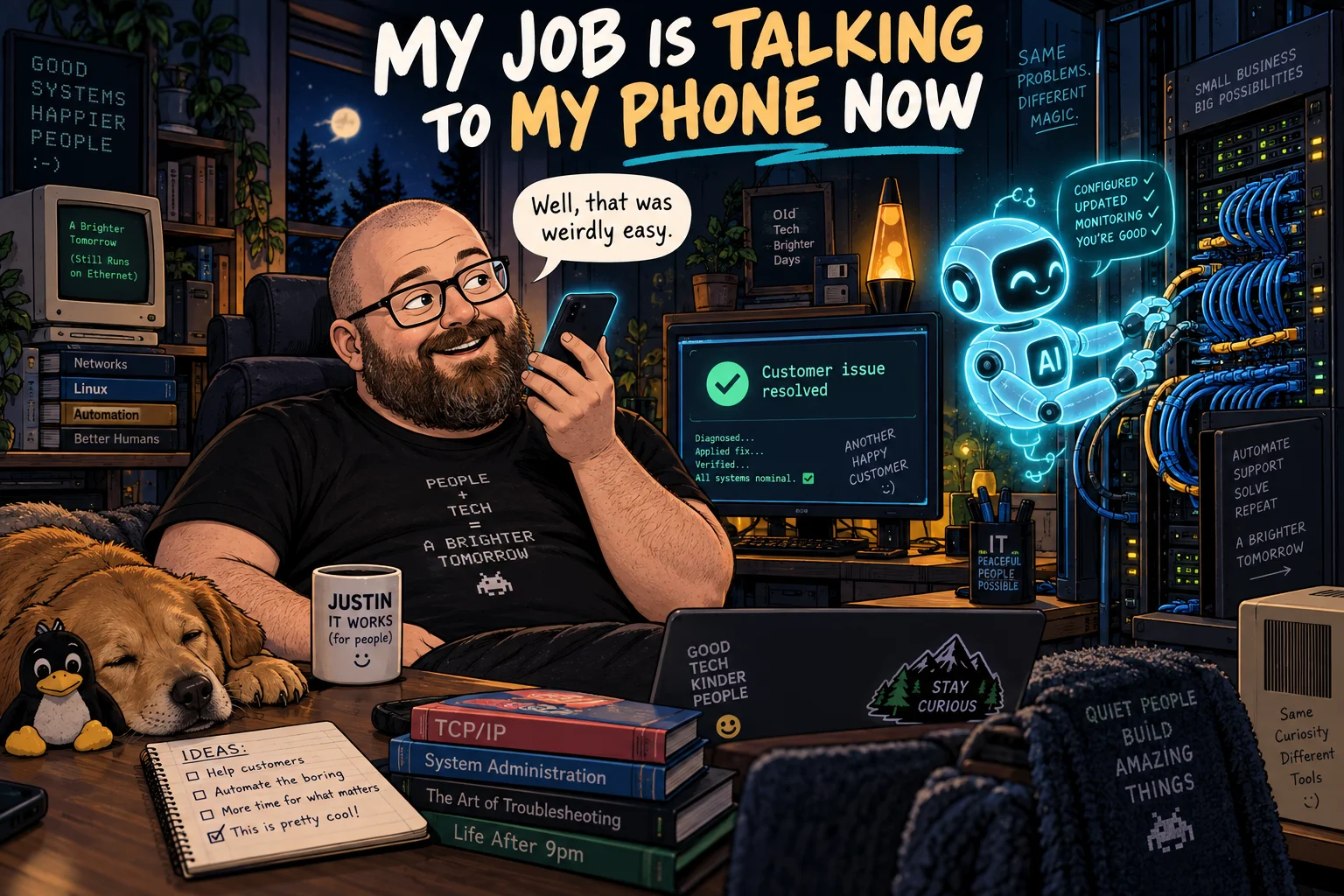
I run an IT business. Lately, getting things fixed feels suspiciously like having a conversation.
My life now consists of talking to Wispr on my phone and telling AI to do things.
A customer emails me because something isn’t working. I pull up ChatGPT, use Wispr to dictate what’s going on, and ask it to figure it out. With the connections we’ve set up, it can investigate and tell me what it finds. We work through the problem, draft a reply, and get back to the customer.
A surprising amount of the time, that takes care of it.
Then I sit there thinking: Did I actually just do my job? Because that barely felt like doing anything.
It’s really fucking weird. I love it.
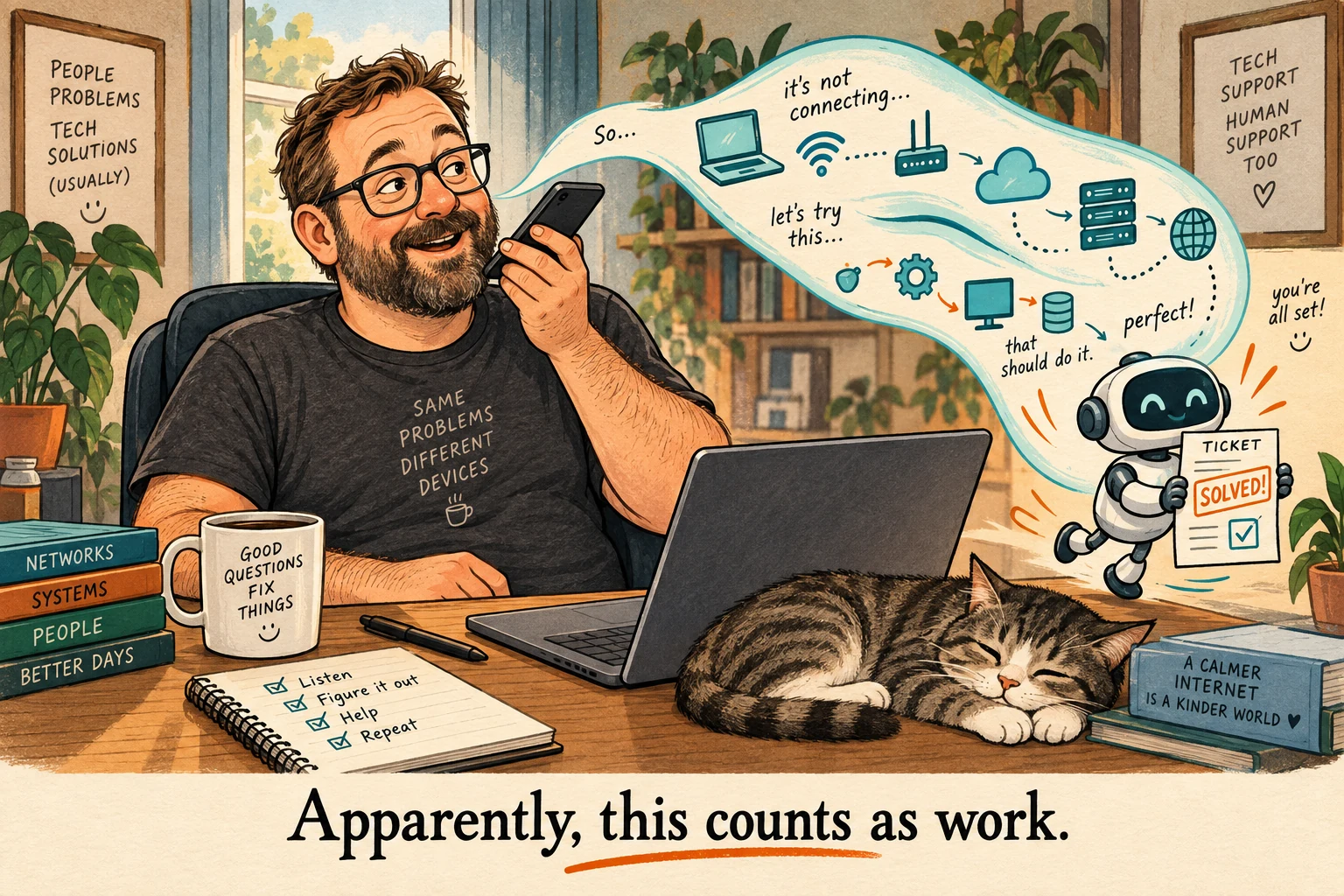
Apparently, this counts as work.
For years, working in IT has involved a familiar collection of activities: opening interfaces, finding the right screen, checking settings, digging through logs, looking something up, trying a fix, and explaining the whole thing to someone who understandably just wants their stuff to work.
I know that routine. I run KC Computer Services in Pueblo. Networks, phones, cameras, and the other things businesses depend on are my world.
Now, more of that routine begins with me saying what I need into a phone.
There’s something ridiculous about spending years learning how to communicate with computers on their terms, then discovering that an increasingly useful approach is: “Here’s what the customer said. Go see what’s wrong.”
And it does enough useful work that I keep doing it.
Wispr is a bigger part of this than I would have expected.
Voice input removes a little barrier that turns out to matter a lot. I can explain the situation as it occurs to me. Include the background. Mention what we changed recently. Get the thought out without thumb-typing a technical explanation into a tiny rectangle.
Wispr gets my words into the conversation. AI helps turn the conversation into investigation and action.
That combination makes reaching for help feel almost automatic. An email arrives, I talk through it, and we’re working on it.
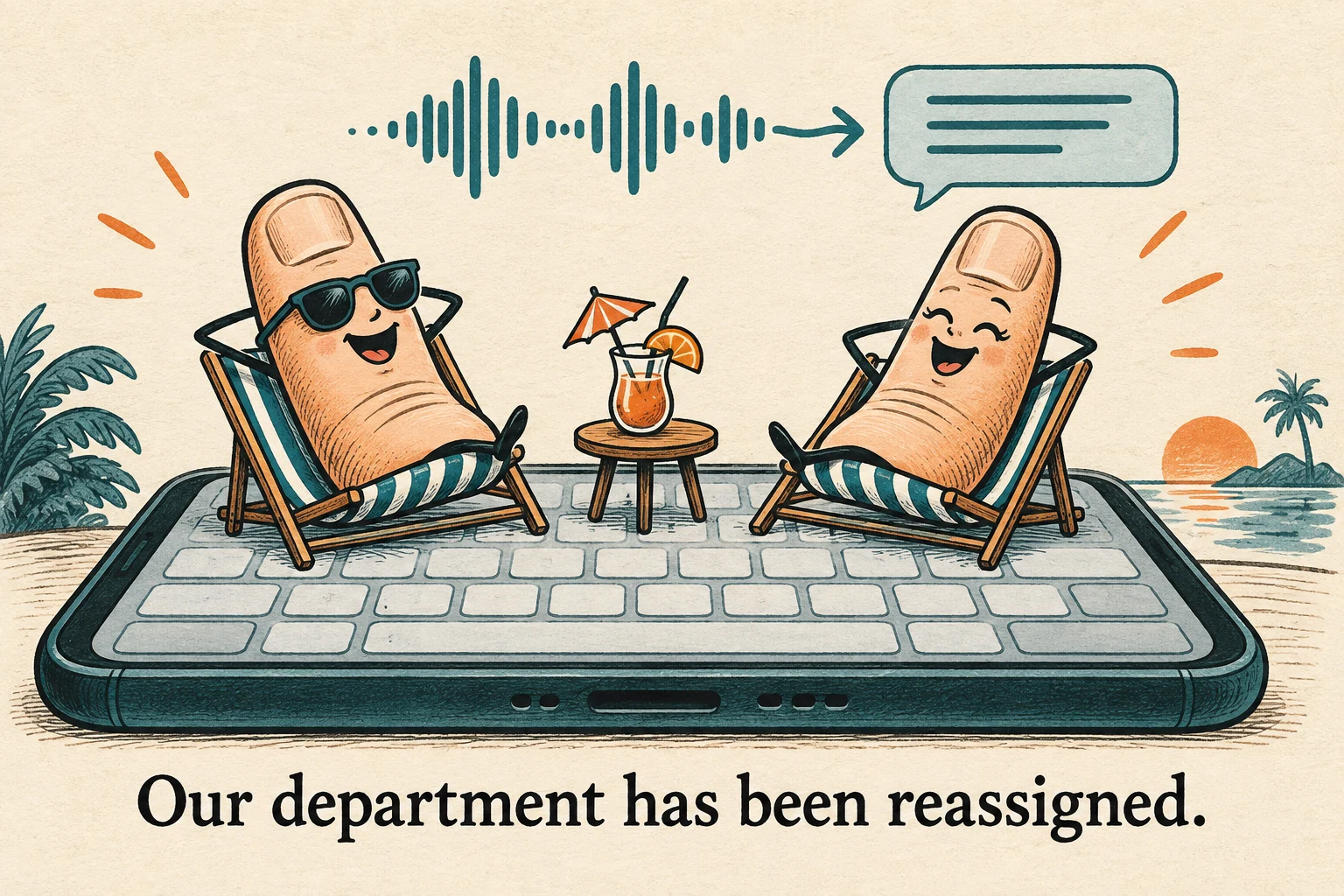
Our department has been reassigned.
I haven’t suddenly stopped knowing anything about IT. I still know the customer, their setup, and what a sensible answer should look like. I can recognize when an explanation doesn’t fit. I’m still responsible for what happens.
But a lot of the mechanical effort between noticing the problem and getting somewhere useful has shrunk.
Apparently, my brain has trouble accepting that.
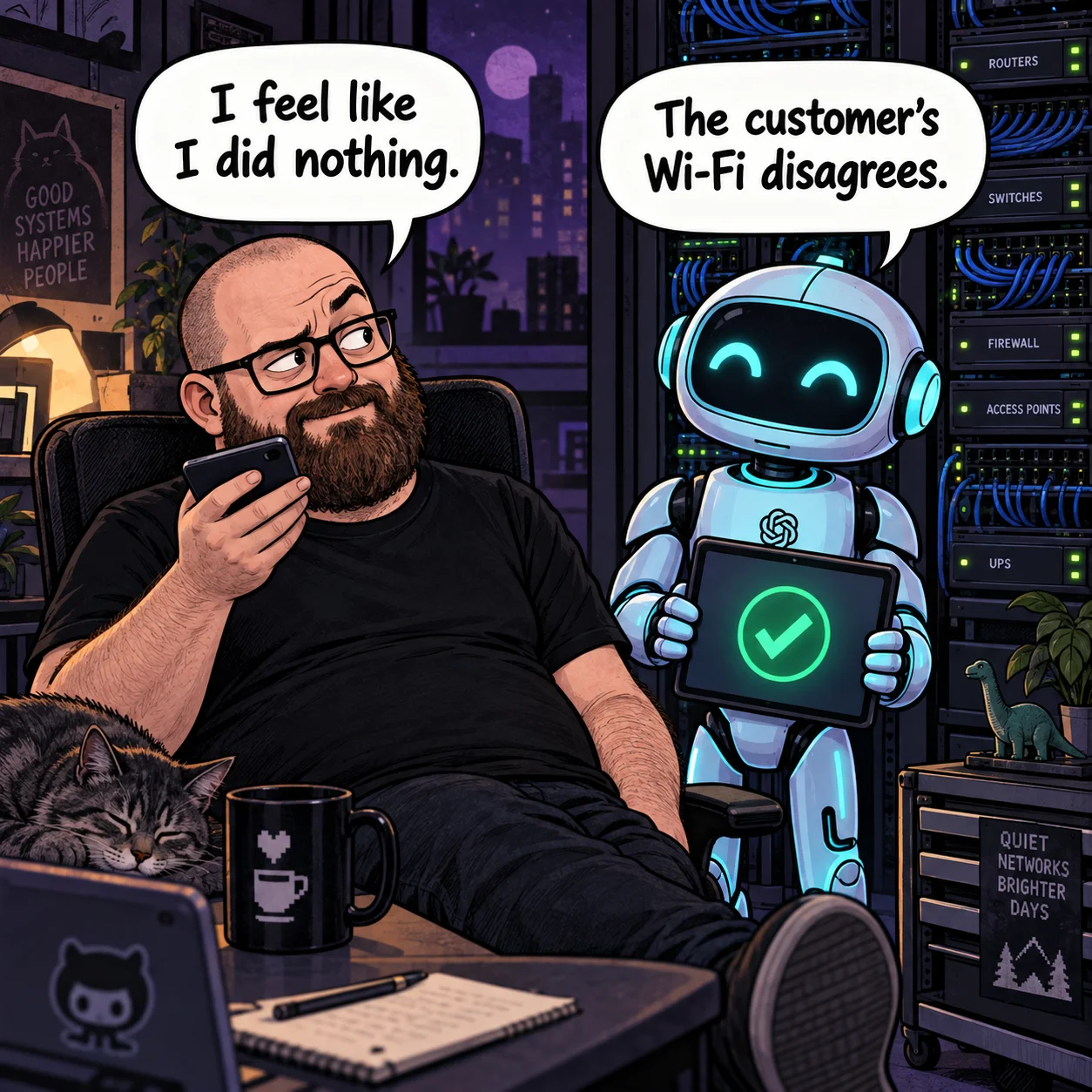
There’s an old association between work and visible effort. If I spent an hour digging through something, I definitely worked. If I spoke into my phone and reviewed the result, some part of me thinks I’ve gotten away with something.
Meanwhile, the customer’s problem doesn’t care how much typing I did.
They wanted something working. We got it working. They needed an understandable response. We put one together.
The outcome is real, even when the process feels absurdly easy.
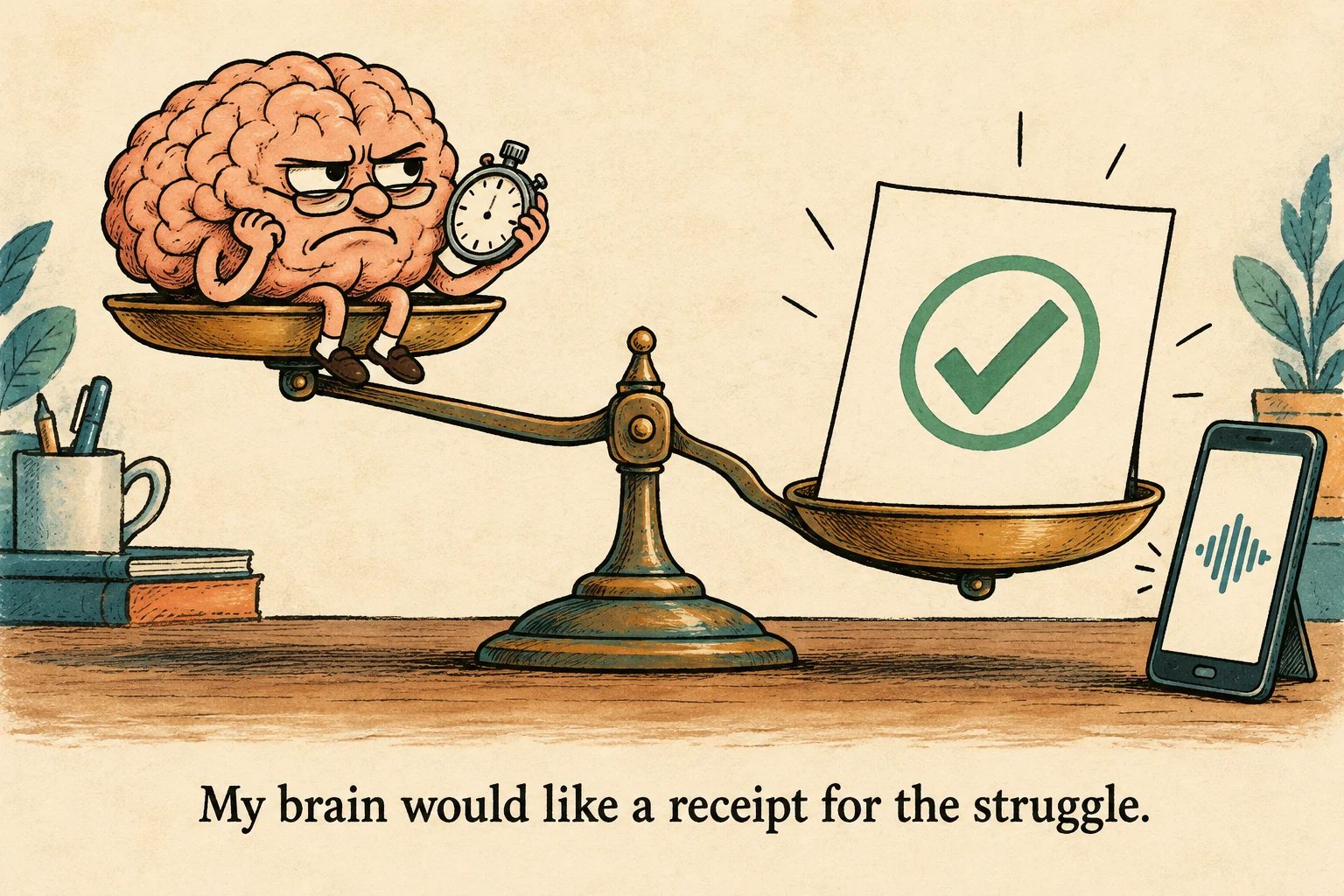
My brain would like a receipt for the struggle.
That doesn’t mean every issue is solved by a conversation. Sometimes the explanation is wrong. Sometimes access is missing. Sometimes you have to investigate further. And sometimes a cable needs a person standing there with a replacement cable. The phone has yet to grow arms.
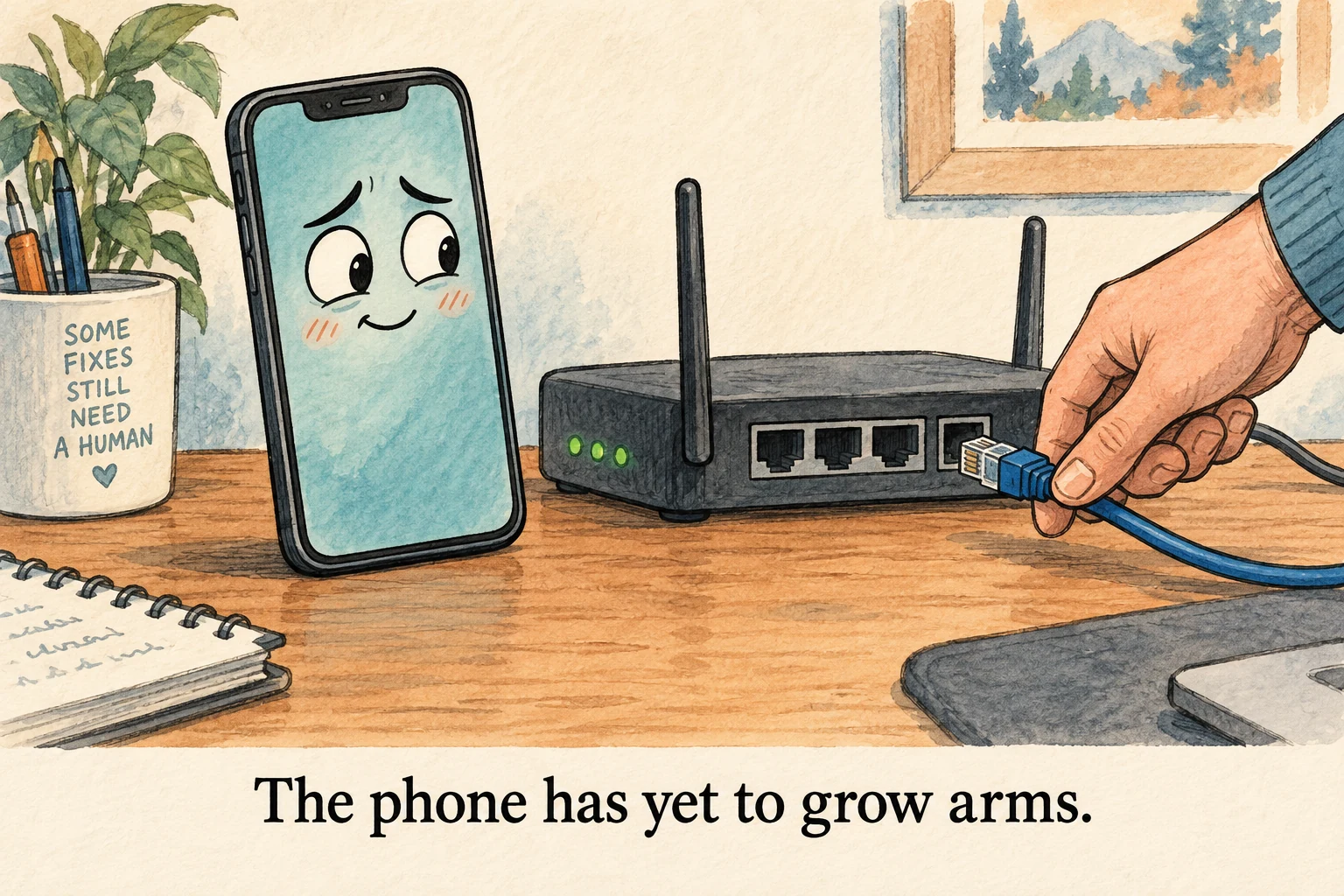
The phone has yet to grow arms.
But enough of my everyday work now happens this way that it has changed my sense of what running a small IT business feels like.
I can bring experience and context to a problem, then get help with the searching, interpreting, and writing that used to consume so much attention. I spend less energy moving information between places and more energy deciding what matters.
That feels good. It also takes some getting used to.
I’ve loved technology for most of my life. I’m used to being excited about what computers might eventually let us do. Now I’m catching myself using something that would have sounded like science fiction to a younger version of me—and using it to answer a customer email.
That might be my favorite part.

The future turns up in the middle of an ordinary day. Something breaks. I talk to my phone. We figure it out. The day continues.
And I’m left holding this little rectangle, wondering how this became my life and what else I can build now that getting things done takes less out of me.