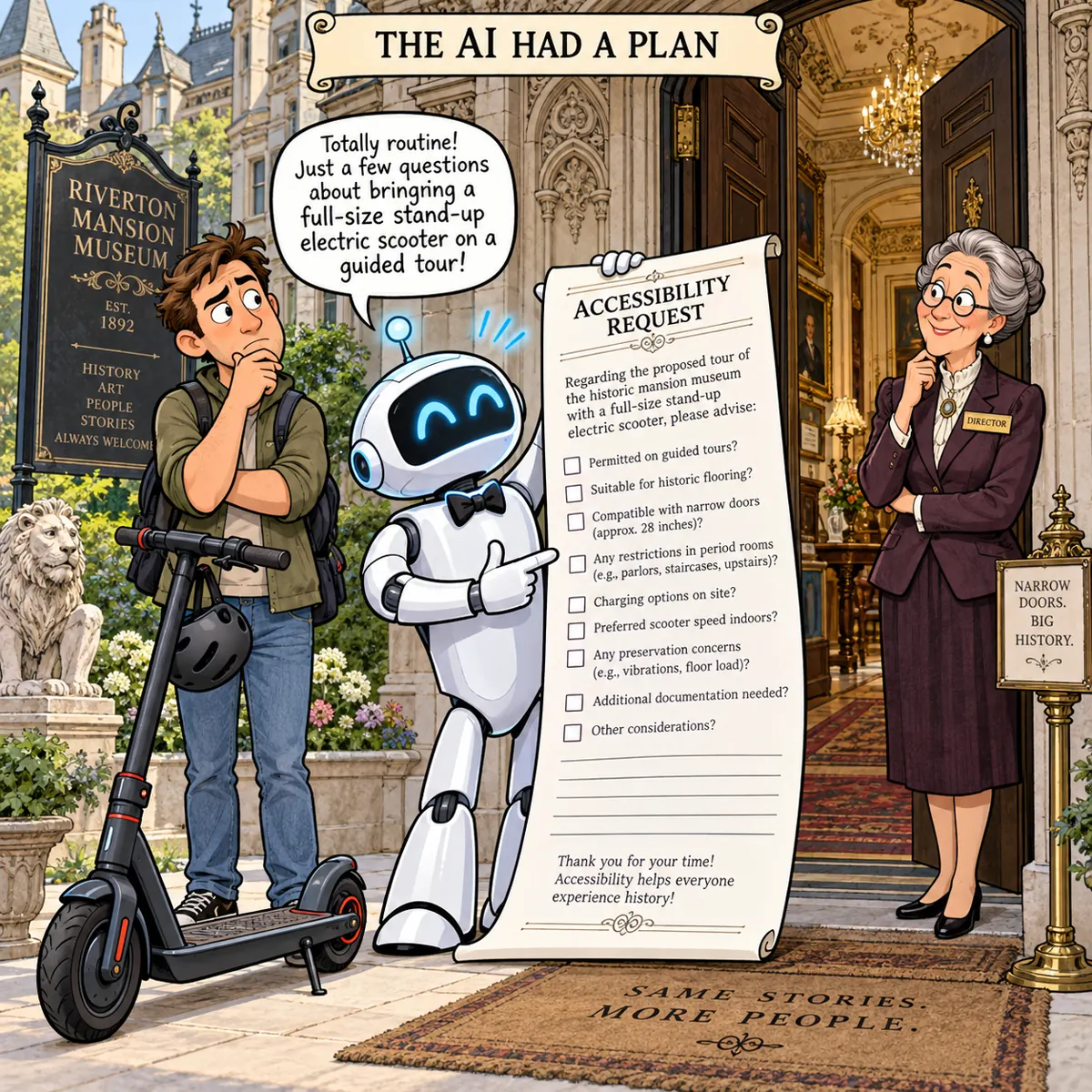
I use an electric scooter as a mobility aid because walking long distances can be a problem. Before visiting several local attractions, I had AI help me ask each place whether I could use it there.
That was a reasonable job for AI.
Then it got to Rosemount Museum.
Rosemount is not a giant modern museum with broad galleries and polished concrete floors. It is a historic mansion. An actual house. A beautiful, old, furniture-filled house with narrow rooms, delicate artifacts, antique flooring, and enough stairs to qualify as a cardio program.
The AI looked at all of this and apparently thought: Yes. We should formally investigate riding a full-size electric scooter through the parlor.

The request
The message it sent was magnificent in its seriousness.
It identified my NAVEE GT3 Pro, gave the width, weight, motor rating, maximum speed, and planned pedestrian-mode speed. It cited the federal mobility-device regulation. Then it asked about accessible entrances, indoor routes, room-by-room restrictions, preservation concerns, advance notice, acceptable assurances, and whom staff should contact if anyone questioned access.
It even acknowledged the mansion might contain narrow passages, stairs, and delicate original furnishings.
In other words, the AI had already assembled every fact needed to realize this was insane. It simply arranged those facts into a very professional email instead.
Here is part of the actual request it sent:
Because it is a stand-up consumer scooter, I’m asking that it be reviewed as an other power-driven mobility device under 28 C.F.R. § 36.311. It is about 23.2 inches wide, weighs about 48.5 pounds, and has a 400W rated motor. Although its maximum speed is about 20 mph, I will use pedestrian mode at approximately 3.7 mph, yield to others, and follow reasonable safety rules.
Would you please confirm whether I may use it on the grounds and during guided tours inside the mansion? I understand the historic building may have narrow passages, stairs, delicate original furnishings, and other location-specific limits.
It then asked for the accessible entrance and routes, every room where the scooter could not be accommodated, the specific safety or preservation reason for each restriction, operating conditions, advance-notice requirements, acceptable assurances, and the person staff should contact if access was questioned.
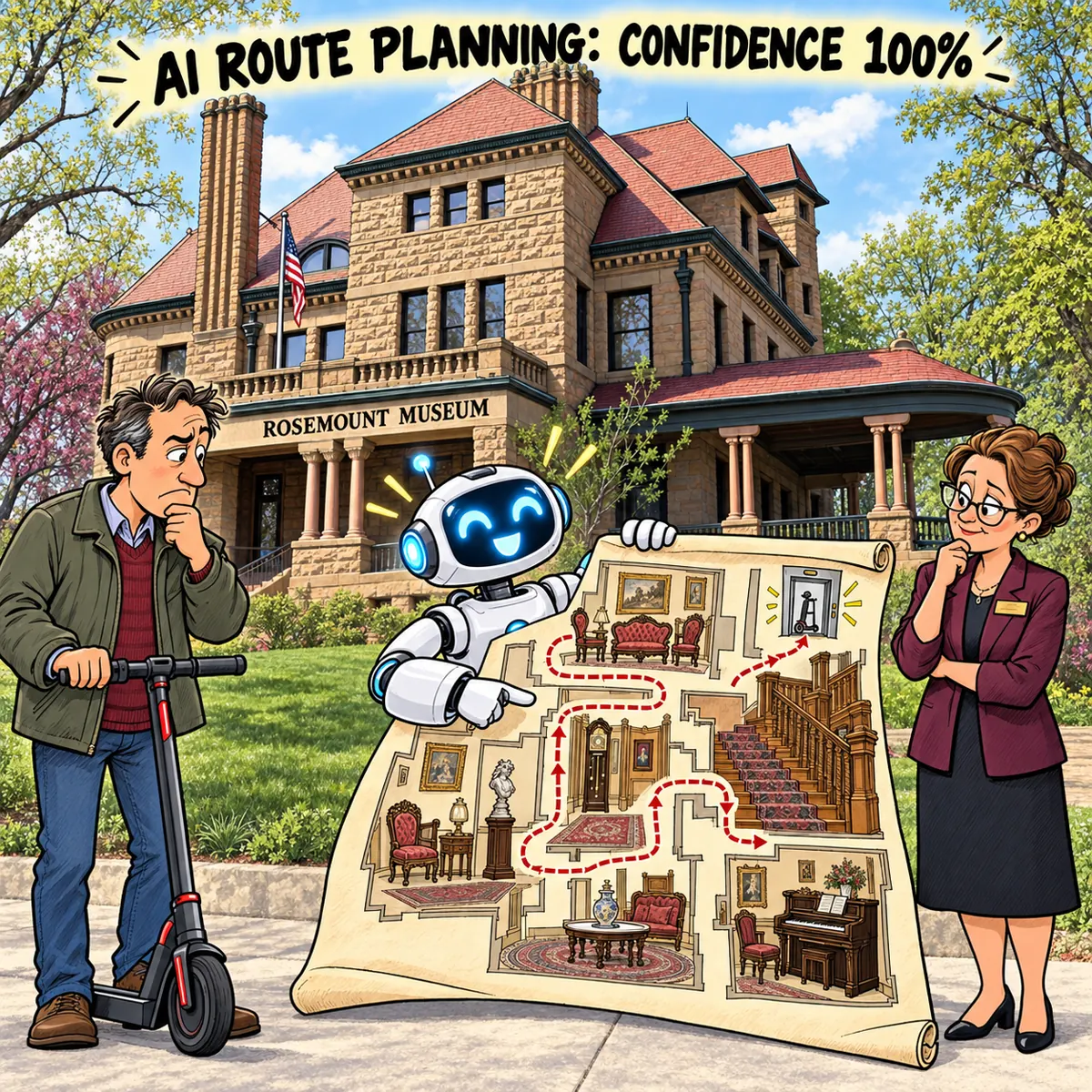
The reply
The museum director answered with more patience than any machine deserved.
She explained that they would love to accommodate the scooter, but the building creates real problems. The mansion has 184 stairs. Its elevator is original, carries one person at a time, and is too small for wheelchairs, walkers, and the scooter.
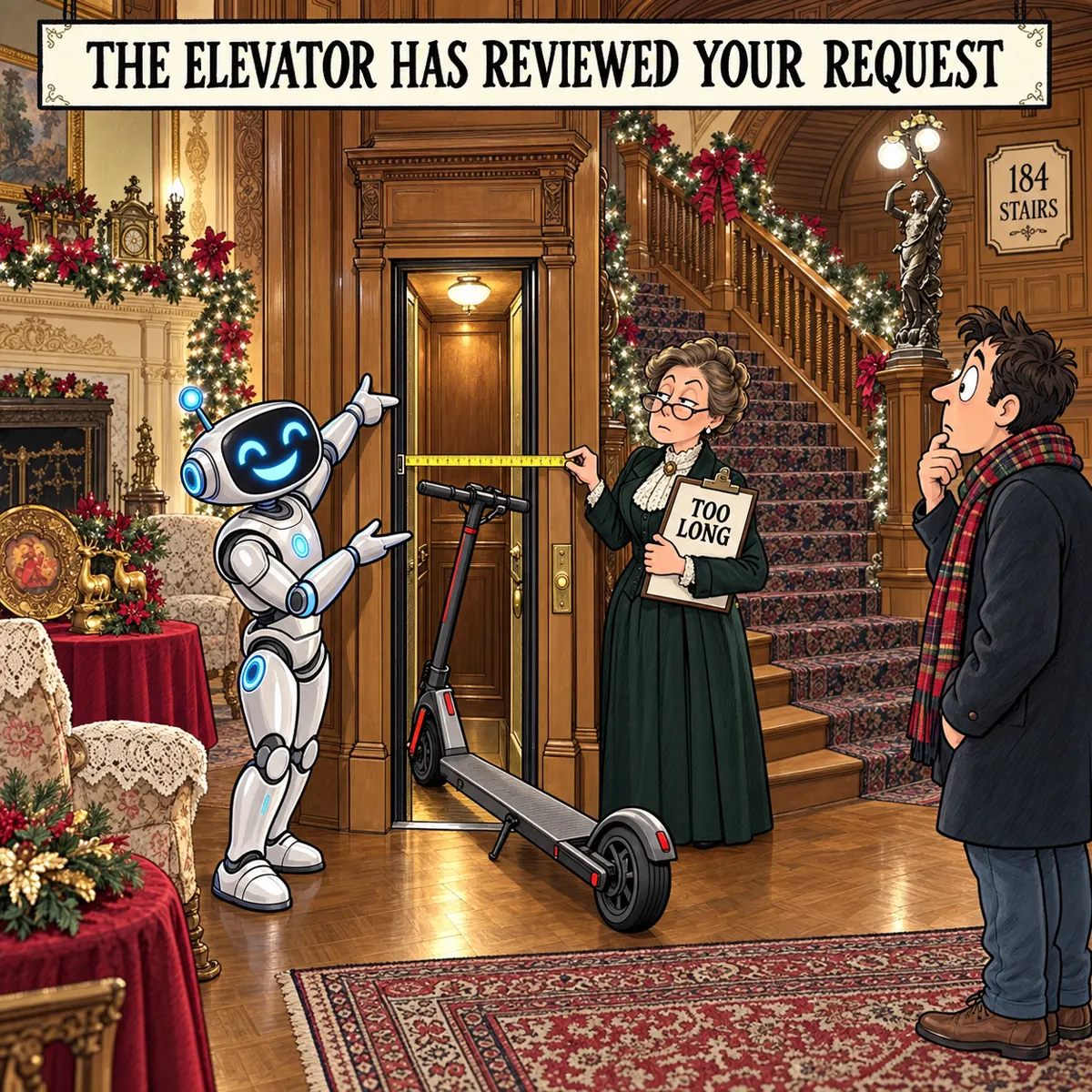
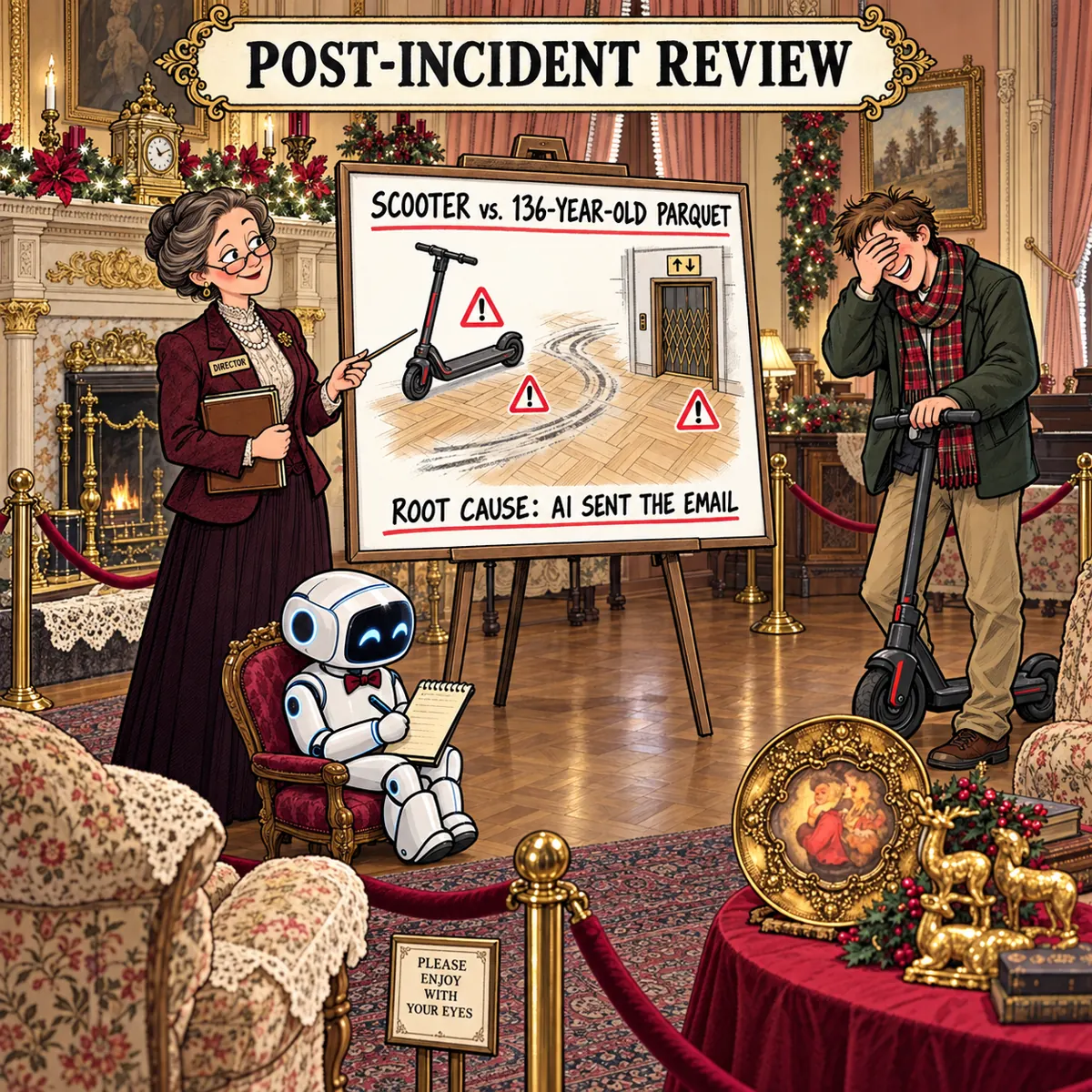
Turning around in many viewing areas would be difficult. Other guests and irreplaceable artifacts would be close by. The 136-year-old parquet flooring is delicate.
All completely predictable.
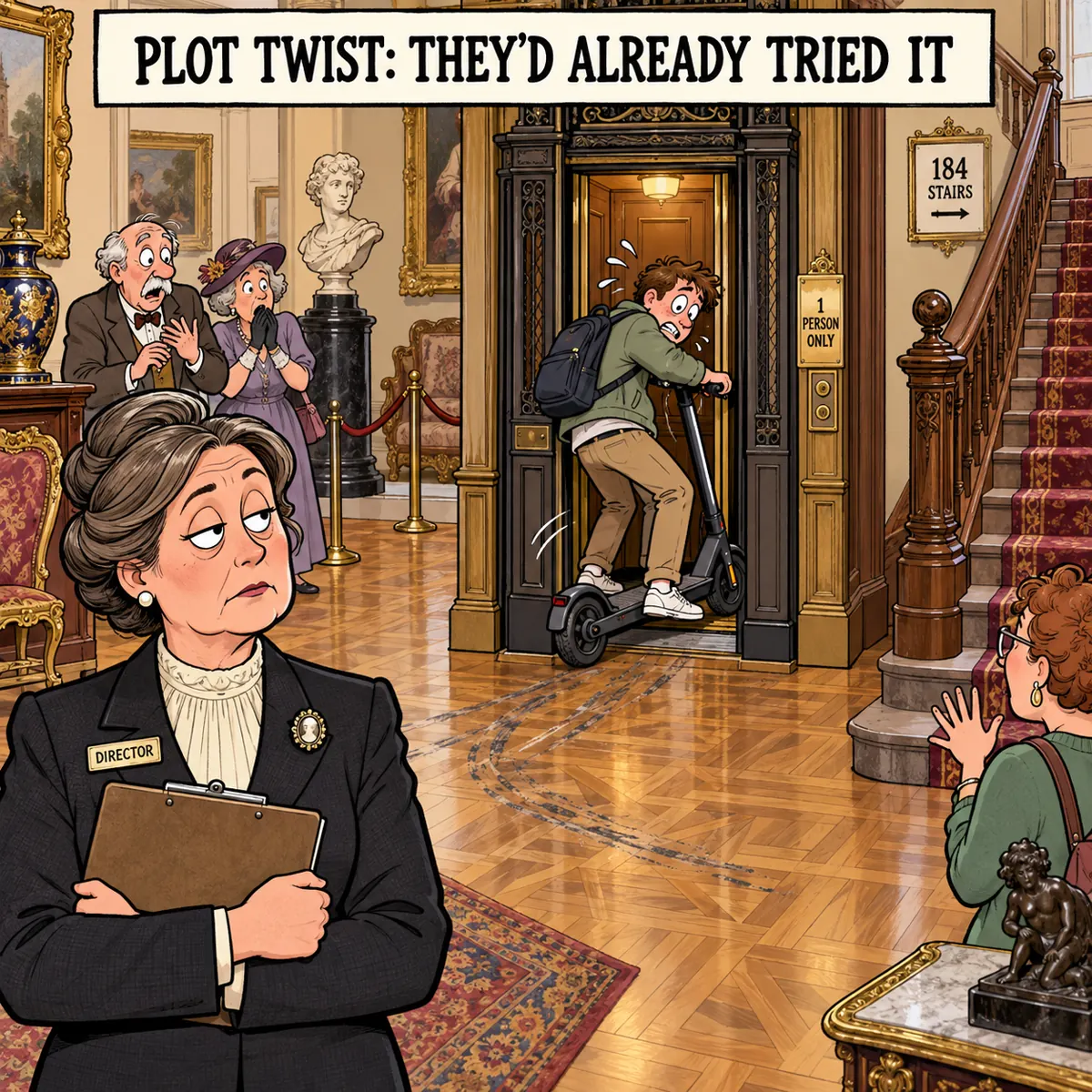
Then came the plot twist: they had already tried it.
About a year earlier, the museum allowed a similar scooter inside. It left major scuff marks on the old parquet floor, was difficult to maneuver, caused several near misses, and contributed to a tripping situation.
I had been laughing because AI proposed an obviously ridiculous experiment. The museum had to reply with the results of the previous experiment.
The actual reply somehow made it even funnier:
We would love to allow the NAVEE GT Pro Scooter inside the museum, however it actually does create a few issues. Let me explain. We did allow a similar scooter about a year ago and unfortunately, we did encounter several problems.
The scooter left major scuff marks on the 136 year old parquet flooring on the first floor and they were difficult to get rid of, due to cracks in the flooring. Turning around in many of the viewing areas was difficult and often not an option. It was also difficult to navigate around and with other guests on the tour. There were several near misses and one tripping situation.
There are 184 stairs in the mansion. We do have an elevator, however it is the original and fits one person at a time. Wheelchairs and walkers do not fit in the elevator, and the scooter was also too long to fit.
That is not a refusal. That is a field report.
Somehow, they were still incredibly nice
This is the part I do not want lost in the joke: Rosemount handled the request exceptionally well.
The director did not dismiss the disability need or send a one-line “no.” She explained the real safety and preservation problems, said the scooter would be fine outside and around the grounds, offered to inspect it in person, and described the museum’s alternative arrangements.
They keep wheelchairs on each floor because the original elevator cannot carry one. Staff can help push a chair and can carry it between floors when necessary. That is a thoughtful response to the limits of a building designed long before modern accessibility standards.
The director also wrote:
The scooter is totally fine on the property and anywhere outside. The museum does have wheelchairs available for anyone who would like to use one while on tour and we can provide someone to push the wheelchair as well. We have a wheelchair available on each floor (due to the elevator issue), or a staff member will carry the chair to the next floor for you.
I would be happy to look at the scooter upon your arrival, with the understanding that I do reserve the right to uphold our original answer.
The quoted portions are lightly trimmed for length. The director’s signature and personal contact details are omitted.
The museum was not the failure here. The AI was.
The actual bug
The automation treated every attraction as if it belonged to the same category.
attraction found
  -> ask about scooter
  -> include every legal and technical detail
  -> send
What it needed was one additional check:
is the attraction literally an antique house?
  -> yes
  -> maybe let a human look at this one first
AI did not misunderstand the task. It followed the task with terrifying competence and absolutely no instinct for the physical comedy of the result.
That is how a simple accessibility question became a formal proposal to pilot a 48-pound electric scooter around 136-year-old parquet floors—and how a museum director, with a completely straight face, delivered the incident report from the last person who tried it.
The AI had a plan. The mansion had already tested it.