There was a time when doing computer work meant physically hauling the Internet around with me.
In the early 2000s I had cable Internet at home, which felt like cheating. A lot of the places I worked still had dial-up, painfully slow DSL, or no useful connection at all. If I thought I might need Windows, drivers, antivirus tools, firmware, a boot disk, or some weird little utility, I had to bring it with me.
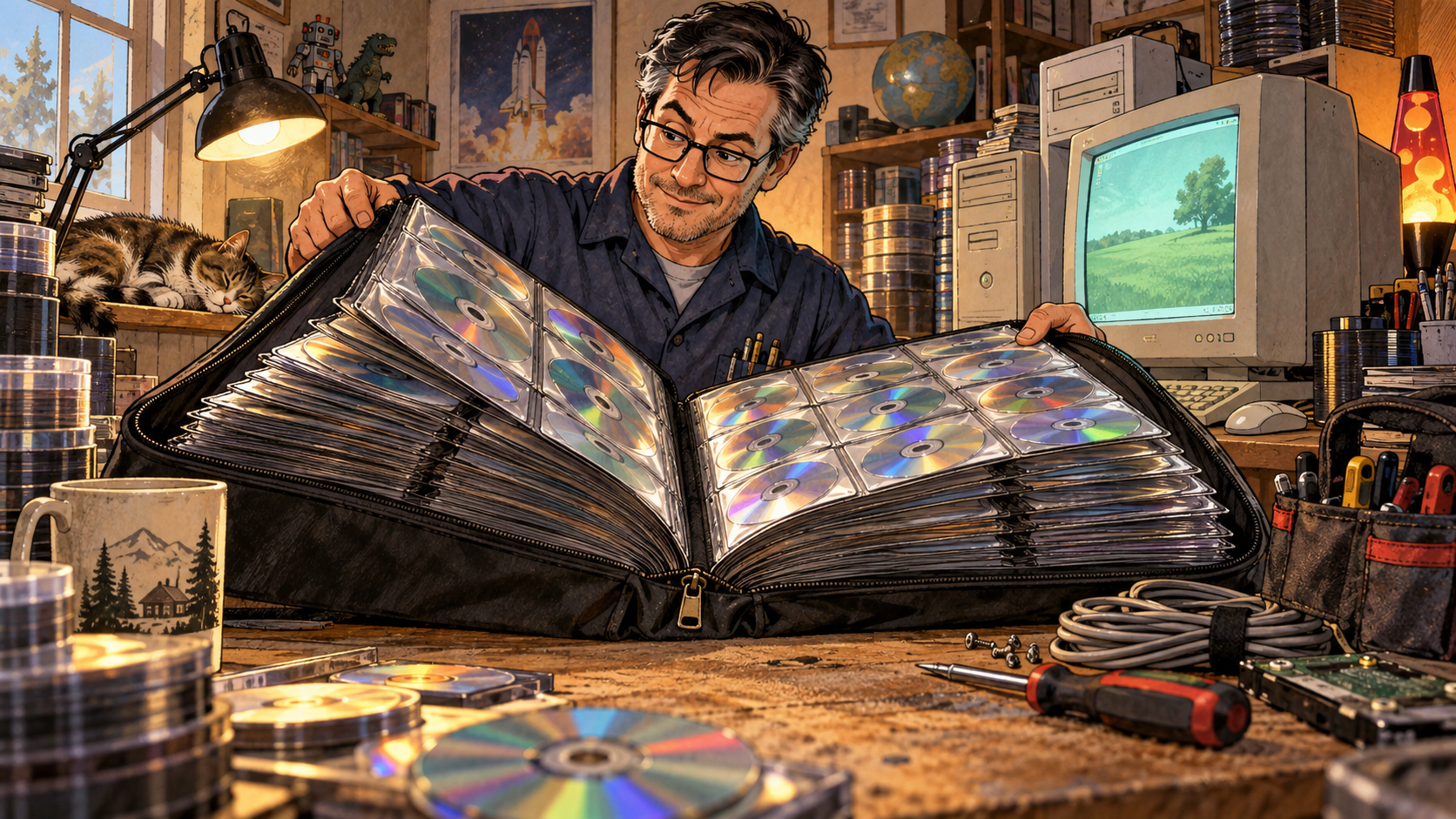
So I carried a giant CD folder.
Not a tasteful little case. A ridiculous, overstuffed, portable history of every computer problem I had already met—and several I was afraid I might meet that day.
Burn it before you leave
Before a service call I would download everything at home, burn CDs or DVDs, label them, and hope I had guessed correctly. Forget one network driver and the machine that needed the Internet could not get on the Internet to download the driver it needed to get on the Internet.
That particular joke was never funny while I was under somebody’s desk.
The job was physical in ways people forget. Drive across town. Carry the bag. Crawl behind the desk. Follow the mystery cable. Find the missing disc. Discover that the customer’s machine had a completely different hardware revision than the one listed on the case.
And then drive somewhere else and do it again.
The pocket-sized repair shop
USB drives changed the weight of the job before broadband changed the location of it.
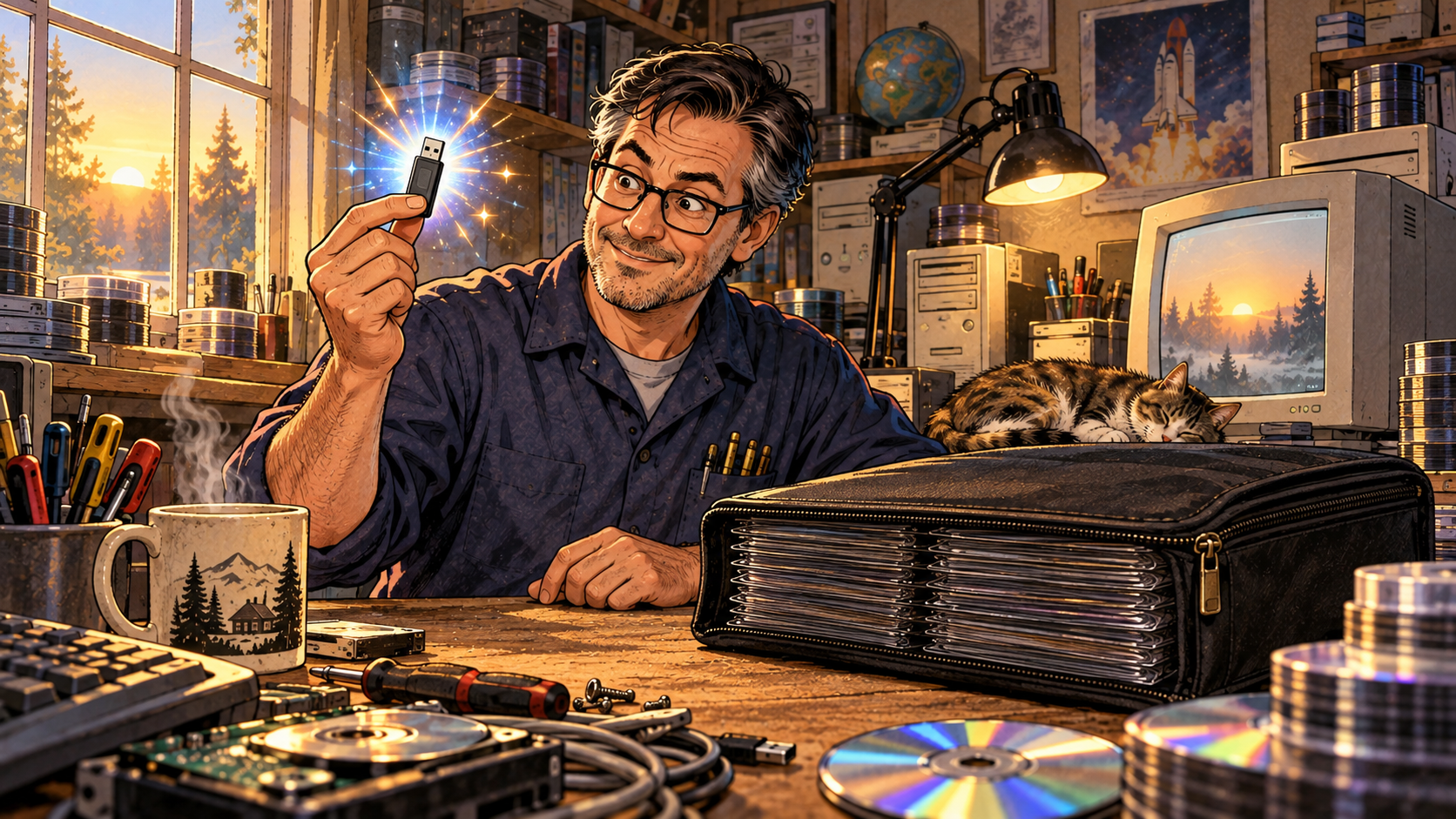
One stick could boot tools, hold installers, carry drivers, and rescue files. The binder stayed home more often. My little USB drive became a pocket-sized data center, and for a while that felt like the final form of the toolkit.
It wasn’t.
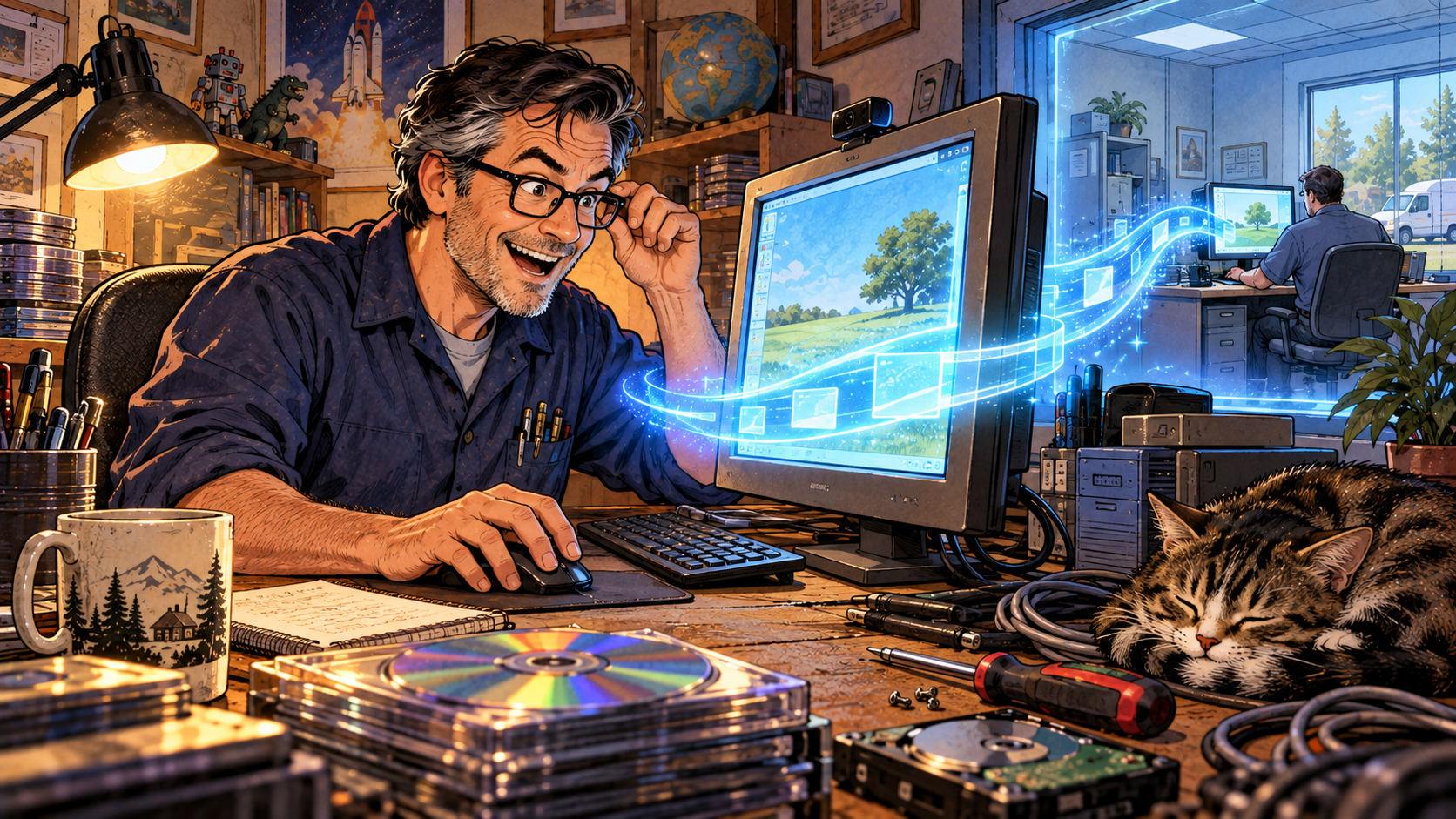
As Internet connections got faster and more reliable, the kit started disappearing altogether. I could download what I needed when I needed it. Remote-control software stopped being a frustrating novelty and became a normal way to work.
The road calls thinned out. Then most of them vanished.
For the last five or ten years, nearly everything has become remote. The computer can be across town or across the country; from my desk, the work is often the same. When I do go on-site now, I usually don’t carry the old arsenal. If I need something, I can get it in seconds.
That was already a huge change in how I worked. It also became more important as my health changed and moving around got harder. Remote access wasn’t merely convenient anymore. It was how I kept doing the work.
Then the keyboard moved again
About six months ago, the whole arrangement shifted one more time.
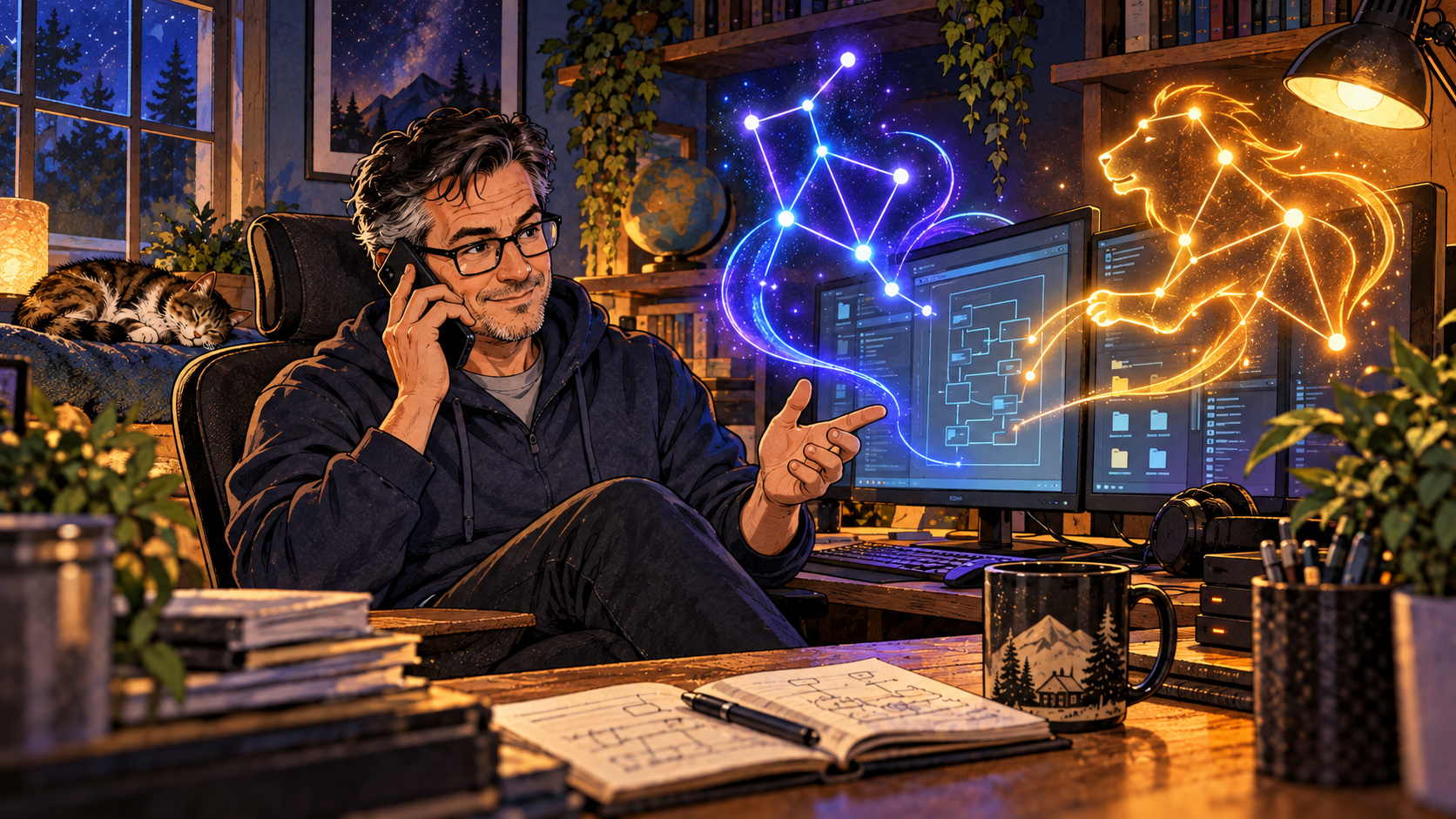
Now I don’t always get up and sit at the computer when somebody needs something. I talk to my phone. Orion, Leo, and the other AI tools help inspect the problem, operate the computer, work through the ugly parts, and sometimes even operate my phones.
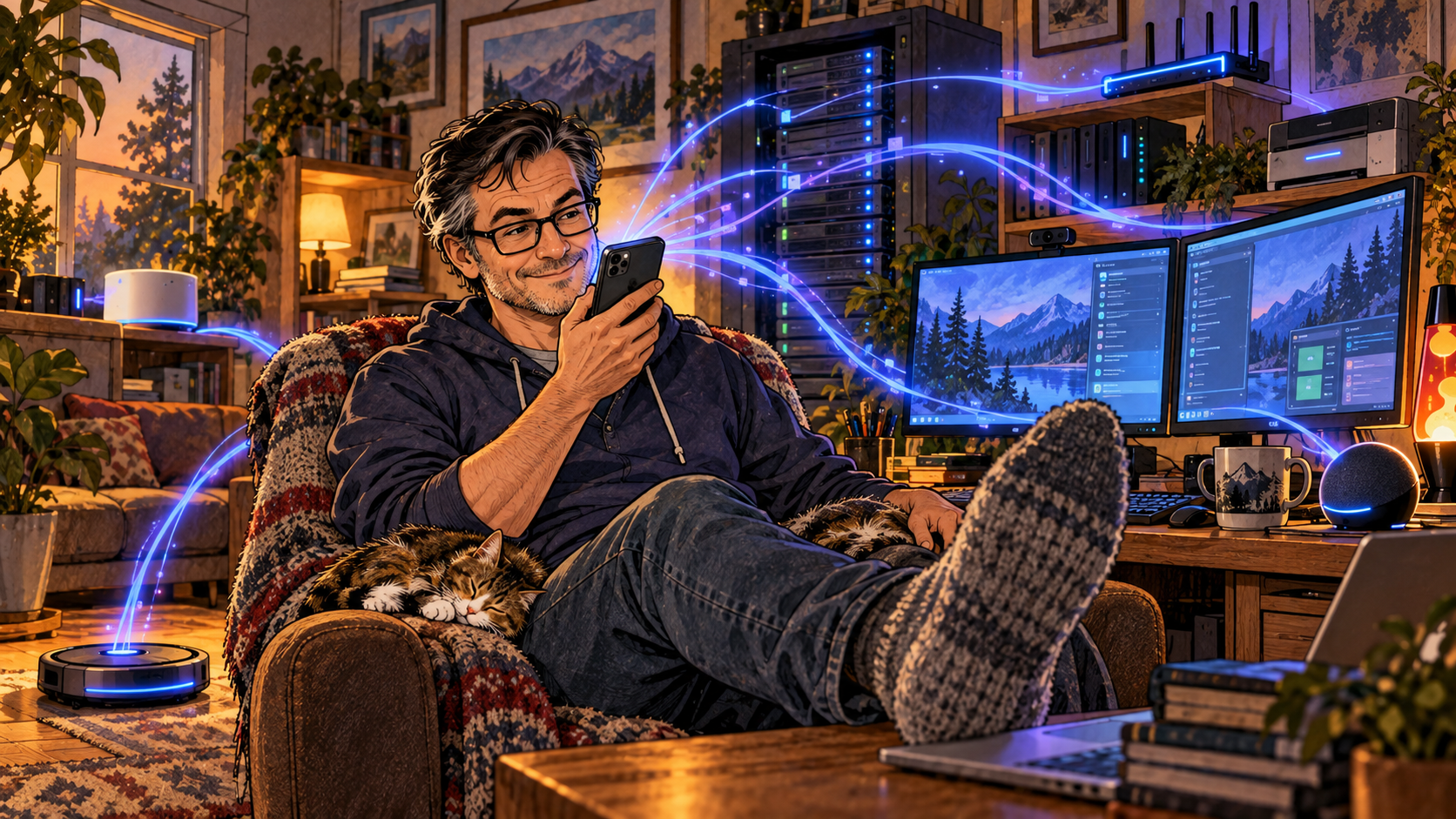
That sentence still sounds like science fiction, even while I am living it.
I used to carry software to the machine.
Then I reached the machine through the network.
Now I can speak an intention into a phone and software starts moving on my behalf.
The Tools Got Smaller — the full 2:15 illustrated story, with narration, music, sound effects, captions, and transitions.
The weird part
It is cool. It is useful. It gives me reach on days when my body does not.
It is also weird as hell.
I am used to being the one with both hands on everything. I knew which disc to grab, which cable to follow, which command to type, and which supposedly easy fix was about to become a three-hour mess. Now there are days when the computers and phones are being used more by AI than by me, and my part begins with talking.

Some of that is good. I can do more with less physical punishment. I can keep several things moving at once. A thought does not have to wait until I can get comfortable at a desk.
Some of it is not so simple. Delegating feels different when you have spent your life being the person who does the thing. AI can click the buttons, type the commands, and sift through a mountain of junk, but it can also misunderstand, overreach, or confidently head toward the wrong machine. Somebody still has to know what “fixed” looks like. Somebody still owns the consequences.
That part is still me.
Same job, different hands
The tools keep getting smaller while the reach keeps getting bigger:
- A shelf of discs became a binder.
- The binder became a USB drive.
- The USB drive became a download.
- The drive across town became a remote session.
- The keyboard became a conversation.
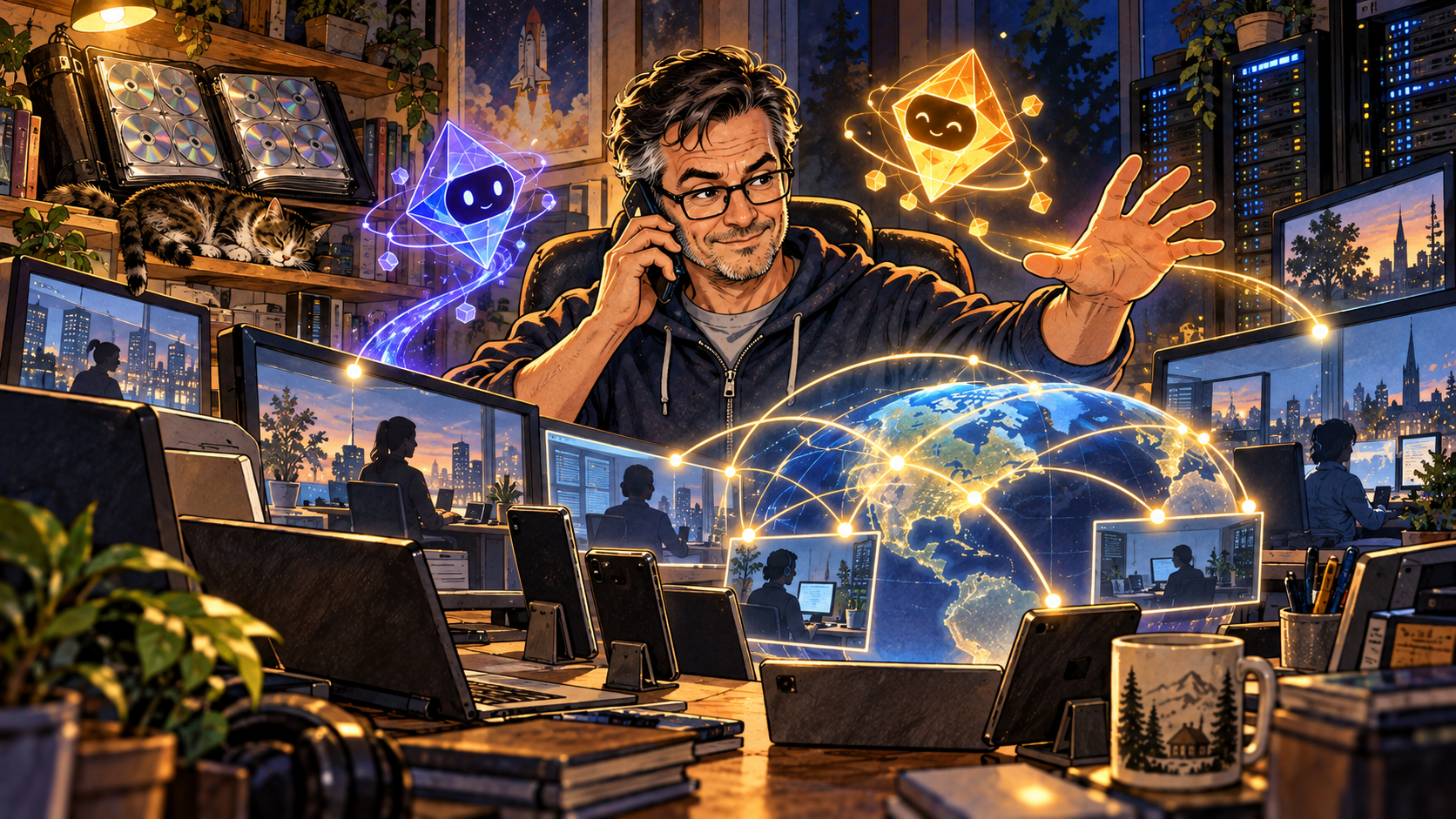
But the job was never really the binder, the USB stick, the remote-control window, or the AI.
The job is knowing why the thing is broken, deciding what is safe to change, and recognizing when it is actually working again.
The computer may have new hands now.
I am still the IT guy.
Production note: The illustrations in this story were AI-generated. The video uses synthetic ElevenLabs Roger narration plus an original procedurally generated music-and-effects track made for this project.