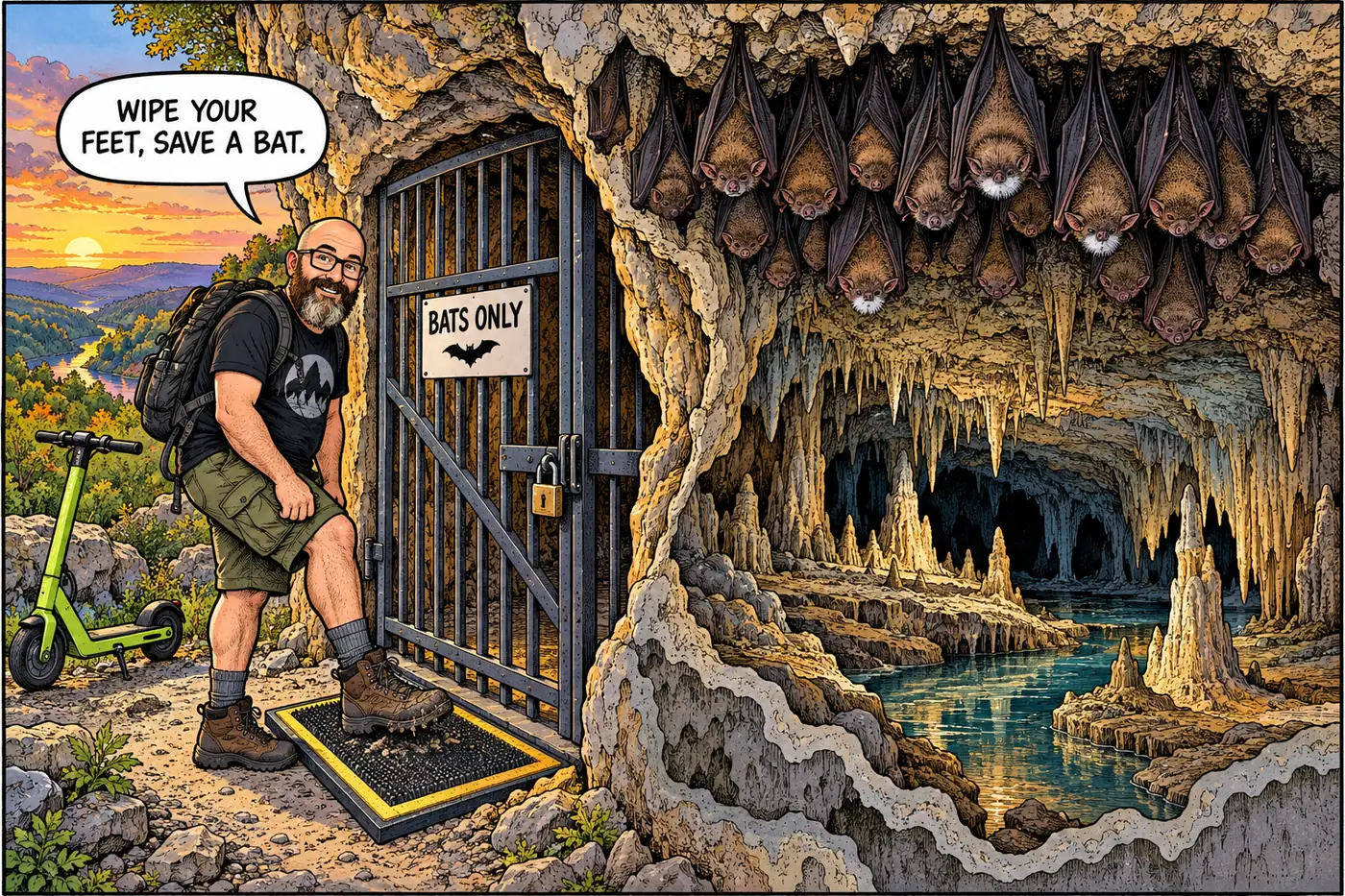
Bats, White-Nose Syndrome, and Why Grand Canyon Caves Stay Shut
A cold-loving fungus that has killed millions of bats nationally was confirmed in Arizona in 2025, and Grand Canyon’s caves are built to keep it out.
A cold-loving fungus that has killed millions of bats nationally was confirmed in Arizona in 2025, and Grand Canyon’s caves are built to keep it out.
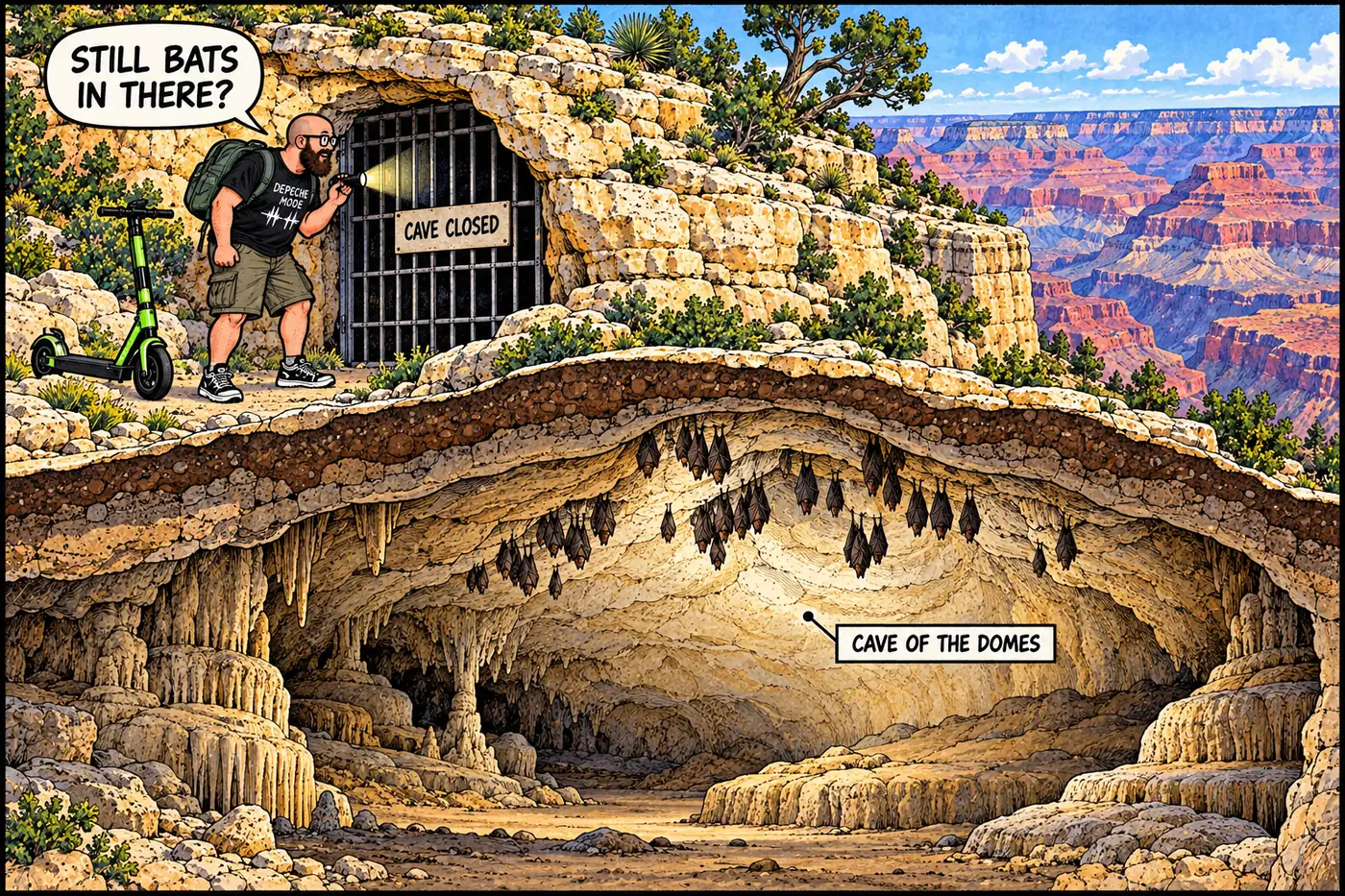
The one Grand Canyon cave you didn’t need a permit for survived a hantavirus scare but not white-nose syndrome.
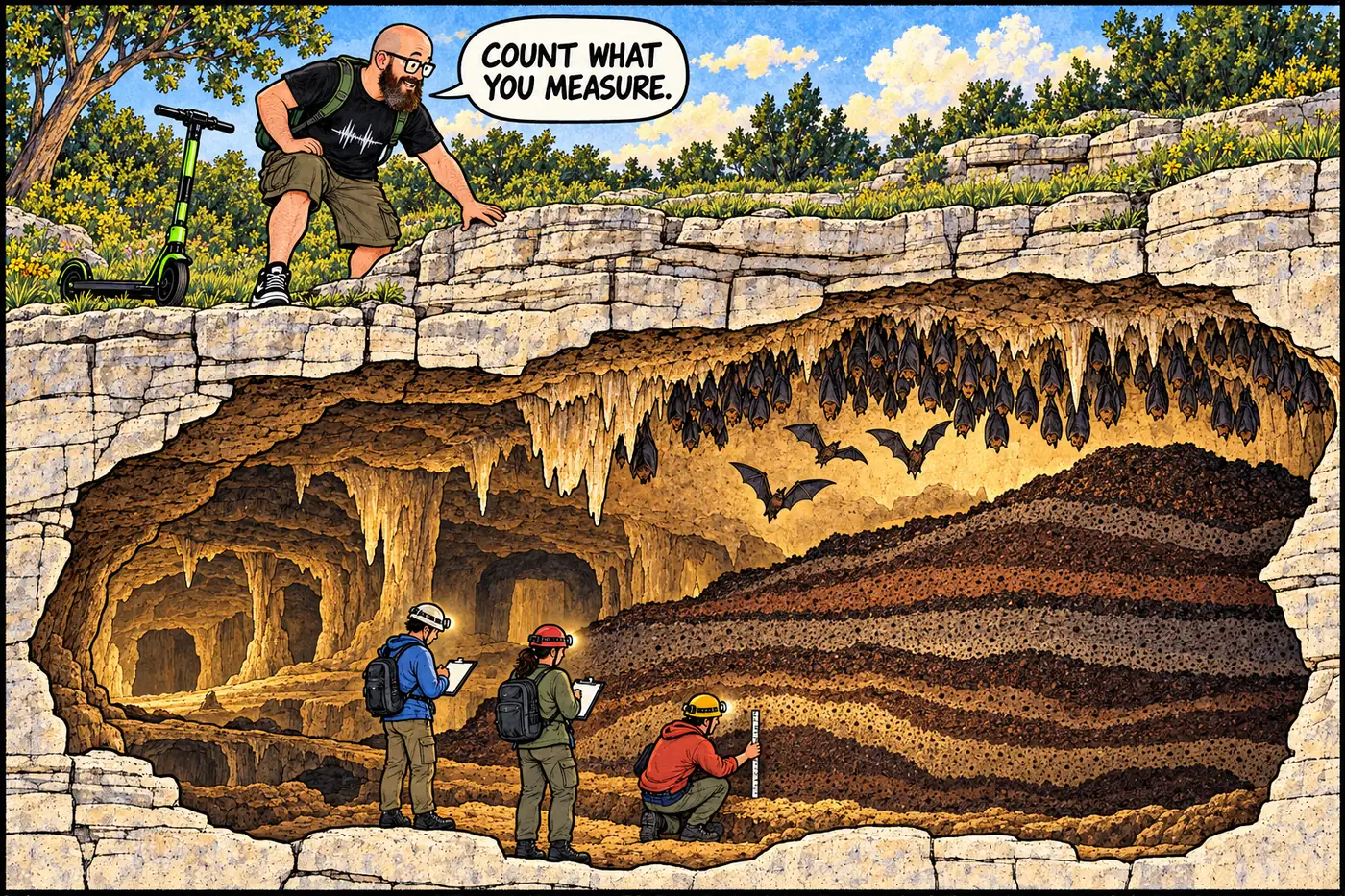
Rampart’s Ice Age fossils, Stanton’s collections, growing Leandras and Double Bopper surveys, and what cave biology and park rules actually establish.
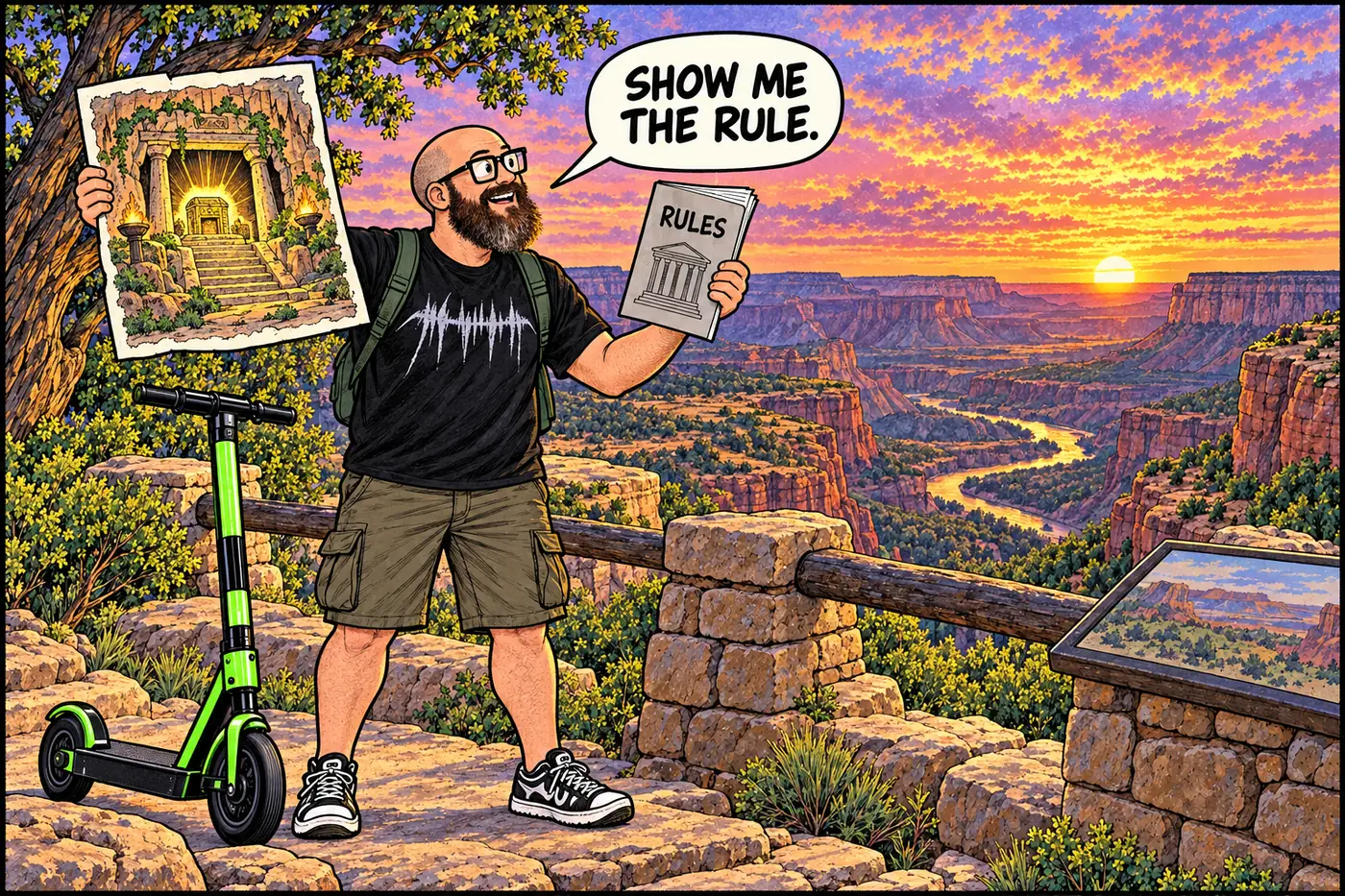
A 1909 cave myth meets the park’s actual closure rules for caves, mines, cultural resources and working facilities. What is closed, and why?
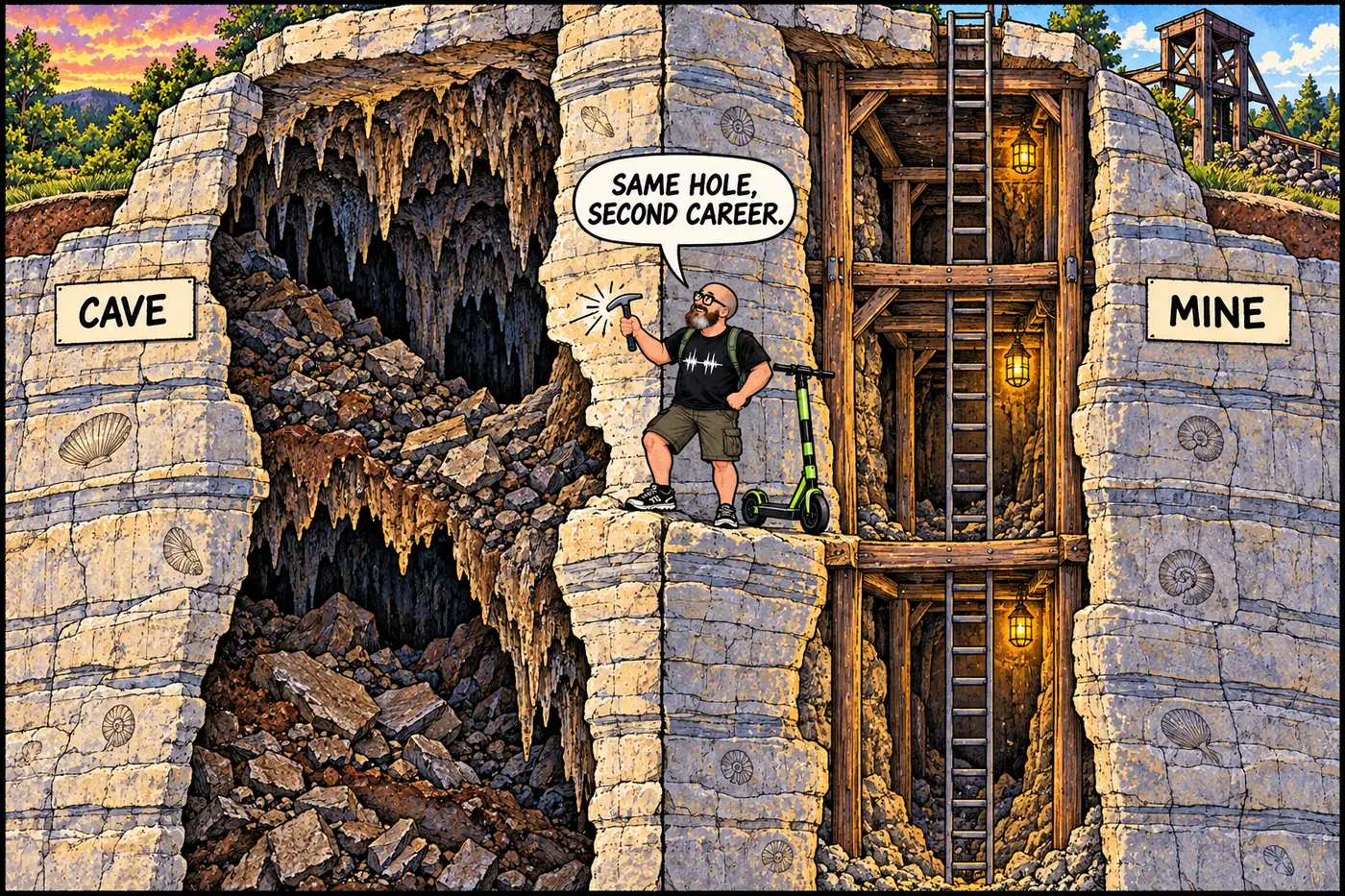
Karst geology links the park’s caves and its uranium mines directly: many ore-bearing breccia pipes are collapsed ancient caves, excavated twice over.
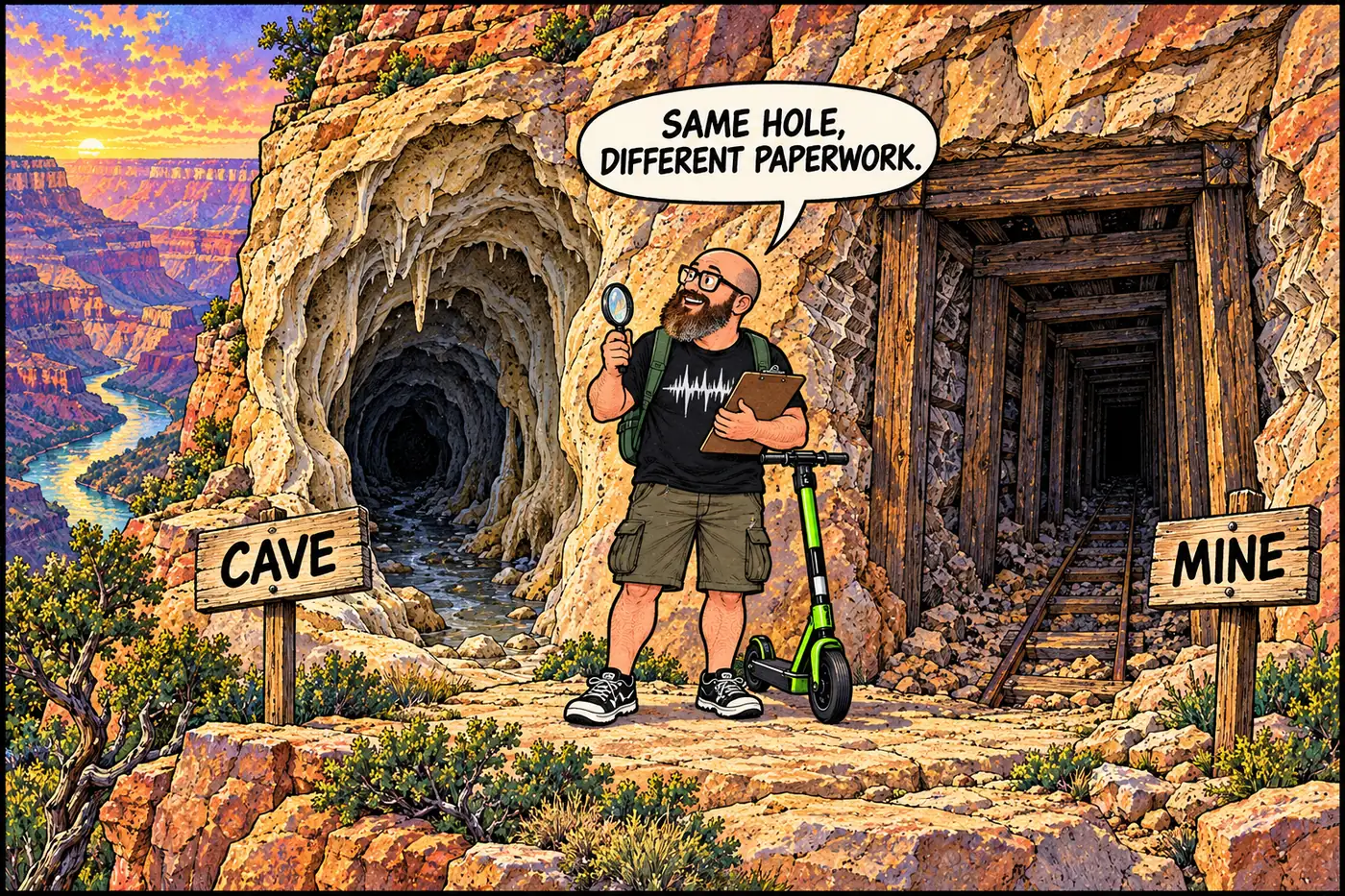
Federal and park rules define caves and mines differently, deciding who needs a permit, why a site is closed, and how NPS counts what is underground.
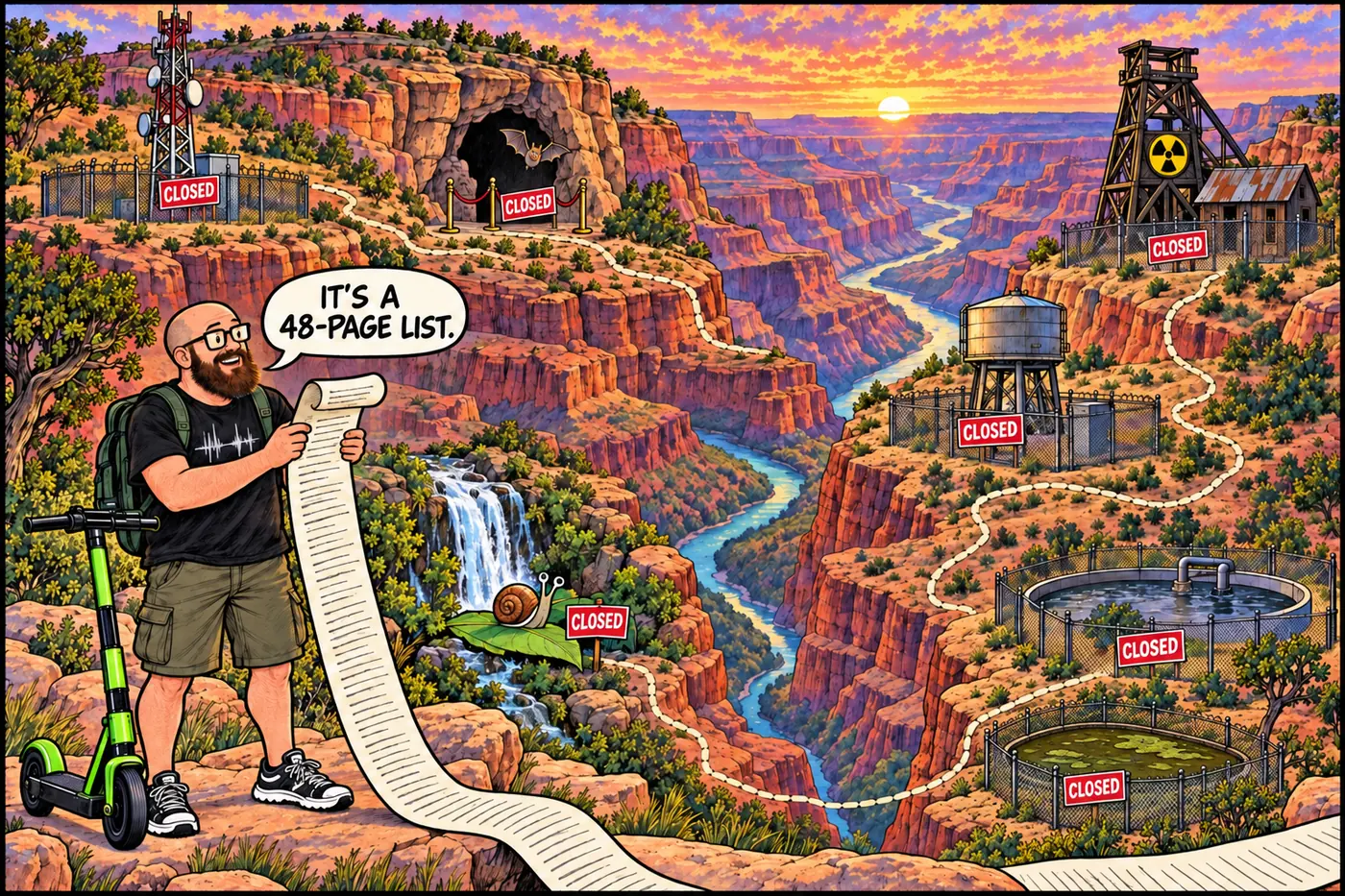
The Grand Canyon publishes a 48-page list of places you can’t go. Uranium, asbestos, bats, a snail, sewage lagoons, tribal land, and zero Egyptian cities: here’s what’s closed and the legal reason why.
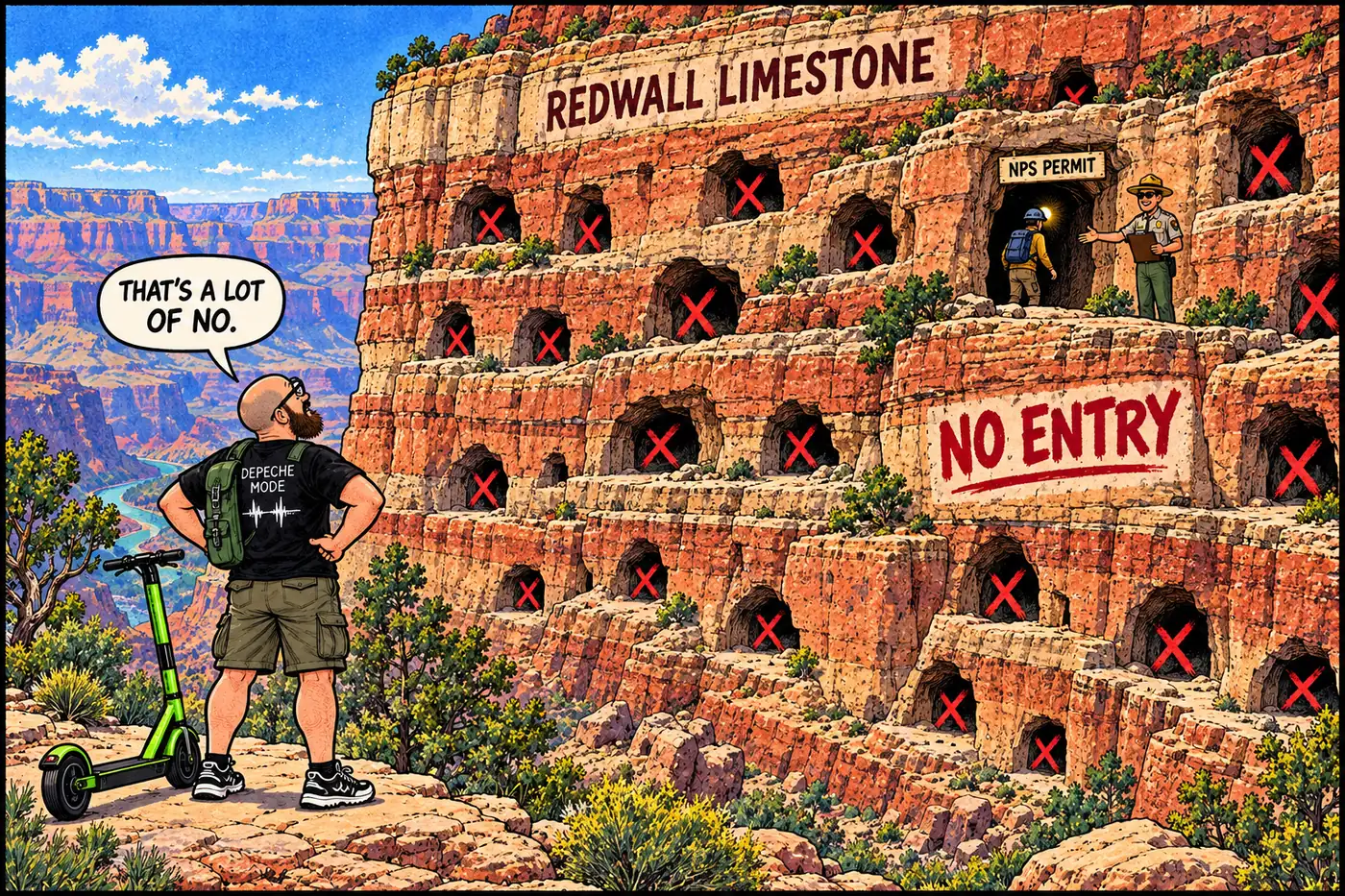
A 1988 federal law makes cave locations confidential; the park’s own rule goes further and requires a permit just to walk in.