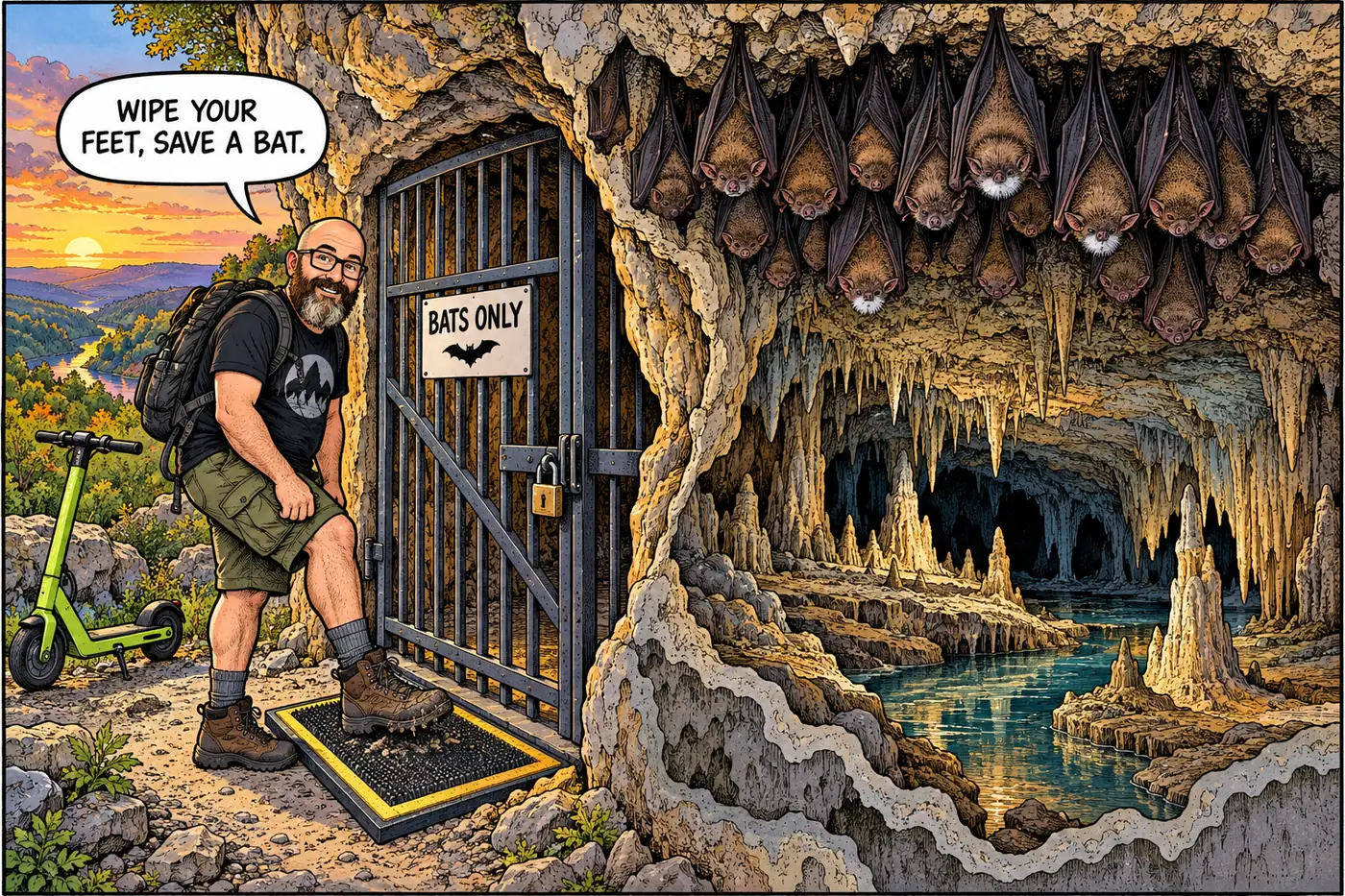
Bats, White-Nose Syndrome, and Why Grand Canyon Caves Stay Shut
A cold-loving fungus that has killed millions of bats nationally was confirmed in Arizona in 2025, and Grand Canyon’s caves are built to keep it out.
A cold-loving fungus that has killed millions of bats nationally was confirmed in Arizona in 2025, and Grand Canyon’s caves are built to keep it out.
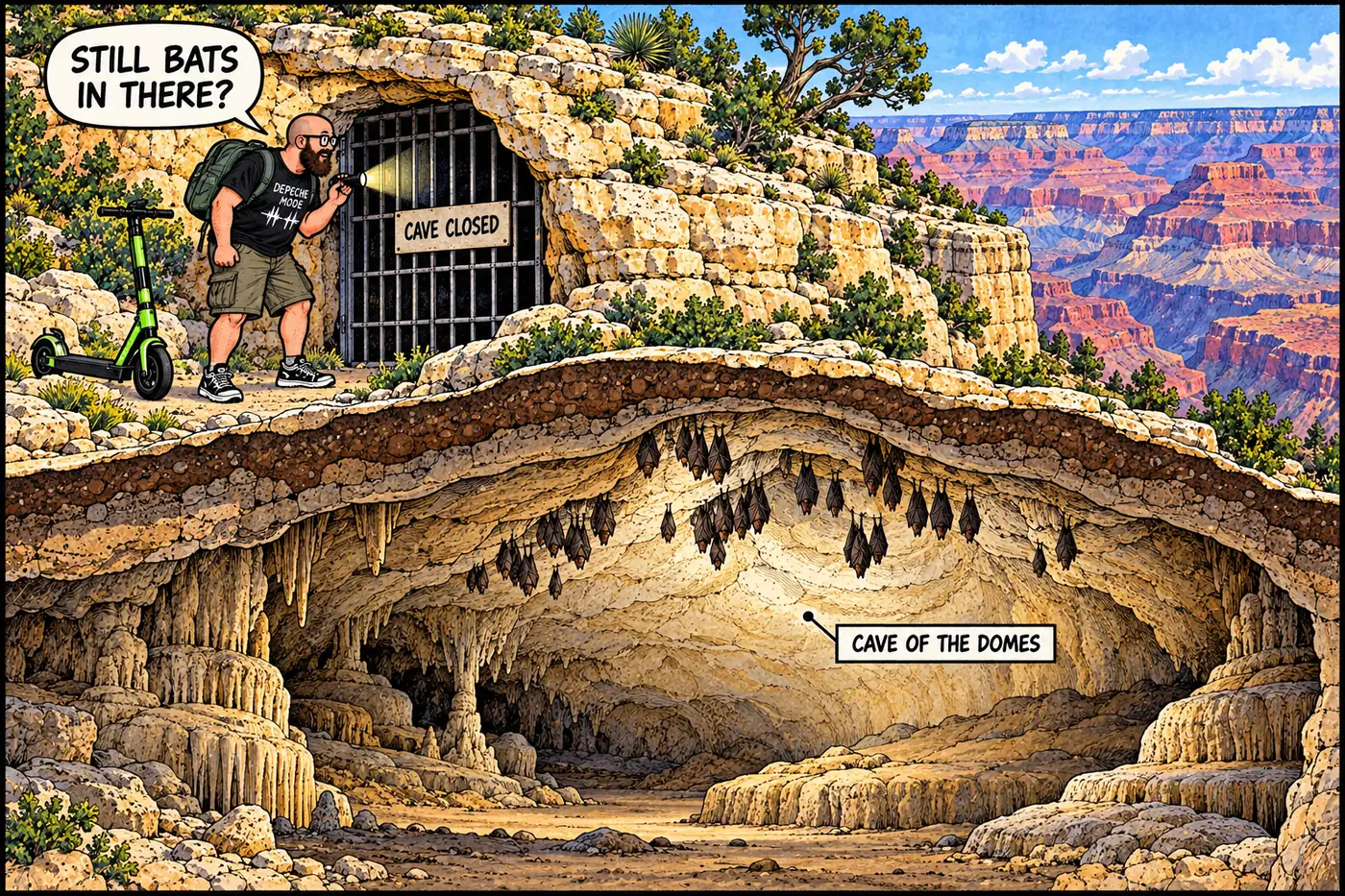
The one Grand Canyon cave you didn’t need a permit for survived a hantavirus scare but not white-nose syndrome.
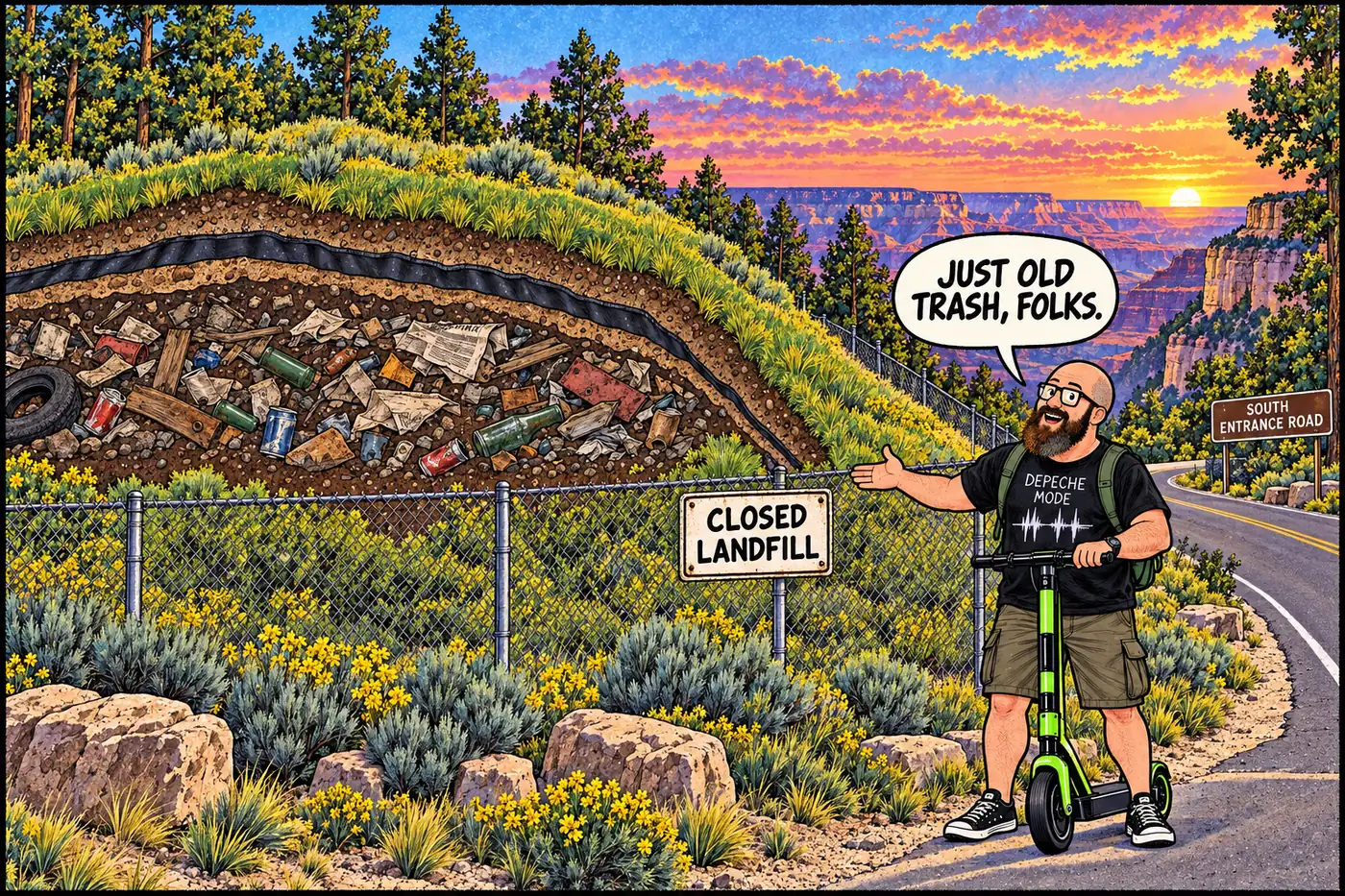
A closed South Rim landfill traces back to open dumps and a 1926 railroad-funded incinerator, not a Superfund emergency.
Every source behind the project, grouped by publisher and linked to the dossiers that cite it.
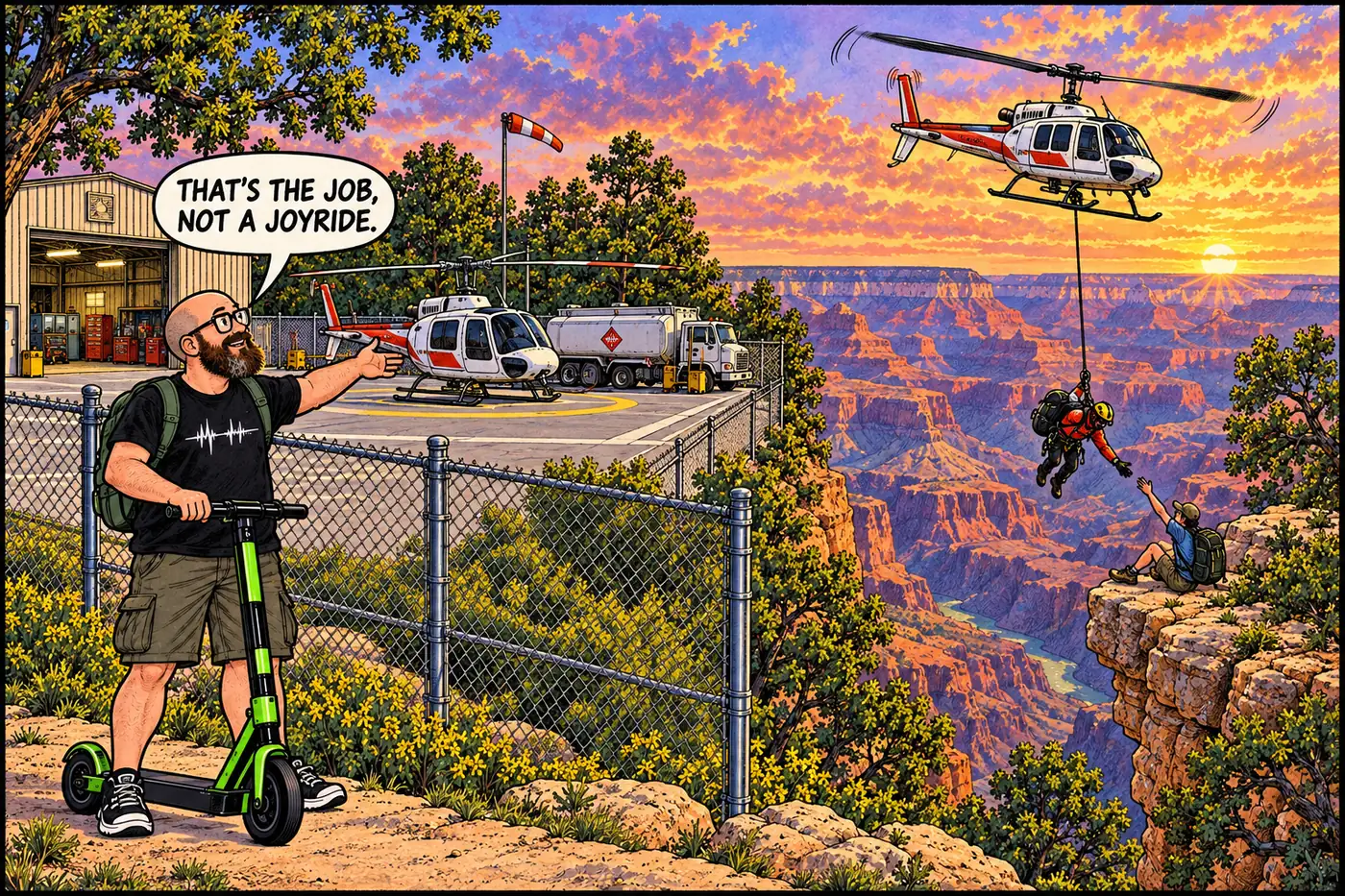
A fenced helibase runs one of the busiest non-military federal flight programs, training rescuers who dangle from a rope to reach places helicopters can’t land.
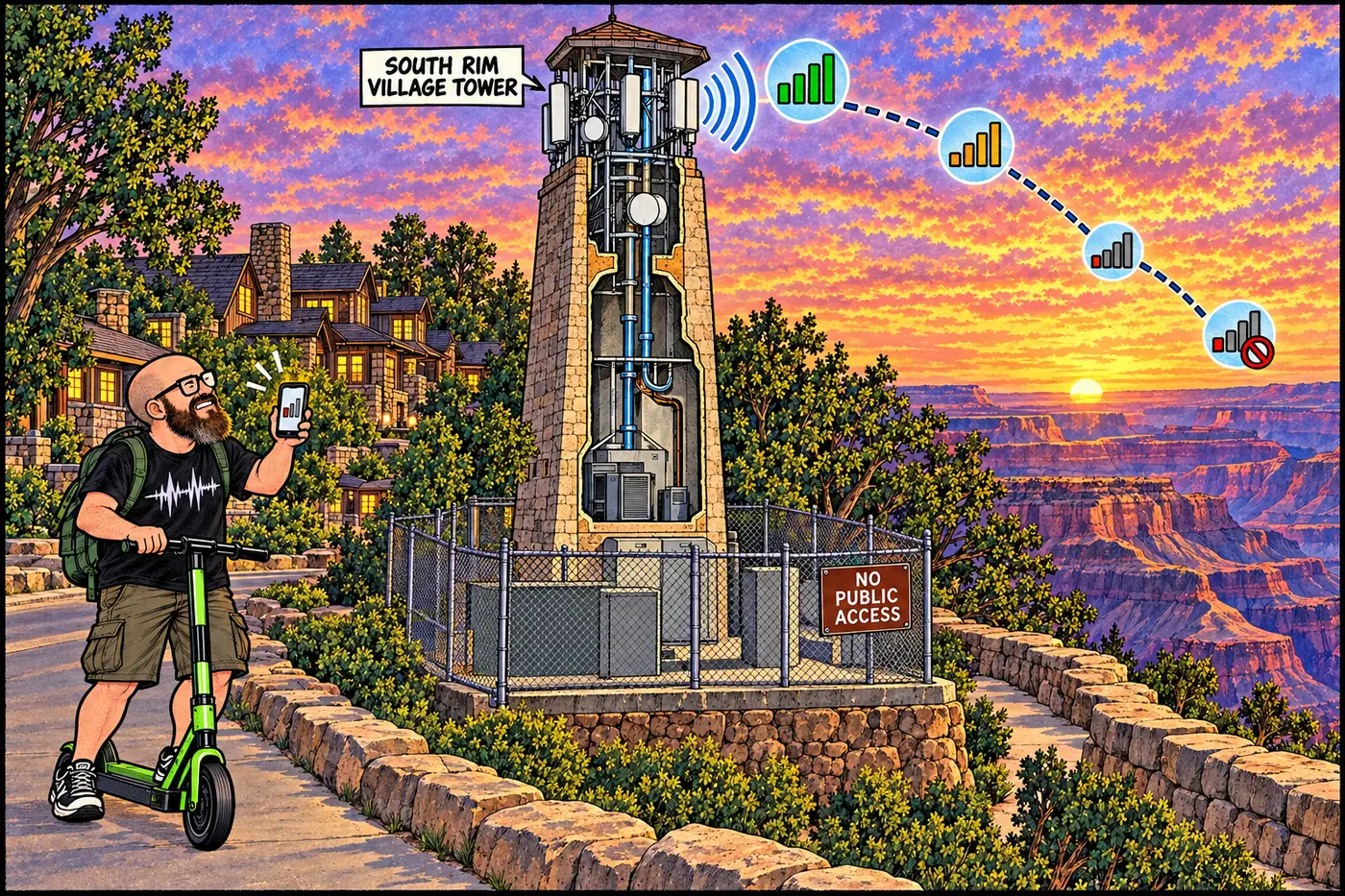
Grand Canyon offered cellular service from just one carrier over a shared 850 Mbps pipe. A 2020 federal plan approved up to five new towers, built permit by permit.
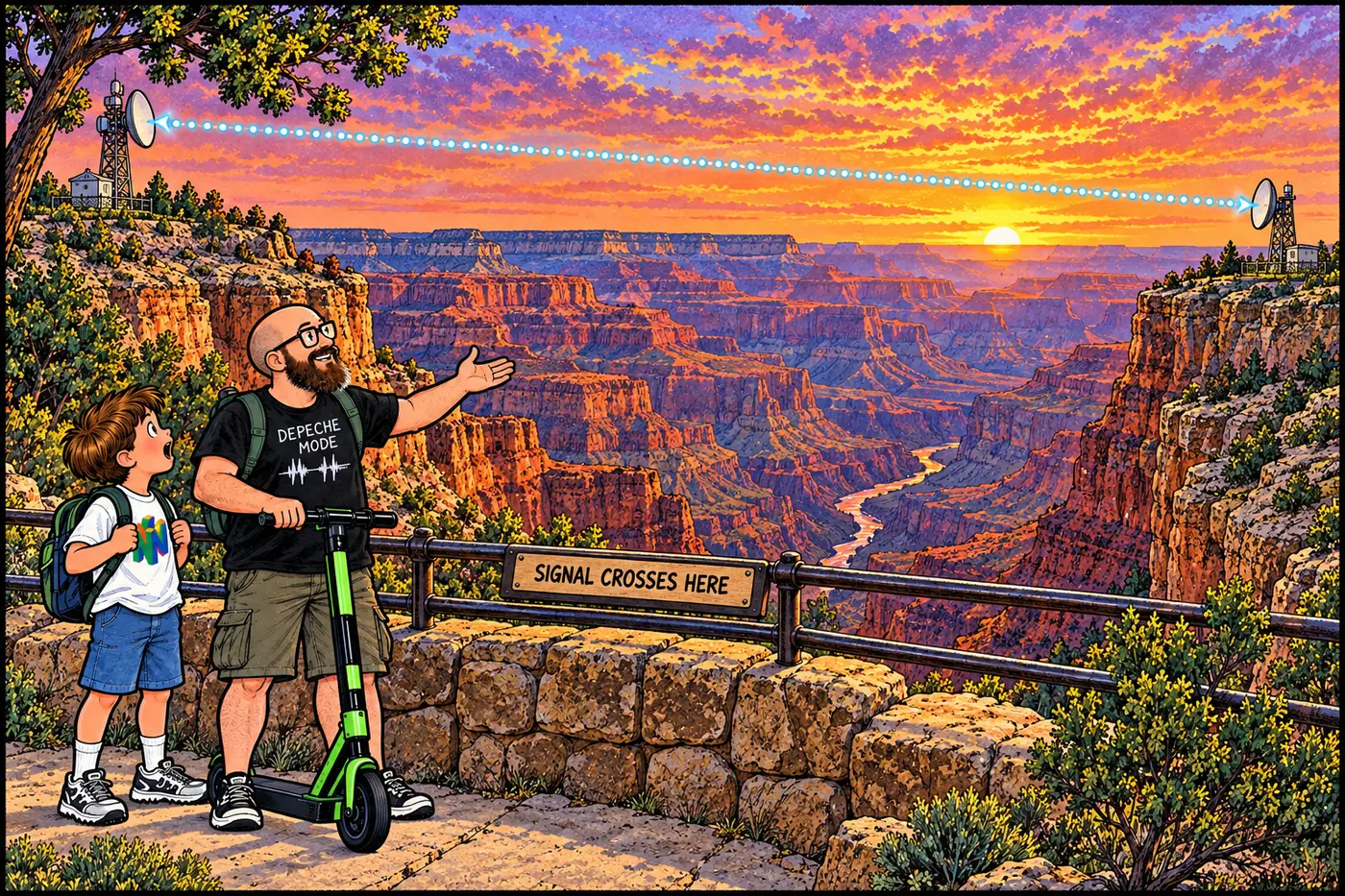
Grand Canyon’s towers reach the outside world via line-of-sight microwave links, including a dish at Phantom Ranch that has quietly carried phone calls from the canyon floor for years.
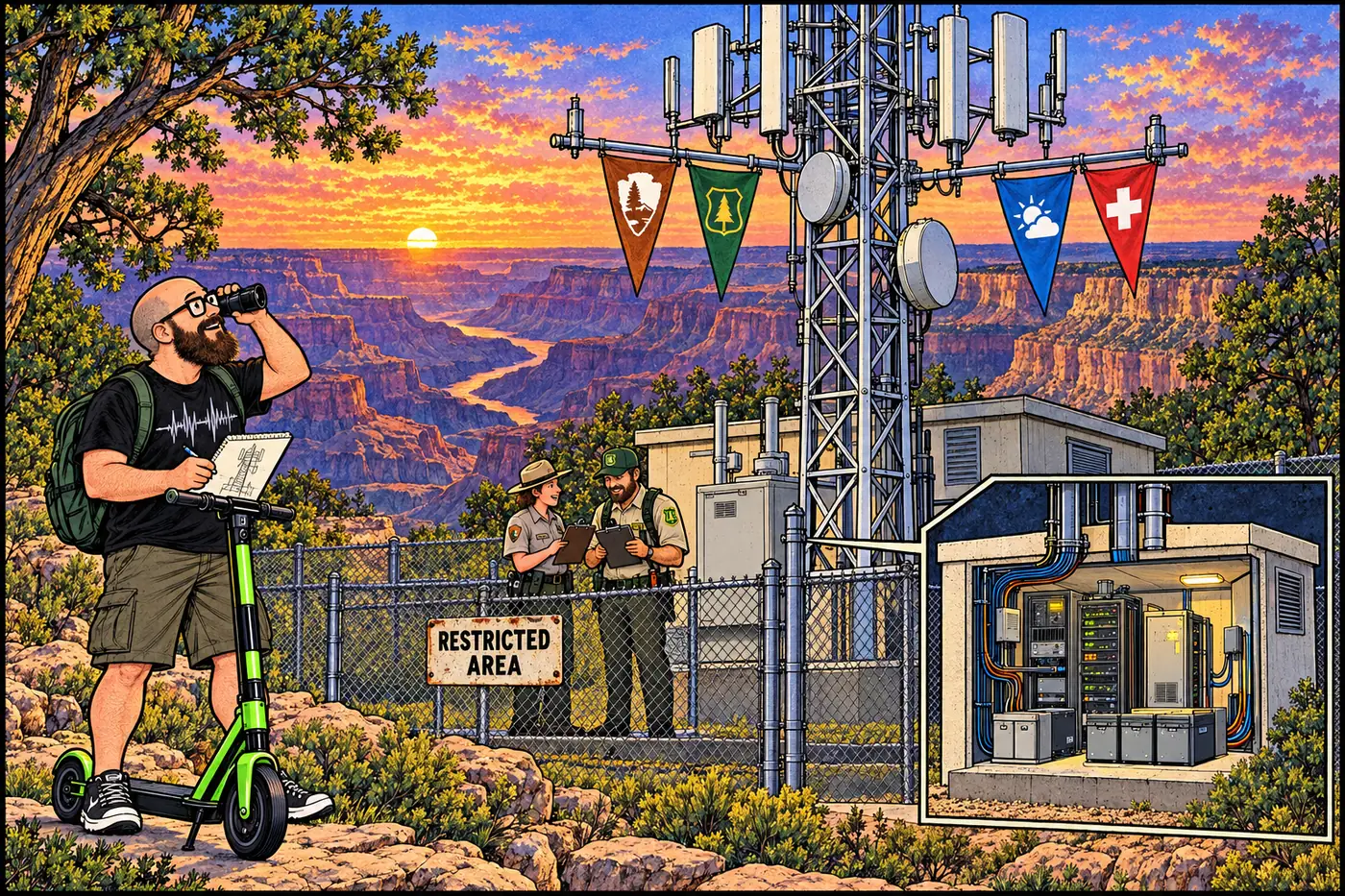
How Grand Canyon’s radio system shares towers, dispatch, and rescue response with the Forest Service, BLM, Arizona DPS, a sheriff, a tribal agency, and a neighboring park.
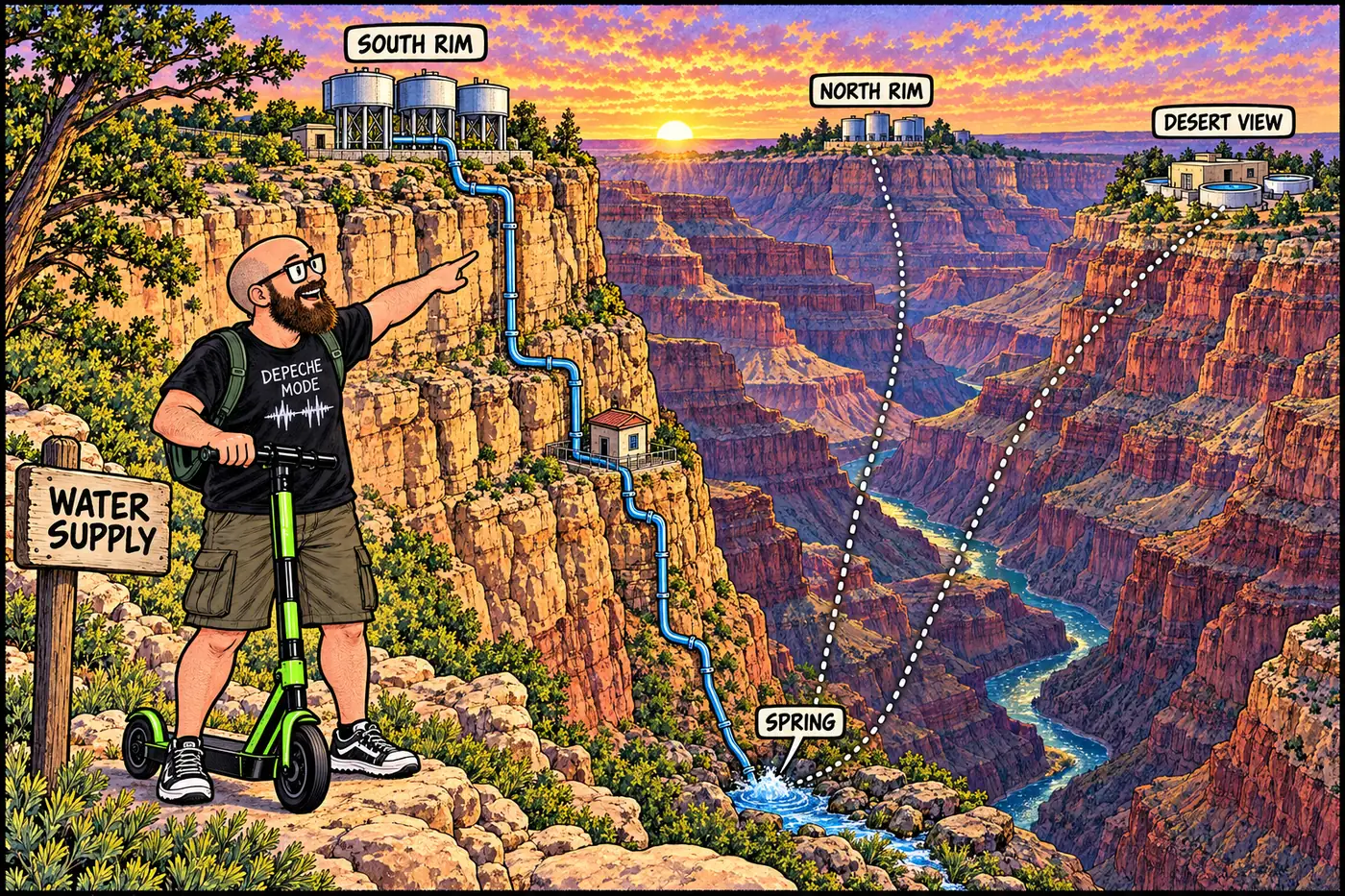
How Grand Canyon National Park sources, treats, stores, and delivers water and wastewater across all four rim and inner-canyon developed areas.
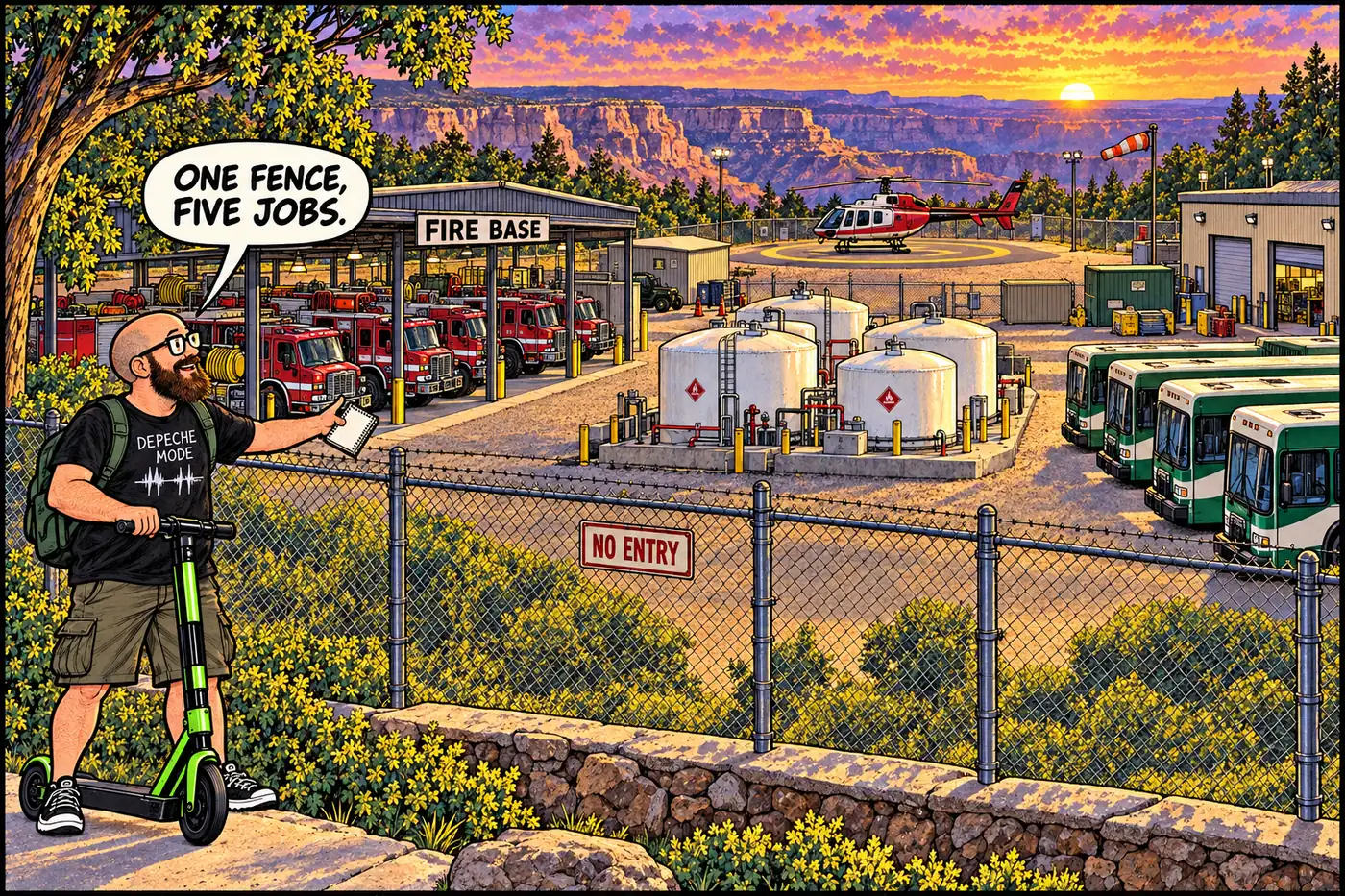
A fenced South Rim compound houses the park’s fire base, fuel yard, and shuttle barn — and why it’s closed, from the fire program to Dragon Bravo.