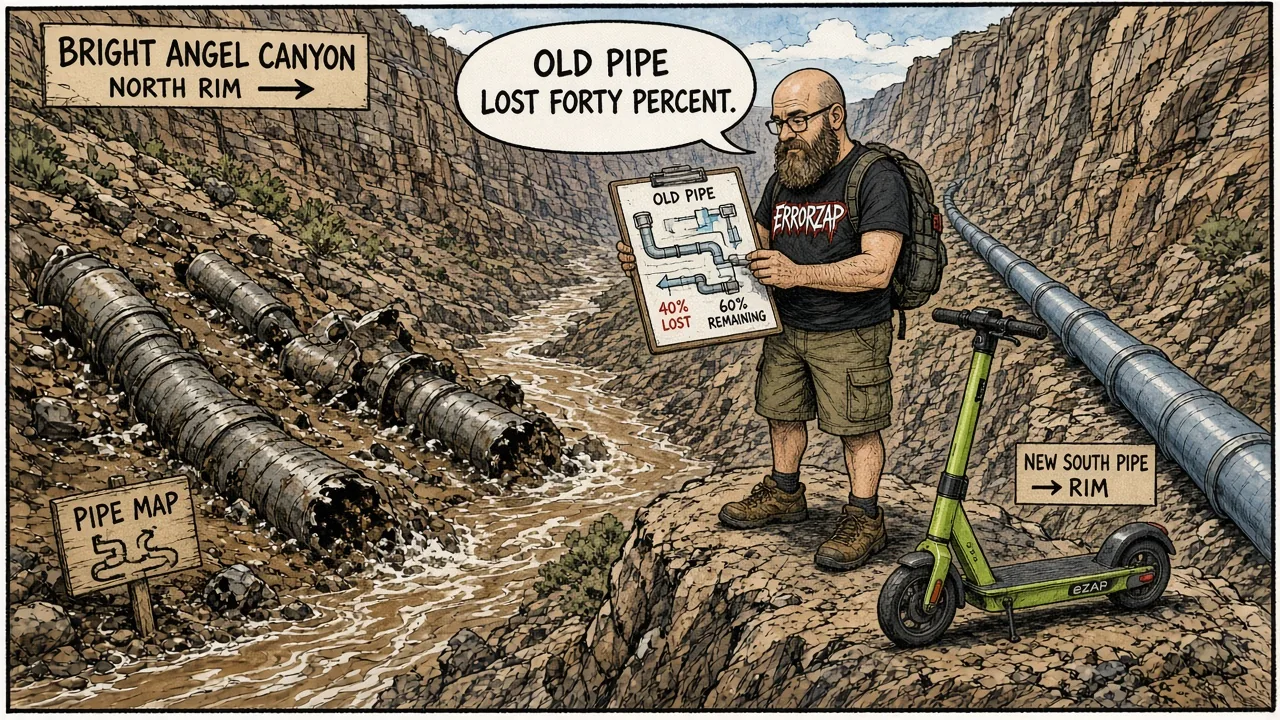
Bright Angel / Phantom flood infrastructure damage (Aug–Sep 2026)
What the August 29 and mid-September 2026 Bright Angel floods did to the legacy waterline, intakes, trails, and bridges — and what the temporary intake plan tried to fix.
What the August 29 and mid-September 2026 Bright Angel floods did to the legacy waterline, intakes, trails, and bridges — and what the temporary intake plan tried to fix.
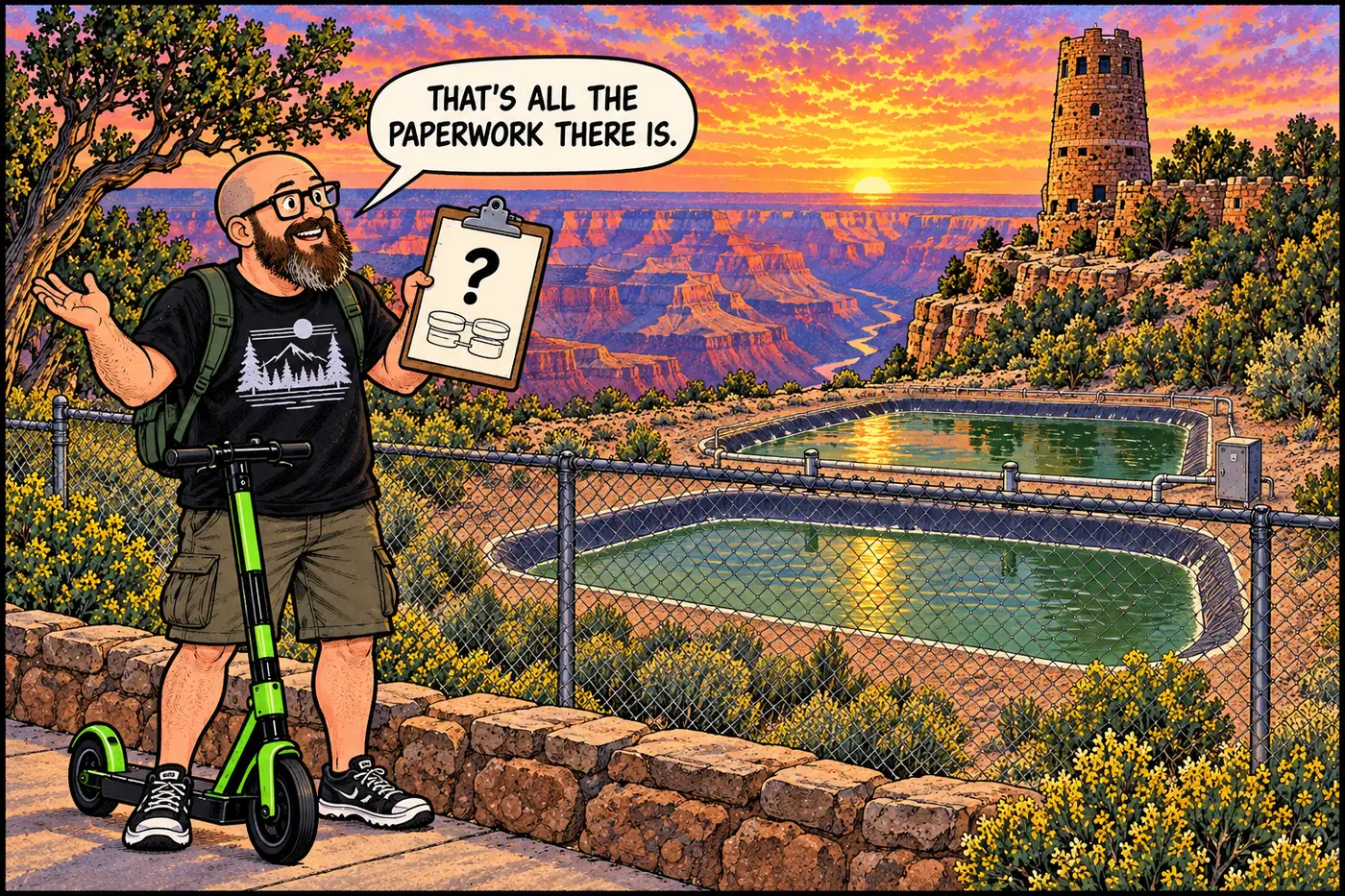
A fenced lagoon plant off Cedar Mountain Road is the least-documented wastewater site in the park. Here’s exactly what is and isn’t public.
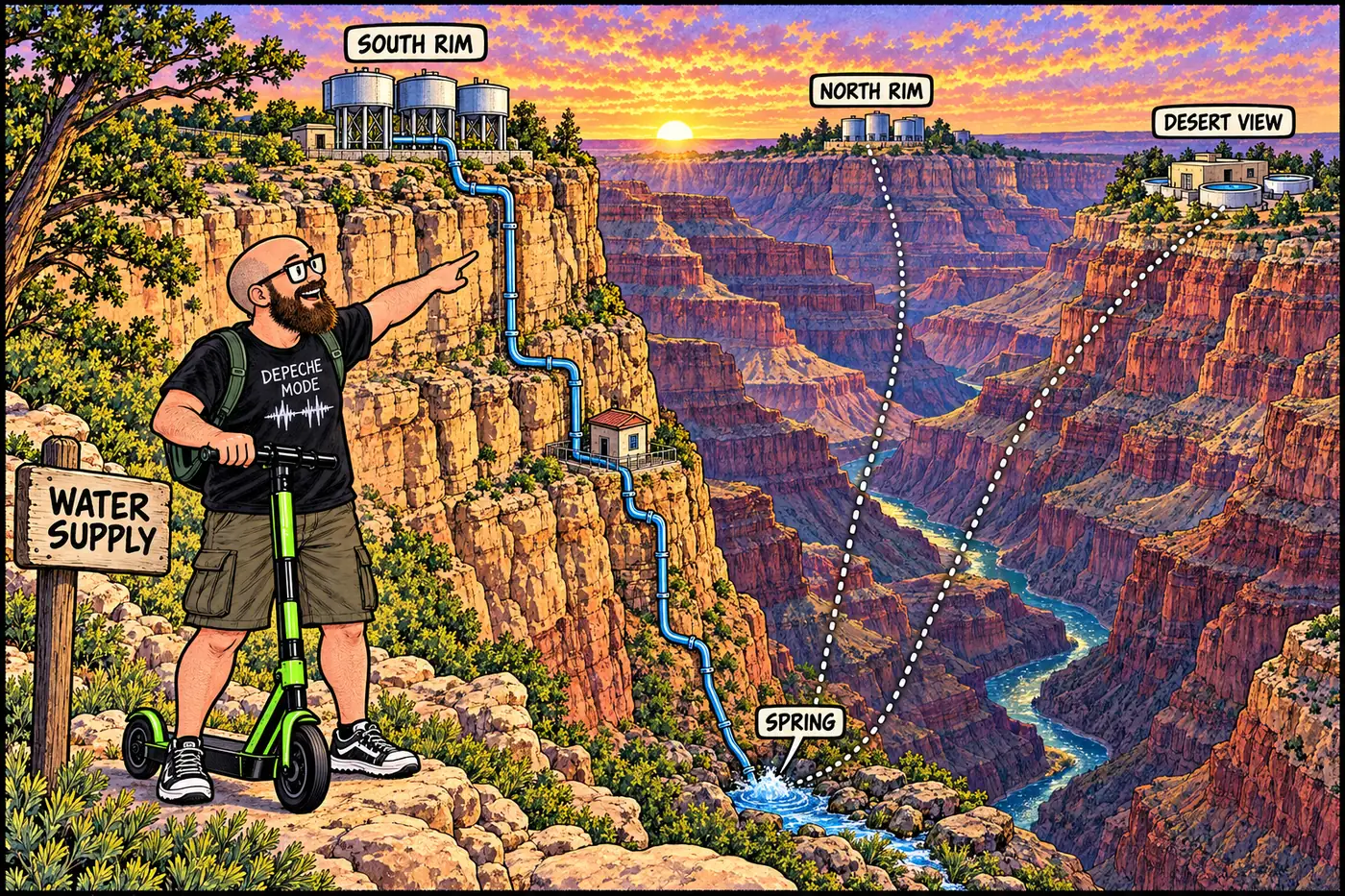
How Grand Canyon National Park sources, treats, stores, and delivers water and wastewater across all four rim and inner-canyon developed areas.
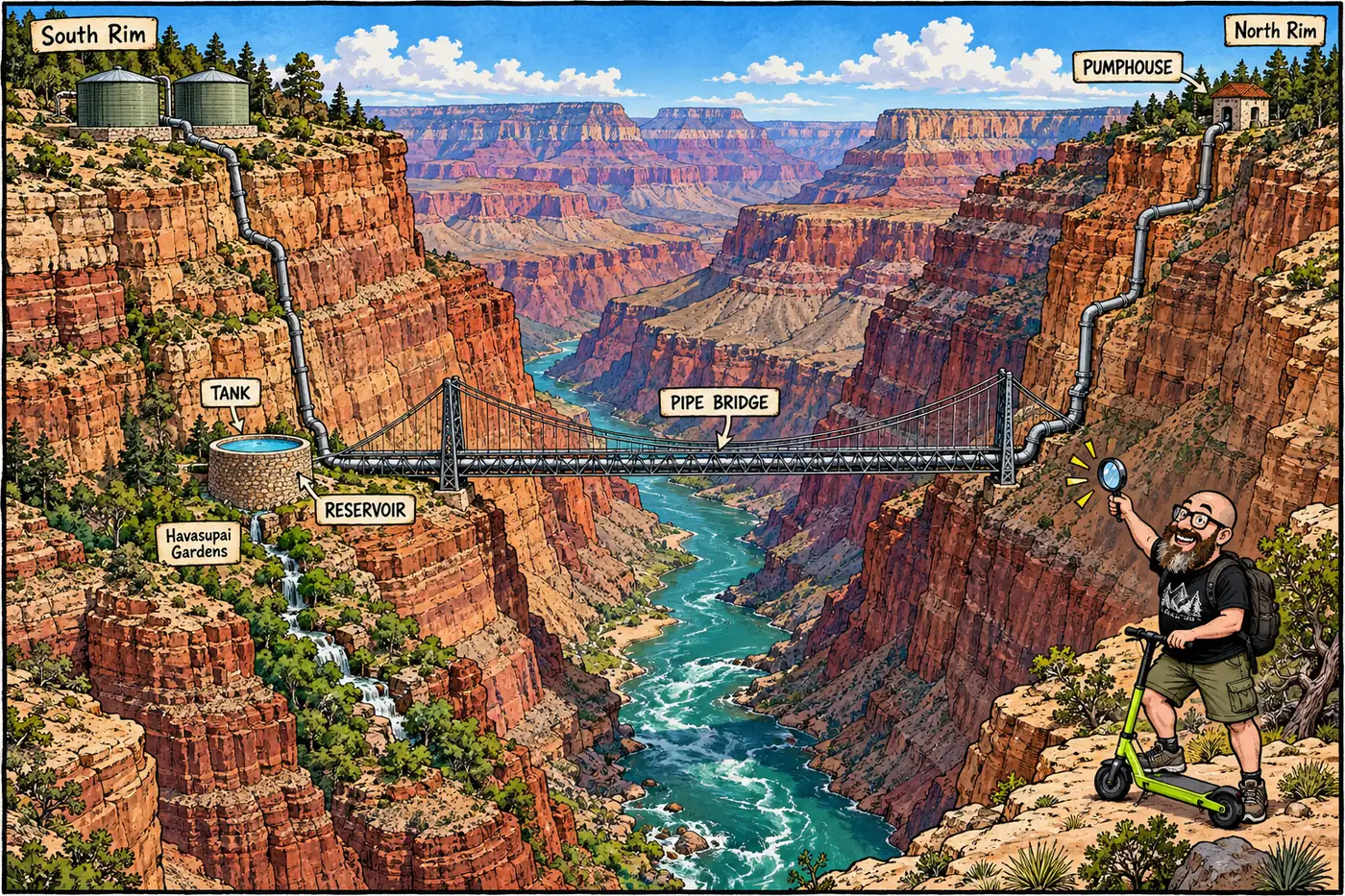
How water gets pumped and piped through the canyon corridor, from a 1932 railroad system to the $208M rebuild and the 2026 flash-flood damage.
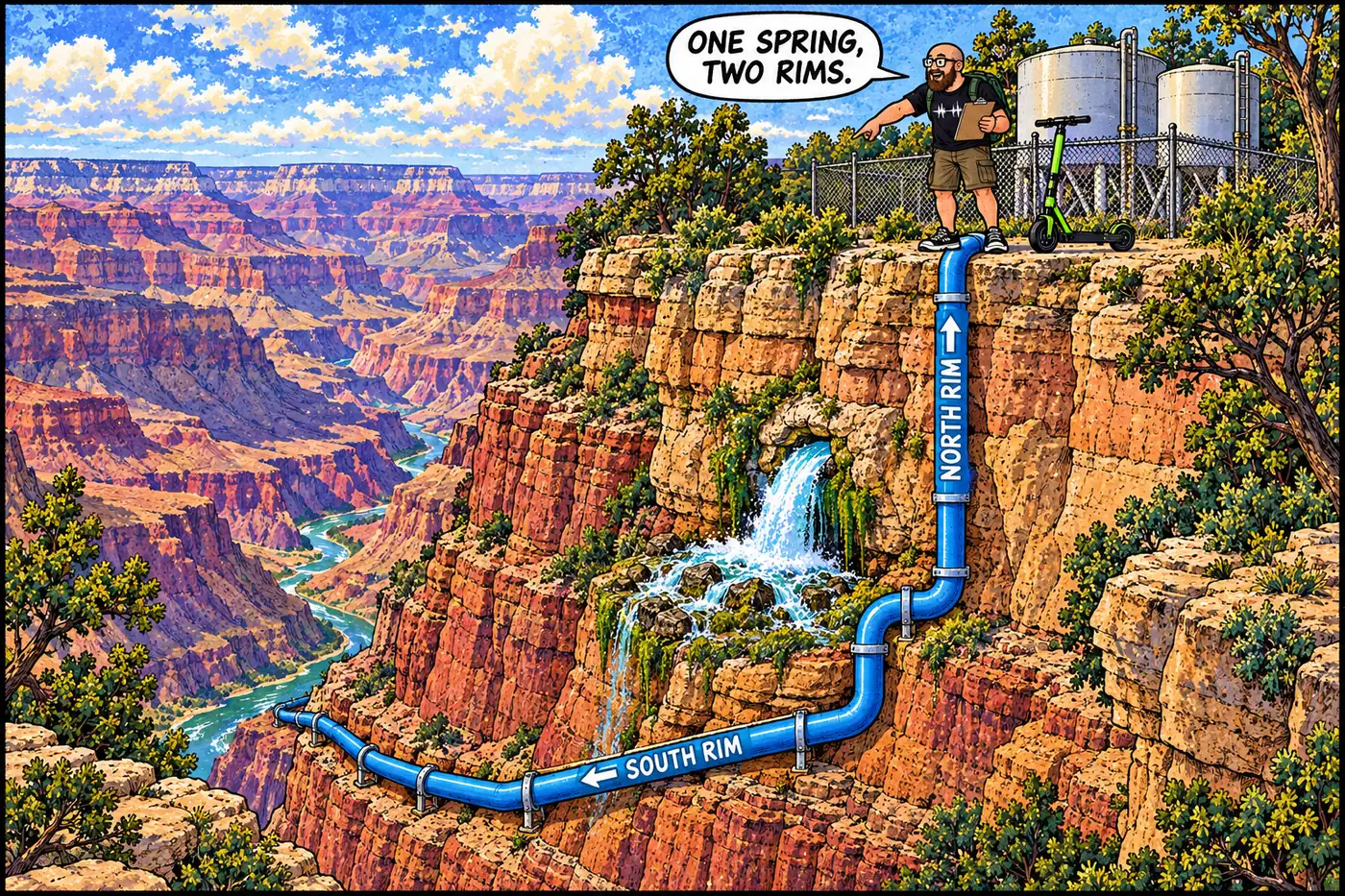
The North Rim’s water comes from Roaring Springs via a 1960s pipeline. A 2025 wildfire destroyed the treatment plant; potable water is still out in 2026.
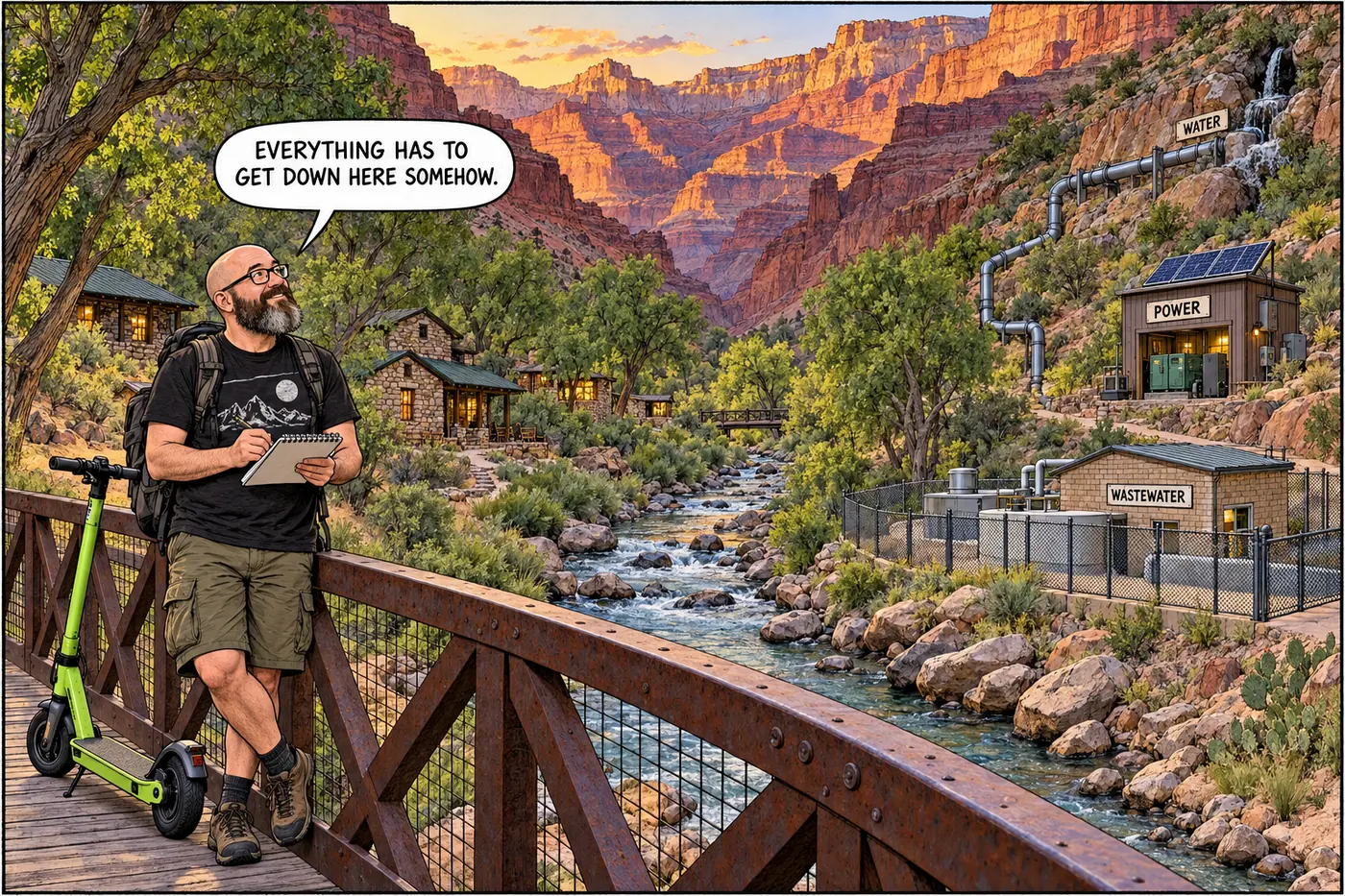
A century of improvised water, power, and sewage at the bottom of the canyon, and what August 2026’s flash flood destroyed and spared.
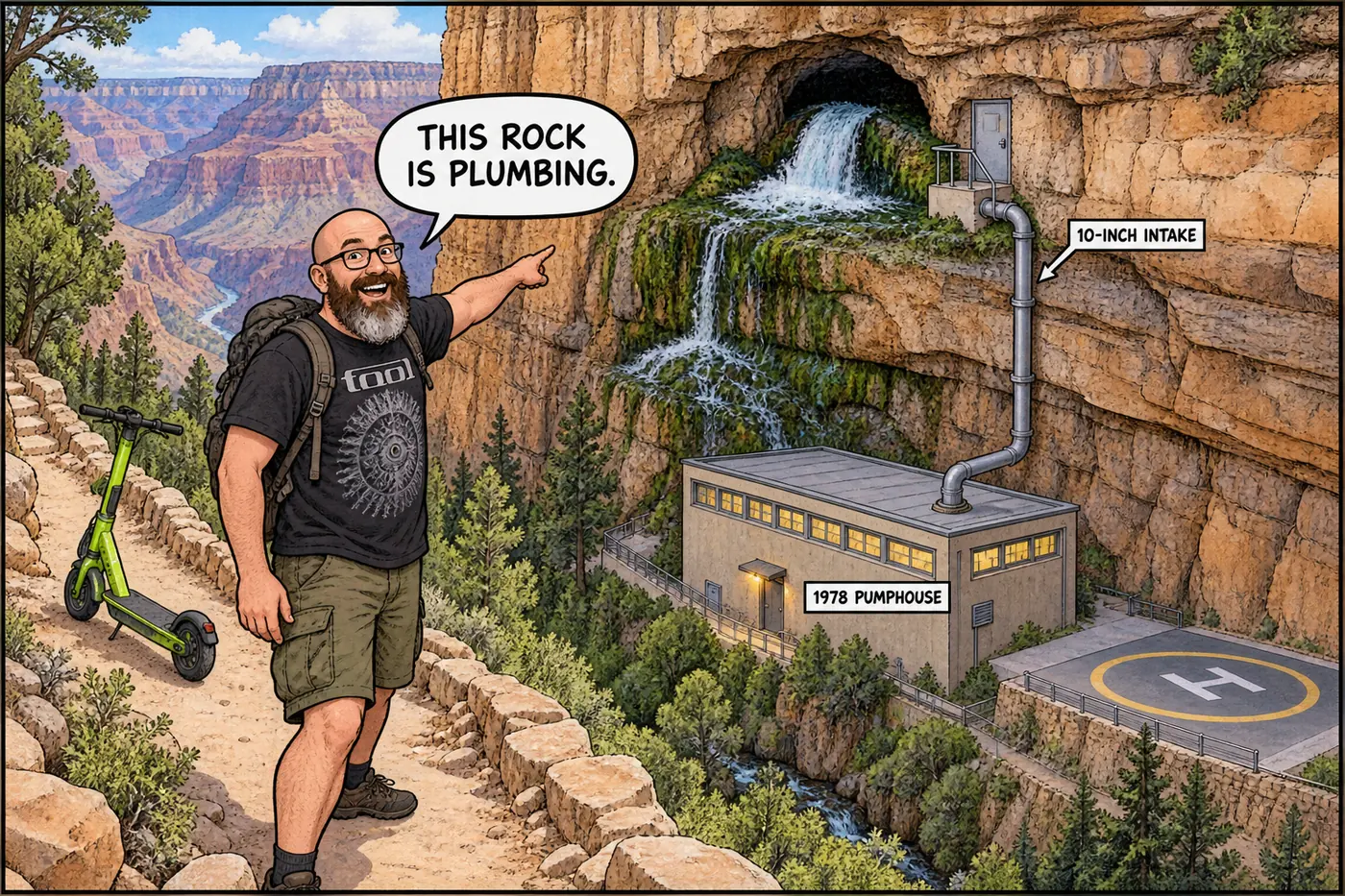
A North Rim spring that supplied all of Grand Canyon’s piped water for decades, staffed by a live-in caretaker for 33 years, now off-limits and mid-rebuild.
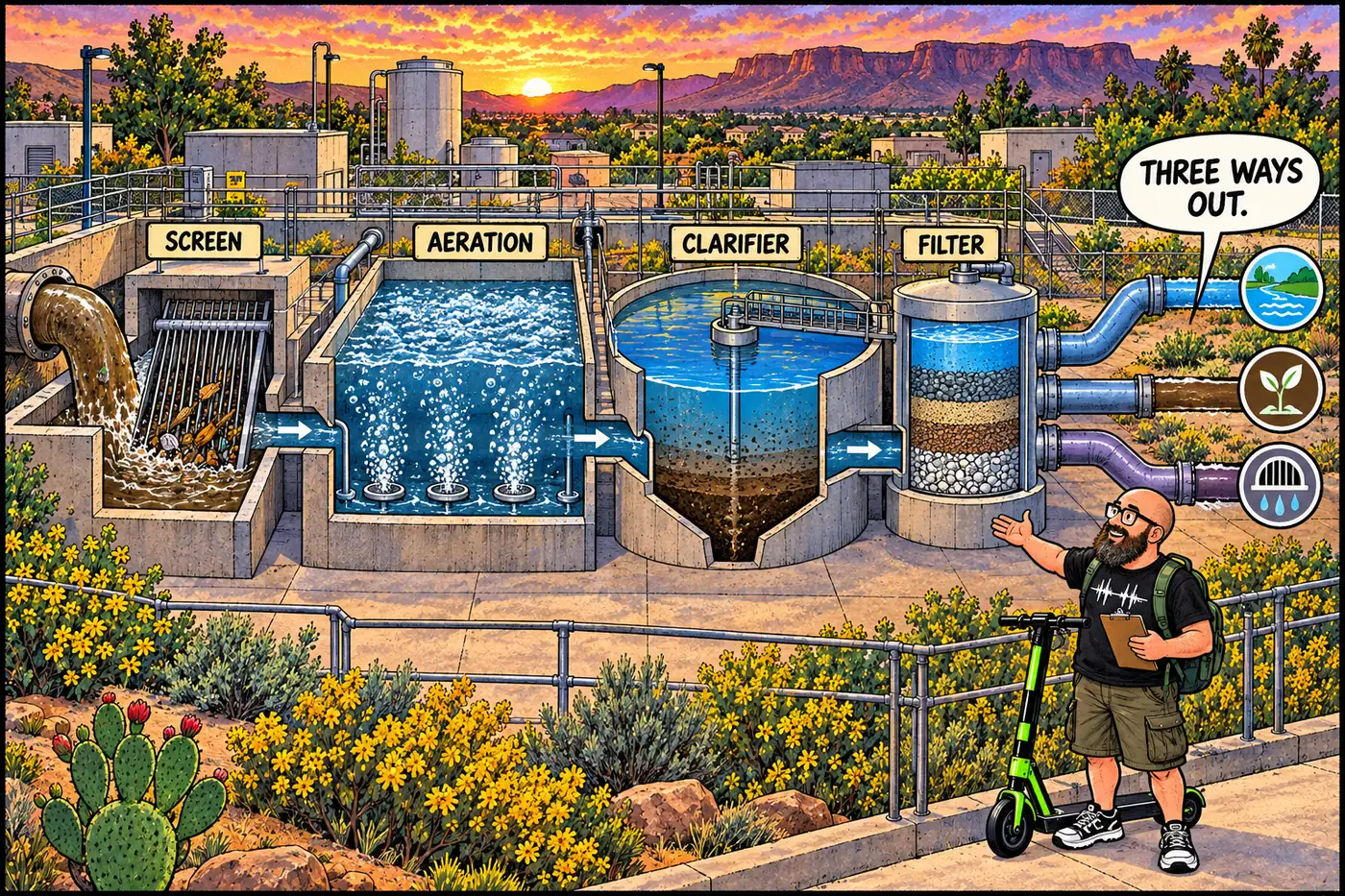
The South Rim’s fenced 1972 wastewater plant, its lagoons, and a 2025 USGS study that traced PFAS and drugs from its effluent into a nearby spring.
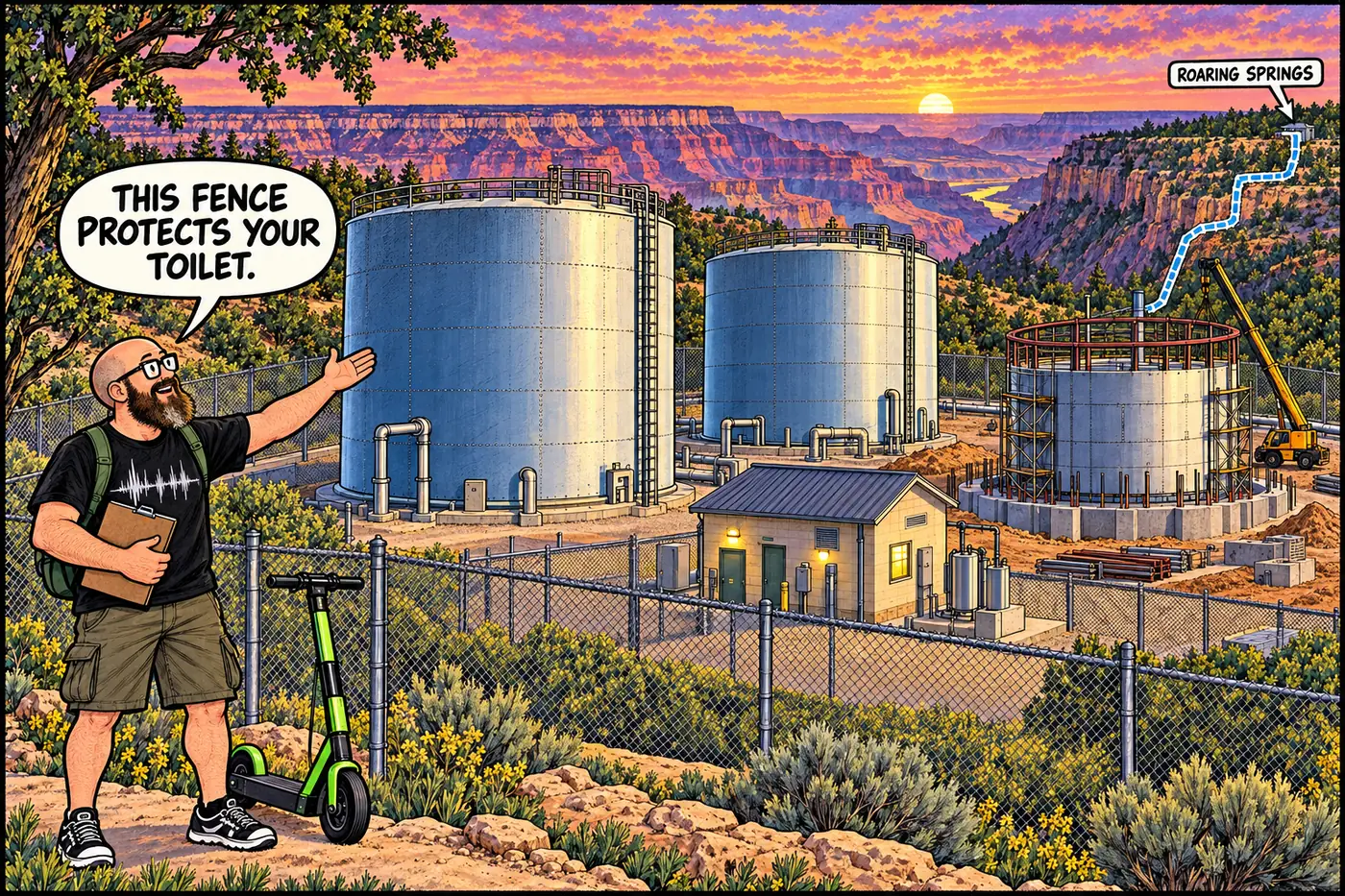
Two fenced tanks near Trailer Village hold all the South Rim’s water. In 2025-2026 they ran low four separate times.
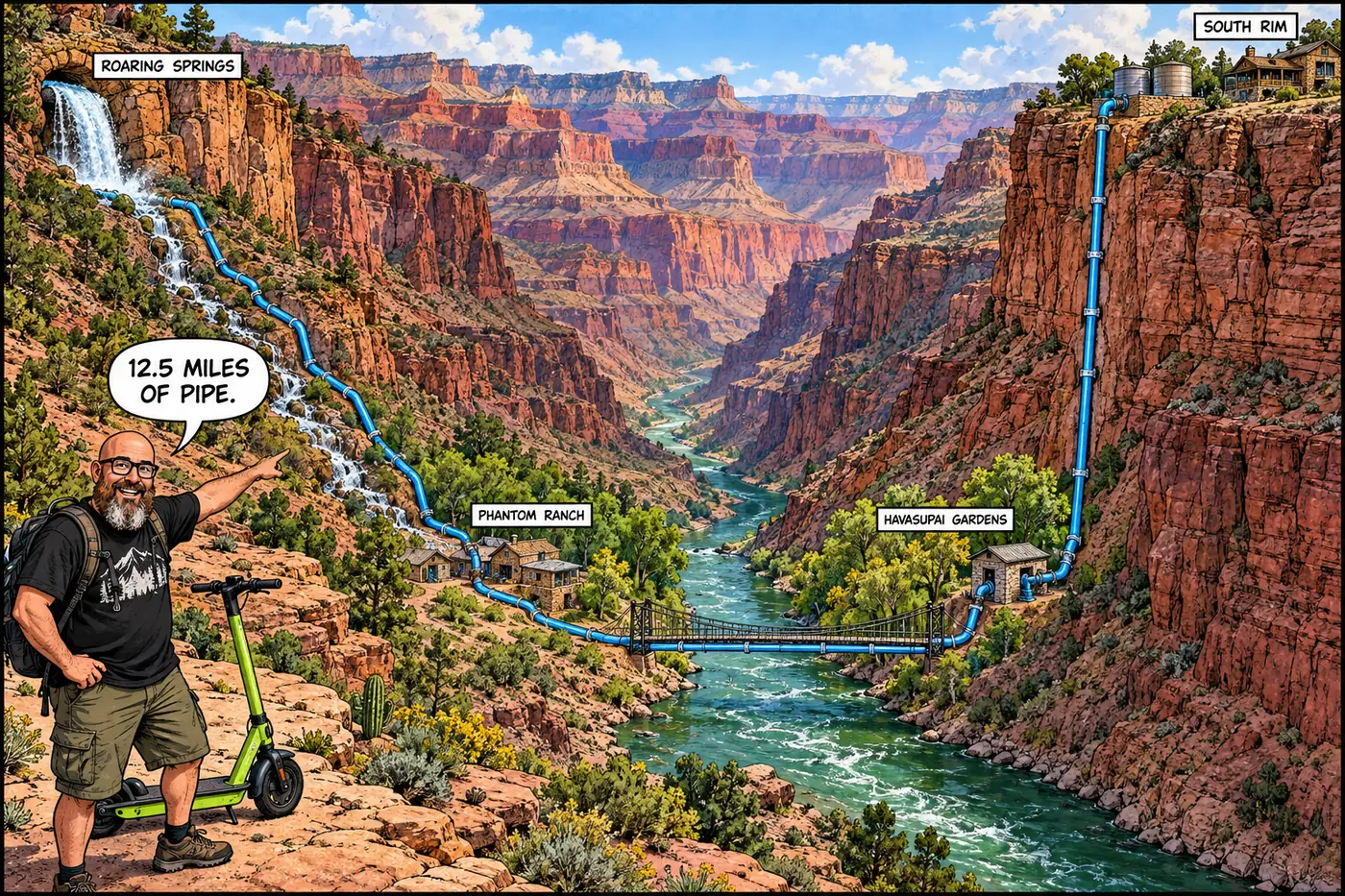
How a 1960s aluminum pipe across the Grand Canyon came to supply every South Rim facility, why it broke 85-plus times, and what the August 2026 flood did to its $208 million replacement.